

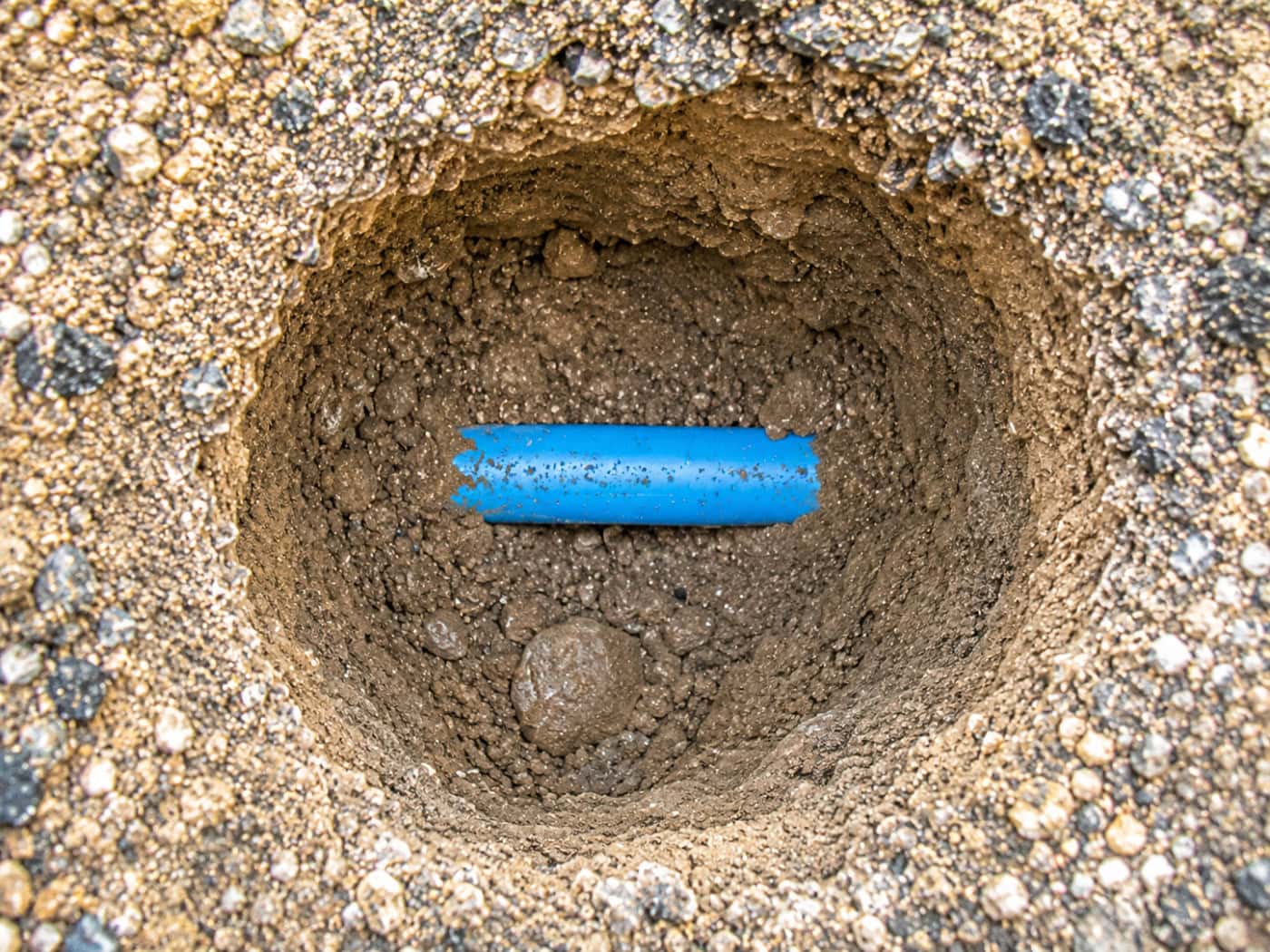
If a leak has been found on your incoming water supply, one of the first concerns is whether the entire pipe needs to be replaced.
For many homeowners, the idea of full replacement feels like the default — especially when the pipe is underground and out of sight. But in reality, that’s not always necessary.
The right solution depends on the condition of the pipe, the location of the leak, and how the issue has developed.
What an incoming supply pipe leak means
Your incoming water supply pipe is the section that runs from the meter into your property. When a leak occurs here, water is lost before it even reaches your internal plumbing.
This means:
- The issue is outside the property
- The leak is continuous, even when no water is being used
- It requires investigation and repair to stop ongoing loss
If you want to understand how these leaks develop and why they often go unnoticed, see mains water leaks explained.
Does a leak always mean full replacement?
No — and this is one of the most common misconceptions.
In many cases, the leak can be repaired without replacing the entire pipe.
This is usually possible when:
- The leak is isolated to one section
- The rest of the pipe is in good condition
- Access to the area is manageable
In these situations, a targeted repair is often the most practical and least disruptive solution.
When replacement may be necessary
There are cases where replacing the pipe becomes the better long-term option.
This may be recommended if:
- The pipe is old or deteriorating
- There are multiple weak points along the route
- Repairs are likely to be repeated
In these scenarios, repairing one section may only delay further problems.
Why accurate detection is essential
Before deciding on repair or replacement, the exact location and condition of the pipe must be confirmed.
The Leak Hunter will:
- Pinpoint the exact leak location
- Assess the condition of the pipe where accessible
- Recommend the most effective solution based on evidence
This ensures the decision is based on facts rather than assumptions.
To understand how this process works, visit how we find mains water leaks.
What the repair process typically involves
Once the approach is chosen, the work is planned to minimise disruption.
This may involve:
- Accessing the pipe at the confirmed leak location
- Repairing or replacing a section of pipe
- Testing the system to ensure the issue is resolved
You can read more about what happens during this stage here: what happens after a mains water leak is found.
What homeowners often assume
It’s common to assume that a leak underground automatically means major work.
In reality:
- Many leaks are isolated and repairable
- Replacement is only recommended when justified
- The goal is always to minimise disruption while solving the problem properly
The right approach is not the biggest one — it’s the most appropriate one.
Final thoughts
If you have a leak on your incoming water supply, it doesn’t automatically mean the whole pipe needs to be replaced.
The key is to confirm the exact cause and location, then choose the most effective solution.
The Leak Hunter will trace the leak, assess the pipe, and carry out the right repair — ensuring the issue is resolved without unnecessary work.
To see how we handle supply pipe leaks from start to finish, visit mains water leak detection.
Frequently asked questions
Do you only cover my area?
If you’re outside these areas, don’t worry — our team covers most of the South East, providing trusted leak detection services throughout London, Kent, Sussex, and Surrey.
Can a supply pipe leak be repaired without replacement?
Yes. Many leaks can be repaired locally if the pipe is otherwise in good condition.
How do I know if replacement is needed?
This depends on the condition of the pipe and the nature of the leak, which is confirmed through proper detection.
Is replacing the pipe more reliable?
In some cases, yes — particularly if the pipe is deteriorating. However, it is not always necessary.