

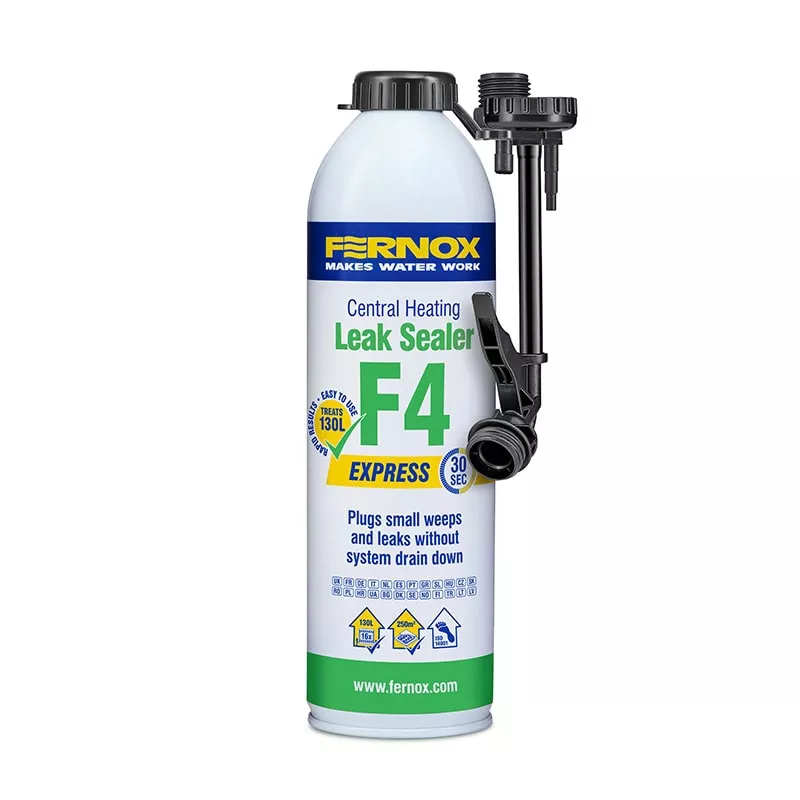
Leak sealers are often marketed as a quick fix for central heating problems, especially when boiler pressure keeps dropping. While they can appear to solve the issue, they rarely address the underlying cause.
In most cases, a system losing pressure is reacting to a fault within the pipework or components. A chemical seal may slow the symptoms, but it does not correct the failure itself.
What a leak sealer actually does
A leak sealer is a liquid additive introduced into the heating system. As it circulates, it reacts with air at the point where water is escaping, forming a temporary seal.
This can reduce pressure loss in very specific situations, particularly where leaks are extremely small and difficult to access.
When a leak sealer may work
Leak sealers are only effective in limited conditions.
- Very small pinhole leaks in pipework
- Hairline cracks in radiators
- Minor seepage at inaccessible joints
In these cases, they may reduce pressure loss temporarily and keep the system running.
Why leak sealers often fail
Most heating system leaks are not small enough for sealers to fix effectively. Where pipework is corroded, joints have failed, or pressure is unstable, the problem will continue to develop.
- Larger leaks will not seal
- Corrosion continues beneath the surface
- Pressure loss returns over time
- The original fault remains unresolved
In these situations, sealers often delay proper diagnosis rather than prevent repair.
Potential risks of using leak sealer
Because sealers are designed to react inside the system, they can sometimes cause unintended side effects.
- Blockages in narrow pipework or heat exchangers
- Reduced efficiency due to restricted flow
- Interference with pumps or valves
- Possible impact on boiler warranties
These risks increase if sealers are used repeatedly or in systems with existing corrosion.
Why pressure loss should always be investigated
If your boiler pressure keeps dropping, the system is losing water somewhere. Even if a sealer appears to work, the cause is still present.
Identifying the source early prevents further damage and avoids more disruptive repairs later.
A better long-term approach
Rather than relying on chemical fixes, the most effective solution is to locate and repair the leak properly.
At The Leak Hunter, we trace leaks using non-invasive methods including acoustic testing, thermal imaging, and tracer gas. This allows the exact source to be identified without unnecessary damage to your home.
The takeaway
Leak sealers can help in very specific situations, but they are not a permanent solution. Most pressure loss issues are caused by faults that require proper investigation and repair.
For a full breakdown of causes and pressure behaviour, see our central heating leaks explained guide.
If your system is losing pressure or showing signs of a leak, our central heating leak detection service can identify the cause accurately and resolve the problem at its source.