

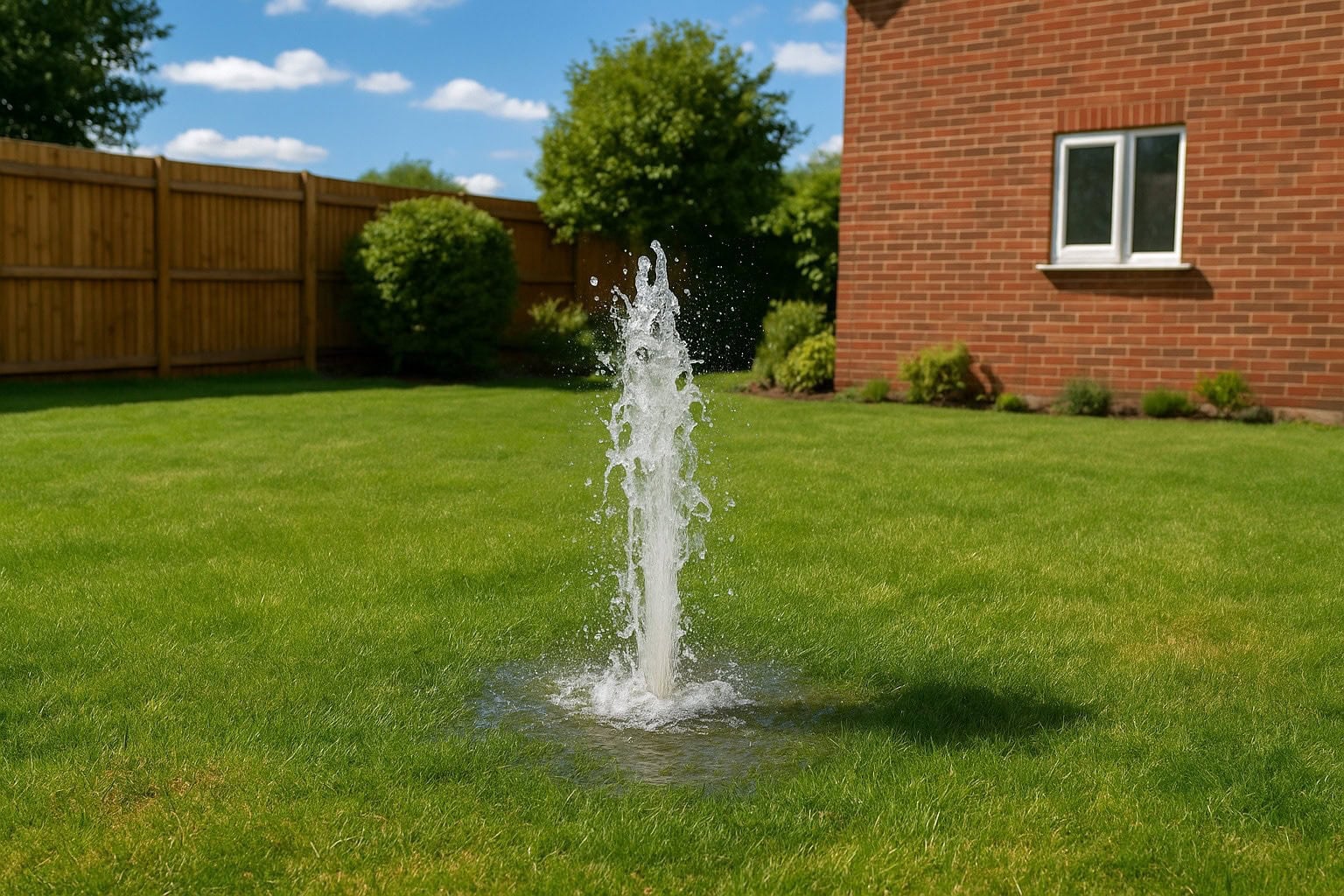
If one area of your lawn looks noticeably greener, thicker, or healthier than the rest, it might seem like a positive sign. However, when the difference is consistent and localised, it can raise questions about what’s happening beneath the surface.
Grass usually grows evenly under the same conditions — so when one patch stands out, there’s often a reason.
In some cases, that reason can be excess moisture below ground.
Why one patch of grass may look different
Grass health is heavily influenced by water availability.
If one area looks greener or grows faster:
- It may be receiving more moisture than surrounding areas
- The soil beneath may be consistently damp
- Conditions may be more favourable for growth in that spot
This creates a visible contrast across the lawn.
If you want to understand how underground leaks affect ground conditions, see underground leaks explained.
Why excess moisture can improve growth
Water is essential for plant health, so increased moisture can initially produce positive results.
This can lead to:
- Faster growth compared to surrounding grass
- A deeper green colour
- Thicker or denser patches forming over time
However, this improvement can be misleading.
Why this isn’t always a good sign
While healthier-looking grass may seem beneficial, it can indicate an imbalance below the surface.
Over time, excess moisture can:
- Create overly saturated soil conditions
- Lead to soft or unstable ground
- Develop into more noticeable surface issues
The visible improvement can be the first sign of a developing problem.
What homeowners often assume
It’s common to assume the difference is due to:
- Better sunlight exposure
- Variations in soil quality
- Uneven watering or lawn care
While these can affect growth, they don’t usually create a sharply defined, consistent patch without other contributing factors.
Why the location matters
The exact position of the healthier patch can provide clues.
This may indicate:
- A localised source of moisture below ground
- Water feeding that specific area consistently
- Ground conditions that allow moisture to collect there
The pattern is often more important than the appearance itself.
How The Leak Hunter approaches this
The Leak Hunter will determine whether the healthier patch is being influenced by an underground leak and pinpoint the exact source without unnecessary excavation.
This ensures the situation is clearly understood before any repair work begins.
To see how this works, visit how we find underground leaks.
Why the surface doesn’t show the full picture
The grass is reacting to conditions below the surface.
In reality:
- The source of moisture may sit deeper underground
- Water may be spreading through the soil unevenly
- The visible patch reflects where moisture is most available
This is why proper investigation is essential.
What happens once the cause is confirmed
Once the source is identified, the repair can be planned in a controlled and targeted way.
This may involve:
- Accessing the pipe at the correct location
- Repairing or replacing the affected section
- Restoring the lawn once the work is complete
You can read more about this stage here: what happens after an underground leak is found.
Final thoughts
If one patch of grass looks noticeably healthier than the rest, it’s worth considering what’s happening beneath the surface.
The difference may not just be environmental — it could be a sign of excess moisture in one area.
The Leak Hunter will confirm the cause, locate the source accurately, and carry out the right repair — ensuring the problem is resolved without unnecessary disruption.
To learn more about how we diagnose and resolve these issues, visit underground leak detection.
Frequently asked questions
Do you only cover my area?
If you’re outside these areas, don’t worry — our team covers most of the South East, providing trusted leak detection services throughout London, Kent, Sussex, and Surrey.
Is greener grass always a good sign?
Not always. It can indicate excess moisture in one area.
Can a leak make grass grow faster?
Yes. Increased water supply can promote faster growth.
Should I investigate even if it looks healthy?
If the difference is consistent and localised, it’s worth confirming the cause.