

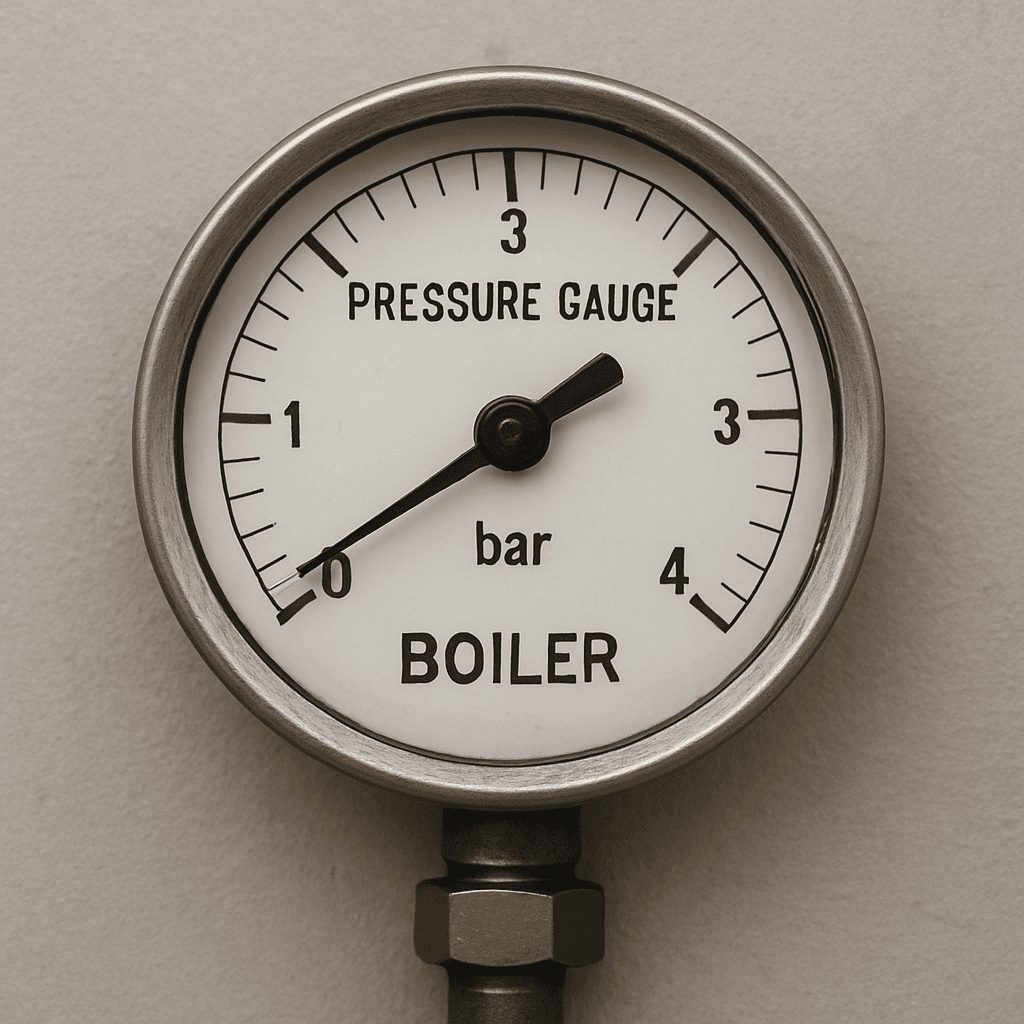
If you notice the pressure gauge dropping even when your heating has not been used, it can be confusing. Many homeowners assume pressure only changes while the system is running.
In a sealed central heating system, pressure should remain fairly stable whether the heating is on or off. If it continues to fall during periods of inactivity, it usually indicates an underlying issue.
Is it normal for boiler pressure to drop when the heating is off?
No, in most cases it is not normal.
When the heating is off, the system is under less stress. Water is static, components are not expanding and contracting, and pressure should remain steady. A gradual drop during this time usually means water is escaping or pressure is being released somewhere in the system.
Small fluctuations can occur, but repeated or noticeable drops should always be investigated.
Common reasons pressure drops when the system is idle
There are several reasons this can happen, even when the boiler is not running.
Pressure relief valve releasing water
If the pressure relief valve becomes worn or partially stuck open, it may release water slowly. This can happen without obvious signs inside the property, especially if the discharge pipe runs externally.
Expansion vessel faults
The expansion vessel helps regulate pressure changes. If it loses its charge or fails, the system can struggle to maintain stable pressure, leading to drops both during operation and when the heating is off.
Small leaks in sealed pipework
Even when the system is not in use, it remains pressurised. Small leaks in pipework, radiator valves, or concealed areas can allow water to escape gradually over time.
Recently topped-up systems
If the system has been recently topped up, pressure loss during downtime may reveal an existing weakness rather than causing it.
Why this type of pressure loss is easy to miss
Pressure drops during inactivity tend to happen slowly. Without noise or obvious changes in heating performance, the issue can go unnoticed until the pressure falls low enough to trigger a fault.
Many homeowners only discover the problem when:
- The boiler fails to start
- A low-pressure warning appears
- Heating becomes inconsistent
Why topping up is not a long-term solution
It is tempting to restore pressure and carry on, especially if the boiler works again afterwards. However, this only masks the underlying issue.
Repeated topping up can:
- Introduce oxygen into the system
- Accelerate corrosion
- Increase sludge build-up
- Worsen existing faults
Over time, this can lead to more serious and costly problems.
When to investigate further
It is worth investigating if:
- Pressure drops steadily over a few days
- The boiler needs frequent resetting
- You are topping up more than once a week
- The issue has been ongoing for some time
These signs usually indicate a fault that will not resolve on its own.
The takeaway
Boiler pressure should not consistently drop when the heating is off. If it does, it usually means the system is not holding pressure correctly.
Identifying the cause early helps protect the heating system and prevents more disruptive repairs later.
For a full breakdown of causes and pressure behaviour, see our central heating leaks explained guide.
If your pressure continues to fall, our central heating leak detection service can identify the cause accurately and with minimal disruption.