

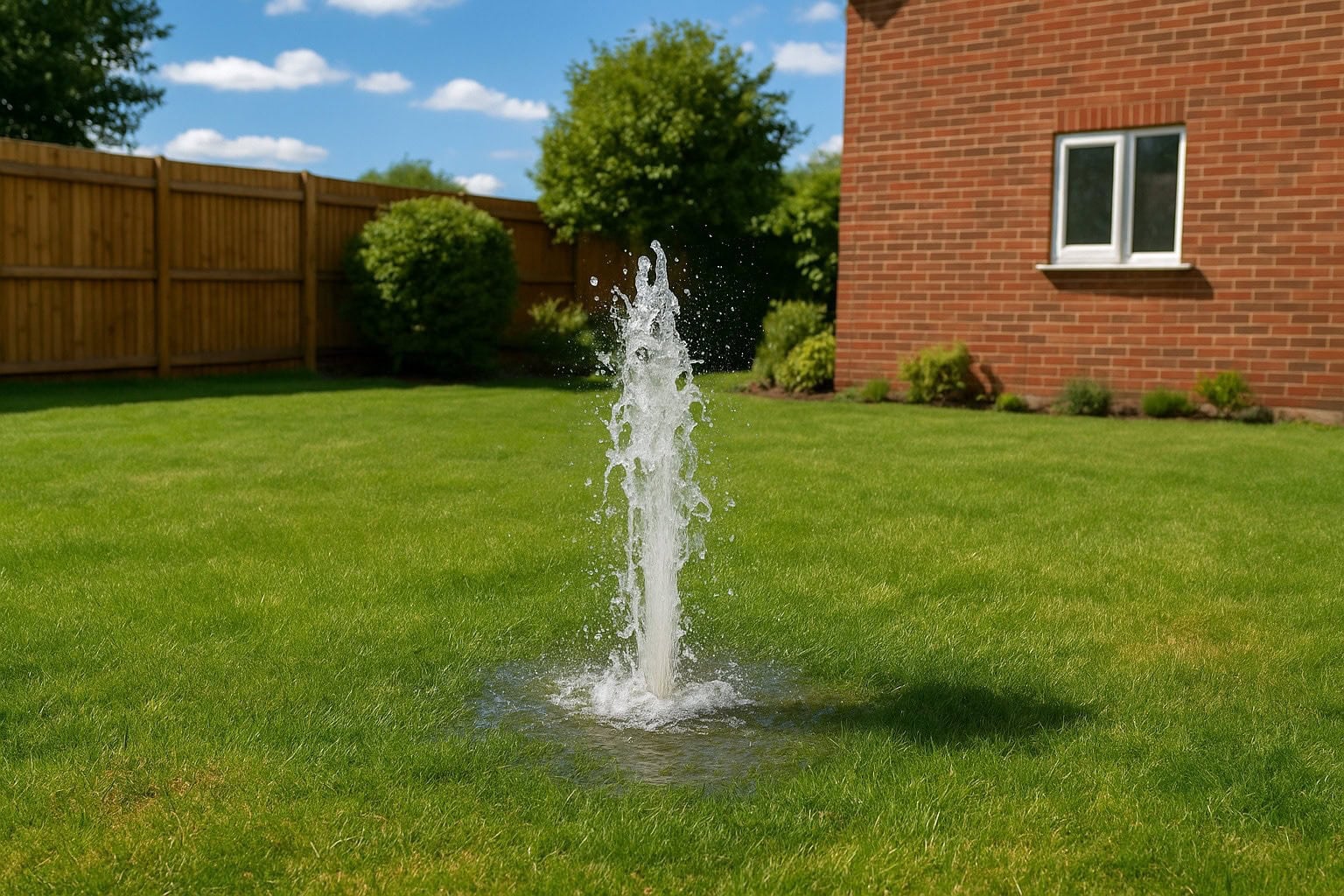
Leaks in underground pipes often go unnoticed for long periods because the pipework is hidden beneath soil, paths, or driveways. In many cases, homeowners only begin finding underground water leaks when outdoor changes appear that don’t have an obvious explanation.
Because these leaks develop below ground level, the warning signs are usually indirect and easy to overlook at first.
Why underground pipe leaks are difficult to spot
Unlike internal leaks, underground leaks rarely create visible drips or pooling water straight away. Escaping water can soak into the surrounding ground, drain away naturally, or surface far from the actual leak.
This means the first signs often appear outdoors rather than near the damaged pipe itself.
Unusually green or fast-growing patches of grass
One of the most common outdoor indicators is grass or plants growing faster or greener in a specific area.
This happens because leaking water provides a constant moisture source. Even during dry weather, affected patches may remain lush while surrounding areas dry out.
Although this doesn’t confirm a leak on its own, it’s often an early clue worth investigating.
Soft or sunken ground
Escaping water can wash away soil beneath the surface, creating soft spots or gradual sinking.
You may notice:
- Spongy ground underfoot
- Small dips forming over time
- Uneven paving or slabs
These changes often develop slowly, making them easy to dismiss as normal ground movement.
Water pooling without rainfall
Puddles appearing during dry weather are another strong indicator of an underground leak.
Because water may travel along trenches or foundations, pooling doesn’t always occur directly above the damaged pipe. Instead, it can appear at the lowest point nearby.
Repeated unexplained pooling should never be ignored.
Damp smells near the building
Underground leaks close to the property can cause damp, earthy smells around external walls or entrances.
As moisture migrates toward foundations, it may begin affecting the building fabric, even before visible damp patches appear indoors.
Persistent musty smells outside are often an early warning sign.
Cracks in paths, patios, or driveways
Continuous water escape beneath hard surfaces can weaken the ground below. Over time, this pressure can lead to:
- Cracks in concrete or paving
- Movement in slabs
- Damage to driveways or paths
These issues are often blamed on wear or weather, but underground leaks can accelerate the damage significantly.
Changes in water pressure inside the home
Although the leak is outside, underground pipe leaks often affect indoor water pressure.
You may notice:
- Fluctuating pressure
- Reduced flow at taps
- Pressure dropping during peak usage
These symptoms can occur even when no internal pipework is faulty.
Why signs may appear far from the leak
Water follows the path of least resistance underground. It can travel along pipe trenches, foundations, or drainage routes before surfacing.
This is why the visible sign isn’t always near the actual pipe damage, making location more challenging without proper investigation.
Why outdoor leaks often get worse over time
Small underground leaks rarely remain stable. Continuous water escape can:
- Erode surrounding soil
- Increase stress on the damaged pipe
- Enlarge small cracks or pinholes
As the leak grows, damage becomes more widespread and repair costs increase.
When outdoor signs should be taken seriously
You should investigate further if:
- Outdoor changes persist or worsen
- Multiple signs appear together
- Water bills increase unexpectedly
- Pressure issues develop indoors
These patterns suggest an ongoing issue rather than a one-off problem.
Why early investigation matters
Ignoring outdoor signs allows leaks to continue unchecked. Over time, underground leaks can lead to:
- Damage to foundations
- Moisture entering floors or walls
- Structural movement
- Higher repair costs
Early identification limits damage and avoids unnecessary disruption later.
The takeaway
Signs of leaks in underground pipes outside the home are often subtle and easy to overlook. Changes in ground condition, unexplained pooling, or pressure issues are usually the first clues.
Recognising these signs early and taking action helps prevent more serious damage and makes repairs far more manageable.