

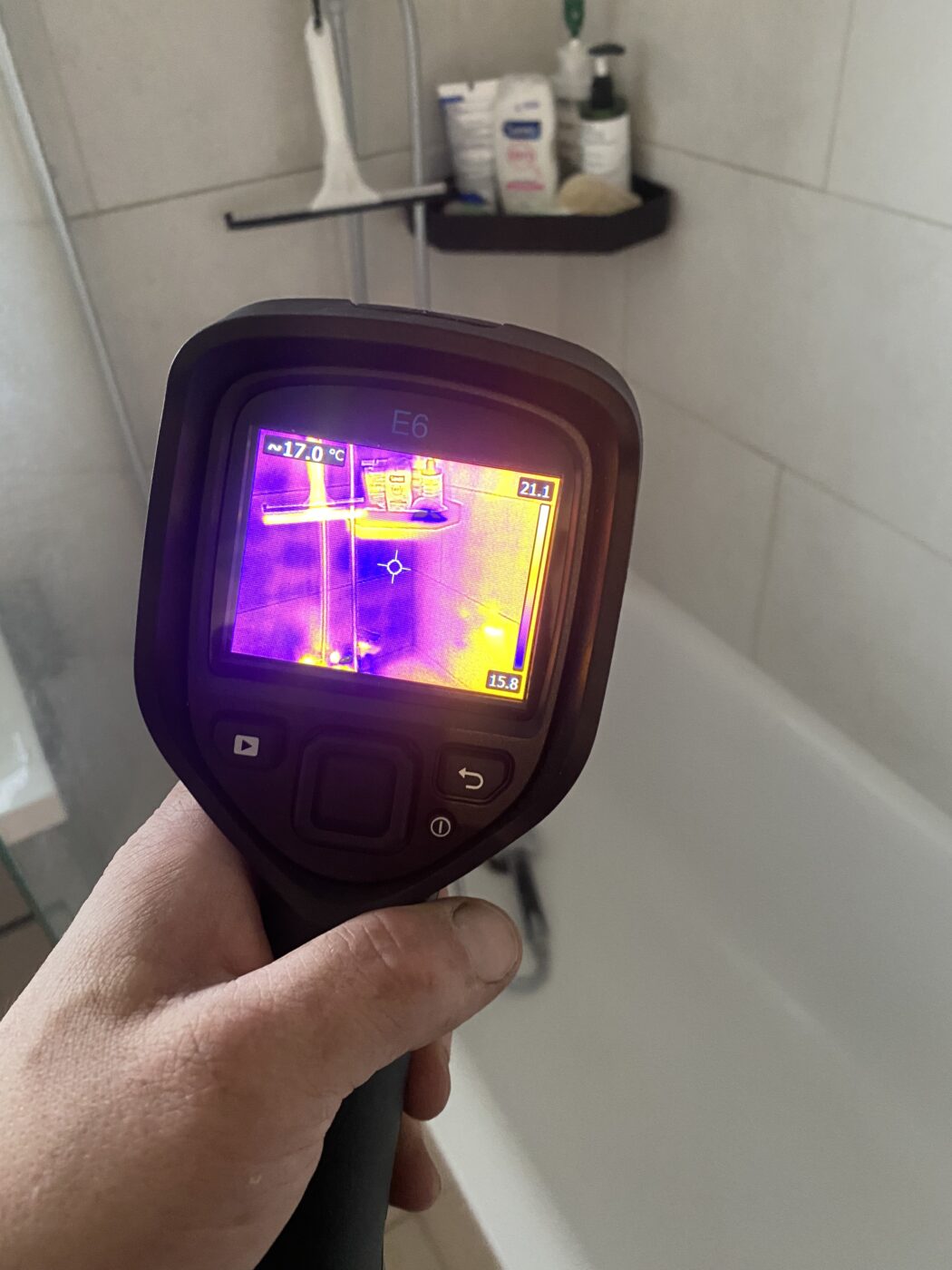
If a room only feels damp at certain times of day, it can be difficult to work out what’s actually causing it. There may be no visible water, no obvious leak, and no clear pattern at first glance — just a noticeable change in how the space feels.
This kind of behaviour often leads to uncertainty. Is it condensation, airflow, or something more hidden?
Why dampness can vary throughout the day
Changes in temperature, usage, and water demand can all affect how a room feels. However, when the damp sensation appears at consistent times — for example, mornings or evenings — it can point to something more specific.
This is especially true if the pattern repeats daily.
What this behaviour can indicate
If the damp feeling is tied to certain times, it may be linked to:
- Water usage in the property (showers, taps, appliances)
- Pipework under pressure during peak times
- Hidden moisture building up and becoming noticeable later
Because these factors change throughout the day, the symptoms can appear and disappear.
Why this is often mistaken for condensation
When dampness is inconsistent, it’s commonly assumed to be condensation. While that can be the cause, it’s not always the full picture.
If the issue is linked to hidden pipework or slow leaks, moisture can build up gradually and only become noticeable at certain times.
This is where confusion often leads to the problem being overlooked.
What signs to pay attention to
If the issue is more than just condensation, you may notice:
- The same room feeling damp at similar times each day
- No clear link to ventilation or weather conditions
- A subtle change in air quality or humidity
- Gradual worsening over time
These patterns help distinguish between environmental factors and a possible hidden issue.
Why it shouldn’t be ignored
Even if there is no visible damage yet, ongoing moisture can affect materials over time. This can lead to:
- Deterioration of walls or finishes
- Increased risk of mould developing later
- Moisture spreading into surrounding areas
What feels minor now can develop into a larger issue if left unresolved.
What the correct next step is
The key is to understand whether the dampness is environmental or linked to a water source.
If there is any uncertainty, the safest approach is to locate or rule out a hidden leak.
This is where How We Find Water Leaks becomes important.
It allows the issue to be properly assessed without unnecessary disruption.
What happens once the cause is identified
If a leak is found, the repair can be targeted. If not, the focus can shift confidently to ventilation or environmental solutions.
The key is removing uncertainty so the right action can be taken.
You can read more about this stage in What Happens After a Water Leak Is Found.
How The Leak Hunter can help
The Leak Hunter specialises in identifying hidden water leaks that don’t present obvious signs. By understanding how the issue behaves over time, we can pinpoint the cause and ensure the right solution is applied.
Learn more about our service here: Water Leak Detection.
Frequently asked questions
Could this just be condensation?
It could be, but repeating patterns at specific times can sometimes indicate a hidden issue rather than just airflow or temperature changes.
Should I wait and see if it gets worse?
If the pattern continues, it’s best to investigate early. Identifying the cause sooner can prevent more serious issues later.
Do you only cover my area?
If you’re outside these areas, don’t worry — our team covers most of the South East, providing trusted leak detection services throughout London, Kent, Sussex, and Surrey.
If a room feels damp only at certain times of day, the pattern itself is the key to understanding it. Identifying the cause early ensures the right solution is applied before the issue develops further.
Find out more about Water Leak Detection.