

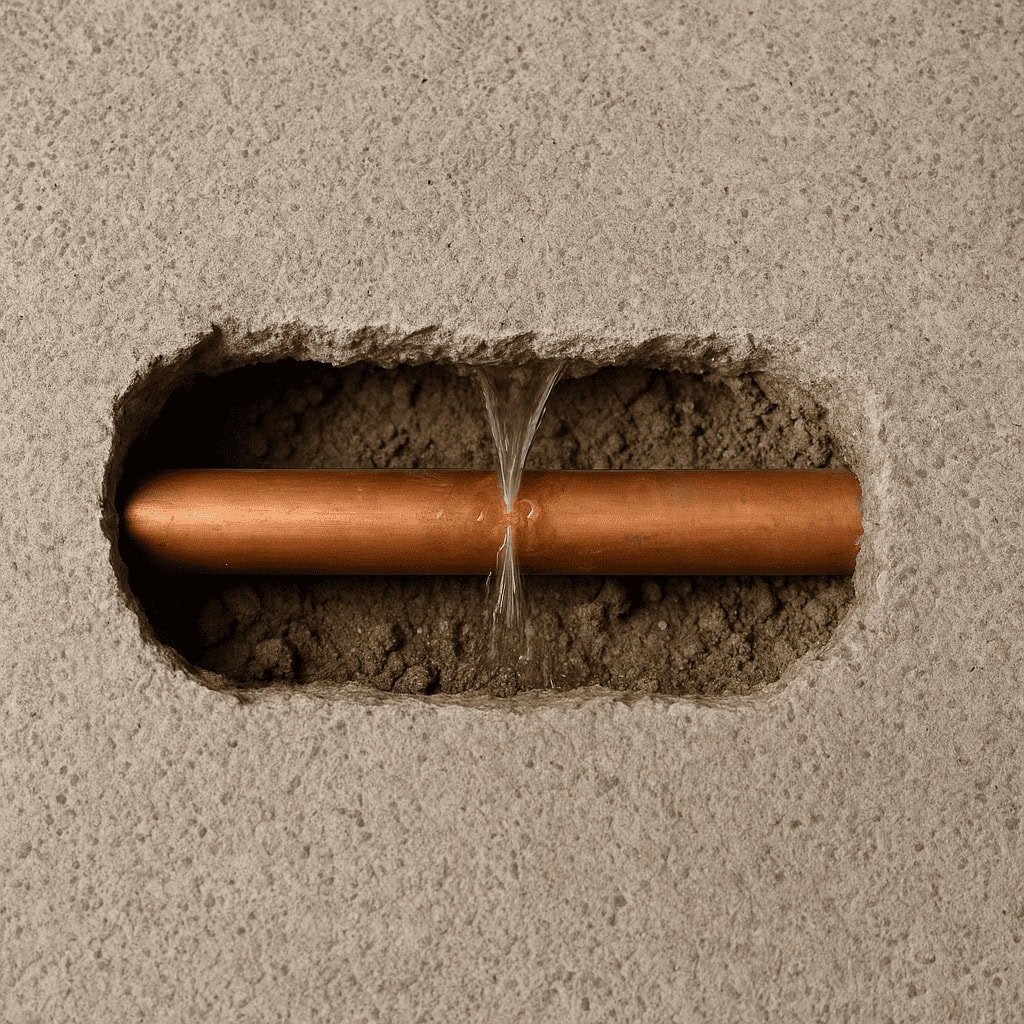
If you suspect your underfloor heating is leaking beneath a concrete floor, it’s natural to worry about how the problem will be found and whether the floor will need to be dug up. Because the pipework is buried within a solid floor (typically a concrete slab or screed), the leak isn’t visible and can’t be inspected in the same way as exposed plumbing.
Fortunately, locating the source doesn’t usually begin by breaking into the floor. The first step is accurately confirming where the leak is before any repairs are considered.
Why underfloor heating leaks are different
Unlike conventional heating pipework, underfloor heating pipes are concealed beneath the finished floor surface.
This means:
- The pipework cannot be inspected visually.
- Leaks develop beneath the floor surface.
- Visible signs often appear some distance from the source.
- Specialist equipment is usually required to confirm the exact location.
As a result, these investigations require a different approach from standard plumbing leaks.
Common signs of an underfloor heating leak
Although every property is different, common symptoms can include:
- Warm or damp patches appearing on the floor.
- Repeated pressure loss within the heating system.
- Areas of the floor heating unevenly.
- Unexplained moisture beneath floor finishes.
These symptoms don’t always confirm a leak, but they may indicate that further investigation is needed.
How underfloor heating leaks are located
Before any access is made, specialist leak detection equipment is used to establish whether a leak is present and pinpoint its location beneath the concrete floor.
The investigation is designed to:
- Confirm the leak is within the underfloor heating system.
- Identify the precise location beneath the slab.
- Avoid unnecessary excavation.
- Allow repairs to be planned accurately.
Learn more about how we find concrete floor leaks and the techniques used to investigate concealed pipework beneath solid floors.
Why the leak isn’t always beneath the visible signs
Water escaping beneath a concrete floor doesn’t always rise directly to the surface. It may travel beneath the slab before becoming visible, meaning the damp area or warm patch isn’t necessarily where the pipe has failed.
That’s why accurately locating the source before carrying out repairs is so important.
What happens once the leak has been located
Once the leak has been accurately located, repairs can be planned around the confirmed position rather than assumptions. This helps keep any access as targeted as possible while avoiding unnecessary disruption to unaffected areas of the floor.
Why early investigation matters
If an underfloor heating leak is left unresolved, moisture can continue to build beneath the slab and the affected area may gradually increase over time. Confirming the cause early often makes planning repairs simpler and more controlled.
Final thoughts
If you suspect your underfloor heating is leaking beneath a concrete floor, the priority is accurately locating the source before any repairs begin. Specialist leak detection helps identify the problem while keeping disruption to a minimum.
To learn more about locating concealed leaks beneath solid floors, visit our concrete floor leak detection page.
Frequently asked questions
Can underfloor heating leak beneath a concrete floor?
Yes. Although underfloor heating pipework is designed for a long service life, leaks can occasionally develop beneath concrete floors and require specialist detection to locate them accurately.
Will my whole floor need to be removed?
Not usually. Leak detection is carried out first so the source can be accurately located before any access is made, helping to minimise disruption.
Can you find the leak without digging up the floor first?
In most cases, yes. Specialist non-invasive leak detection methods are used to locate the leak before repairs are planned.