

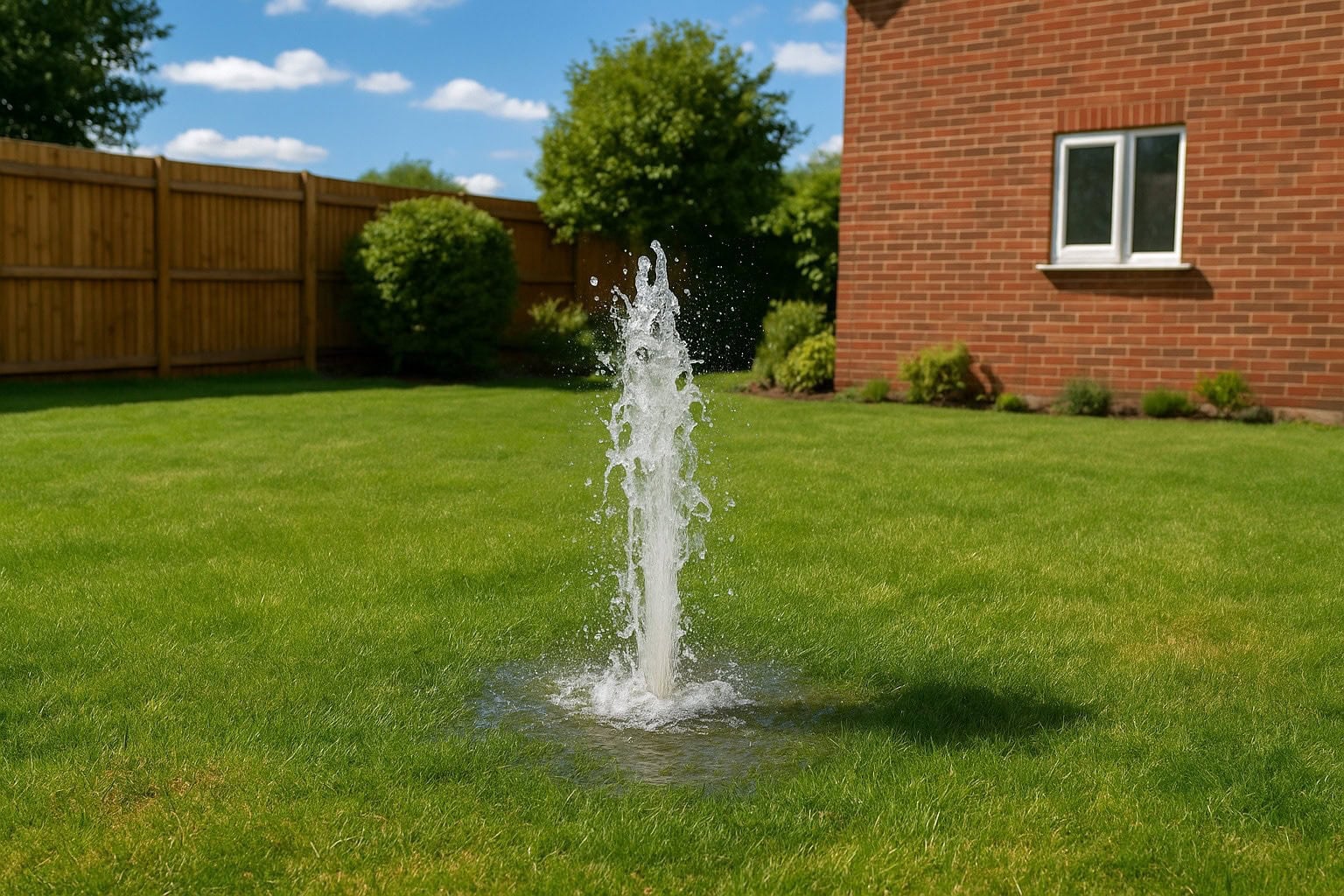
If you’ve noticed subtle movement in the ground outside — slight shifts, uneven areas, or changes in how the soil feels — it can be difficult to pinpoint the cause. There’s no obvious event, no clear trigger, yet something seems to be changing.
This type of gradual movement is often overlooked at first.
However, in many cases, it can be linked to changes happening below the surface — particularly involving moisture.
Why soil movement can occur without warning
Ground conditions are influenced by what’s happening beneath the surface, not just what you see above.
Movement can occur when:
- The soil becomes saturated and loses stability
- Water changes the structure of the ground over time
- Support beneath the surface is gradually altered
This type of change is often slow and difficult to detect early.
If you want to understand how underground leaks affect ground conditions, see underground leaks explained.
How water below ground affects stability
Water doesn’t just sit in the ground — it can actively change how the soil behaves.
This can lead to:
- Softening of the soil structure
- Loss of compact support in certain areas
- Gradual shifting or settling of the ground
These changes can create uneven or unstable conditions over time.
Why the movement may be localised
In many cases, soil movement affects a specific area rather than the entire space.
This usually indicates:
- A localised source of moisture below ground
- A specific section of ground losing stability
- Water influencing one area more than others
The defined nature of the movement is often a key clue.
What homeowners often assume
It’s common to think soil movement is caused by:
- Natural settling over time
- Changes in weather conditions
- Minor ground variation that will stabilise
While these can play a role, they don’t always explain ongoing or progressive movement in one area.
Why this shouldn’t be ignored
Even small changes in ground stability can develop over time.
If left unresolved, this can lead to:
- More noticeable uneven surfaces
- Increased instability in affected areas
- More complex repair work if the cause continues
What starts as subtle movement can become more disruptive later.
How The Leak Hunter approaches this
The Leak Hunter will determine whether the soil movement is being influenced by an underground leak and pinpoint the exact source without unnecessary excavation.
This ensures the issue is clearly understood before any repair work begins.
To see how this works, visit how we find underground leaks.
Why surface changes don’t show the full picture
The movement you notice is often just the visible result of deeper changes.
In reality:
- The source may sit below the surface and out of view
- Water may be altering the ground structure gradually
- The visible effects may lag behind the underlying cause
This is why proper investigation is essential.
What happens once the cause is confirmed
Once the source is identified, the repair can be planned in a controlled and targeted way.
This may involve:
- Accessing the pipe at the correct location
- Repairing or replacing the affected section
- Stabilising and restoring the ground
You can read more about this stage here: what happens after an underground leak is found.
Final thoughts
If you’ve noticed unexplained soil movement outside your property, it’s worth considering what’s happening below the surface.
The issue may not be structural alone — it could be linked to hidden moisture affecting the ground.
The Leak Hunter will confirm the cause, locate the source accurately, and carry out the right repair — ensuring the problem is resolved without unnecessary disruption.
To learn more about how we diagnose and resolve these issues, visit underground leak detection.
Frequently asked questions
Do you only cover my area?
If you’re outside these areas, don’t worry — our team covers most of the South East, providing trusted leak detection services throughout London, Kent, Sussex, and Surrey.
Is soil movement always a structural issue?
Not always. Changes in moisture below ground can also affect stability.
Can water really cause ground to shift?
Yes. Saturation and loss of support can lead to gradual movement.
Should I investigate early signs?
Yes. Early investigation can prevent more significant issues developing over time.