

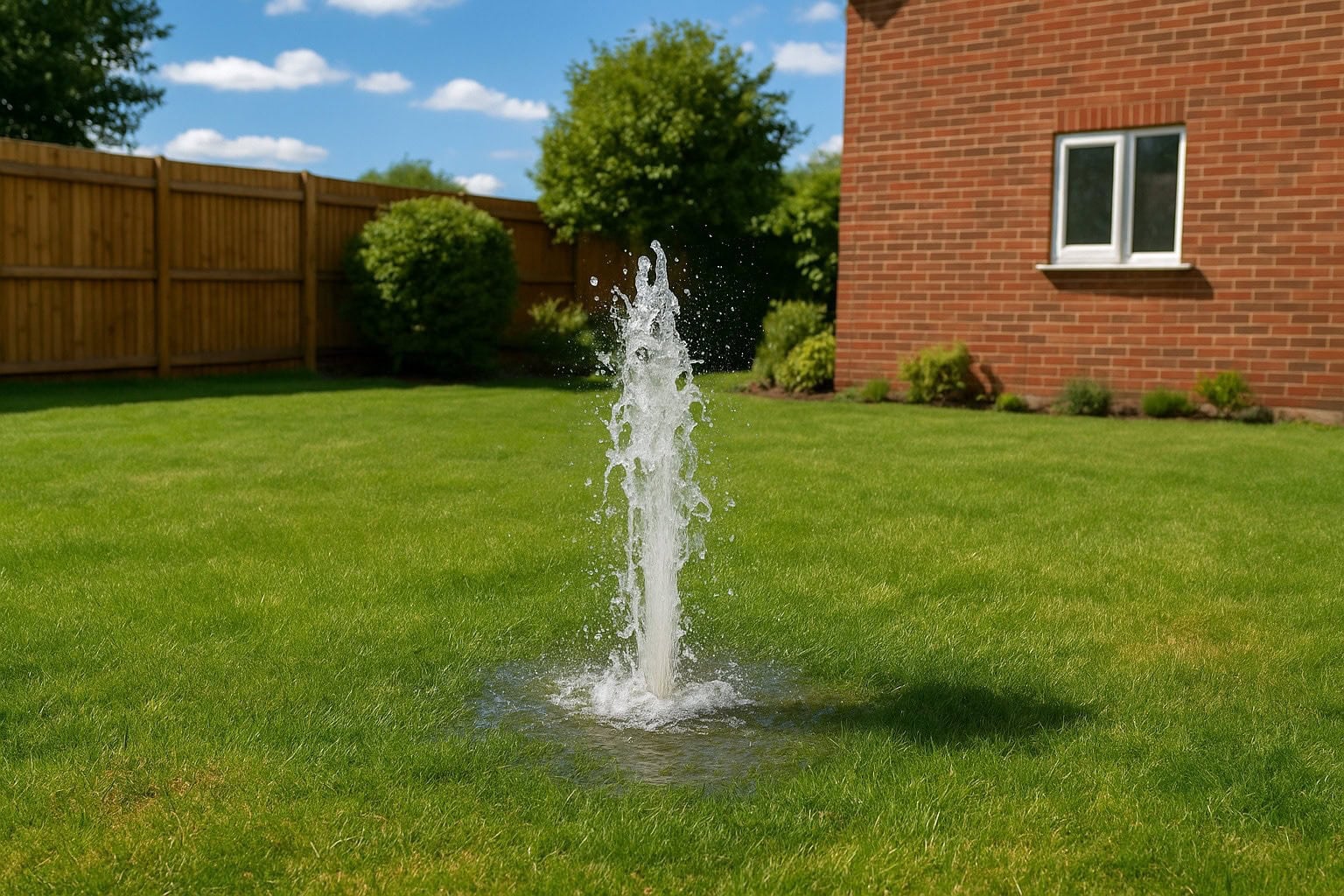
If you’ve noticed a persistent damp or musty smell outside, particularly near ground level, it can be difficult to explain. There’s no visible water, no obvious source — just a noticeable change in the air.
This kind of sensory sign is often overlooked because it’s not visual.
However, in some cases, it can indicate moisture building up below the surface.
Why damp smells can appear outdoors
Damp smells are usually caused by moisture interacting with soil, organic material, or enclosed spaces.
Outside, this can happen when:
- Moisture builds up in the ground over time
- Water sits in areas with limited airflow
- The soil remains consistently damp beneath the surface
This can create a noticeable smell even without visible water.
If you want to understand how underground leaks affect ground conditions, see underground leaks explained.
Why there may be no visible signs
One of the most confusing aspects is that nothing looks wrong.
This happens because:
- Moisture may be contained below the surface
- The ground may not yet show visible saturation
- The smell can be the first noticeable sign
This makes it easy to dismiss as something minor.
What this could indicate
If the smell is consistent and localised, it may suggest:
- A build-up of moisture below ground
- Water affecting soil conditions in one area
- A hidden issue that hasn’t yet become visible
The key factor is whether the smell remains over time.
What homeowners often assume
It’s common to assume the smell is caused by:
- Natural soil or garden conditions
- Decomposing organic material
- Temporary dampness after weather changes
While these can cause smells, they don’t usually create a persistent, localised odour without visible explanation.
Why this shouldn’t be ignored
A damp smell may seem minor, but it can indicate conditions that are developing below ground.
If left unresolved, this can lead to:
- Increasing moisture in the surrounding area
- Visible damp patches forming later
- More noticeable ground changes over time
Early signs are often subtle before becoming visible.
How The Leak Hunter approaches this
The Leak Hunter will assess whether the damp smell is linked to an underground leak and identify the exact source without unnecessary excavation.
This ensures the issue is clearly understood before any repair work begins.
To see how this works, visit how we find underground leaks.
Why smell alone doesn’t show the full picture
The odour you notice is only part of what’s happening.
In reality:
- The source may sit below the surface and out of view
- Moisture may be building gradually in the soil
- The smell reflects conditions rather than the exact cause
This is why proper investigation is important.
What happens once the cause is confirmed
Once the source is identified, the repair can be planned in a controlled and targeted way.
This may involve:
- Accessing the pipe at the correct location
- Repairing or replacing the affected section
- Restoring the area once the work is complete
You can read more about this stage here: what happens after an underground leak is found.
Final thoughts
If you’ve noticed an unusual damp smell outside near ground level, it’s worth paying attention — even if there are no visible signs yet.
The issue may be developing below the surface and becoming noticeable through subtle changes.
The Leak Hunter will confirm the cause, locate the source accurately, and carry out the right repair — ensuring the problem is resolved without unnecessary disruption.
To learn more about how we diagnose and resolve these issues, visit underground leak detection.
Frequently asked questions
Do you only cover my area?
If you’re outside these areas, don’t worry — our team covers most of the South East, providing trusted leak detection services throughout London, Kent, Sussex, and Surrey.
Can smells indicate a leak?
They can in some cases, especially if linked to persistent moisture below ground.
Should I wait for visible signs?
Not necessarily. Early investigation can confirm whether there’s an underlying issue.
Is this always a serious problem?
Not always, but it’s worth confirming the cause if the smell persists.