

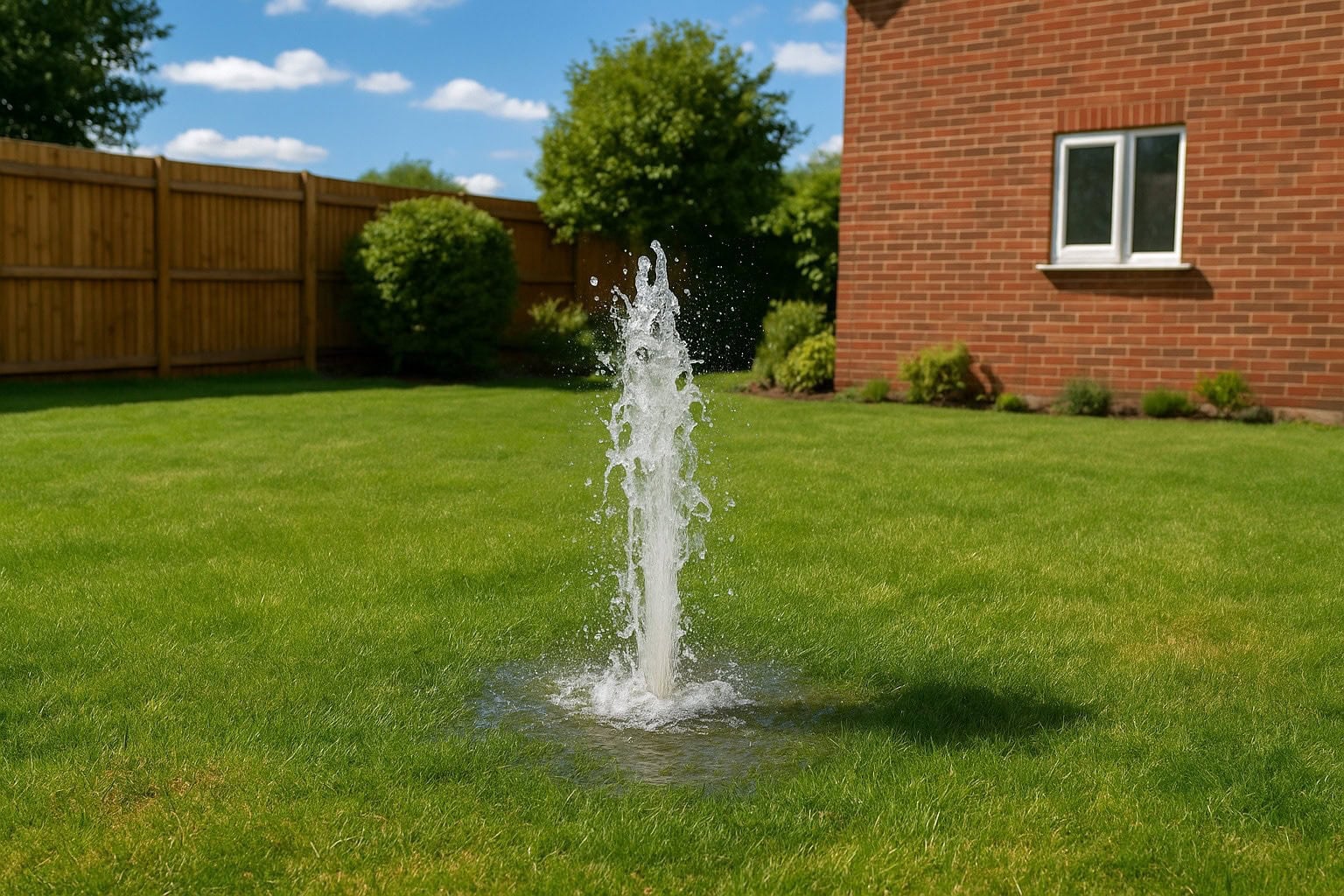
If you’ve started to notice moss or algae appearing in one specific outdoor area — especially where it wasn’t present before — it can raise questions about what’s changed.
These types of growth usually develop when conditions become consistently damp.
When they appear in a defined or unexpected location, it can suggest that moisture levels below the surface are higher than they should be.
Why moss and algae form
Moss and algae thrive in environments where moisture is present over time.
This typically happens when:
- The ground remains damp for extended periods
- Water doesn’t fully drain or evaporate
- Conditions allow moisture to build up consistently
These organisms often act as indicators of underlying moisture.
If you want to understand how underground leaks affect ground conditions, see underground leaks explained.
Why growth may appear in one specific area
When moss or algae is localised, it often means that one part of the ground is behaving differently.
This can indicate:
- A consistent source of moisture in that location
- Water feeding the area below ground
- Conditions that support growth only in that spot
The defined nature of the growth is often the key clue.
What homeowners often assume
It’s common to assume moss or algae is caused by:
- Shaded areas receiving less sunlight
- Natural garden conditions
- Seasonal changes in weather
While these factors can contribute, they don’t always explain sudden or concentrated growth in one area.
Why this can indicate more than surface conditions
When growth appears consistently or intensifies over time, it can suggest that moisture is not just temporary.
This may mean:
- The ground is being supplied with water from below
- Moisture levels are higher than expected for the conditions
- The issue is ongoing rather than environmental
The growth itself can be an early sign rather than the main problem.
Why this shouldn’t be ignored
Moss or algae may seem harmless, but it can indicate conditions that continue to develop.
Over time, this can lead to:
- Increasing moisture in the surrounding ground
- Surface becoming slippery or unstable
- More visible signs appearing later
What starts as a small patch can point to a wider issue.
How The Leak Hunter approaches this
The Leak Hunter will determine whether the unusual growth is being influenced by an underground leak and pinpoint the exact source without unnecessary excavation.
This ensures the issue is clearly understood before any repair work begins.
To see how this works, visit how we find underground leaks.
Why the visible growth doesn’t show the full picture
The moss or algae is reacting to conditions below the surface.
In reality:
- The source of moisture may be deeper underground
- Water may be spreading through the soil unevenly
- The visible area reflects where conditions allow growth
This is why proper investigation is important.
What happens once the cause is confirmed
Once the source is identified, the repair can be planned in a controlled and targeted way.
This may involve:
- Accessing the pipe at the correct location
- Repairing or replacing the affected section
- Restoring the area once the work is complete
You can read more about this stage here: what happens after an underground leak is found.
Final thoughts
If you’ve noticed unusual moss or algae growth outside, it’s worth considering what’s happening beneath the surface.
The change in conditions may not be purely environmental — it could be linked to excess moisture below ground.
The Leak Hunter will confirm the cause, locate the source accurately, and carry out the right repair — ensuring the problem is resolved without unnecessary disruption.
To learn more about how we diagnose and resolve these issues, visit underground leak detection.
Frequently asked questions
Do you only cover my area?
If you’re outside these areas, don’t worry — our team covers most of the South East, providing trusted leak detection services throughout London, Kent, Sussex, and Surrey.
Is moss always caused by a leak?
No, but localised or unusual growth can indicate excess moisture.
Can underground water cause algae?
Yes. Persistent moisture can create ideal conditions for growth.
Should I remove it or investigate first?
Removing it treats the symptom, but it’s worth confirming the underlying cause.