

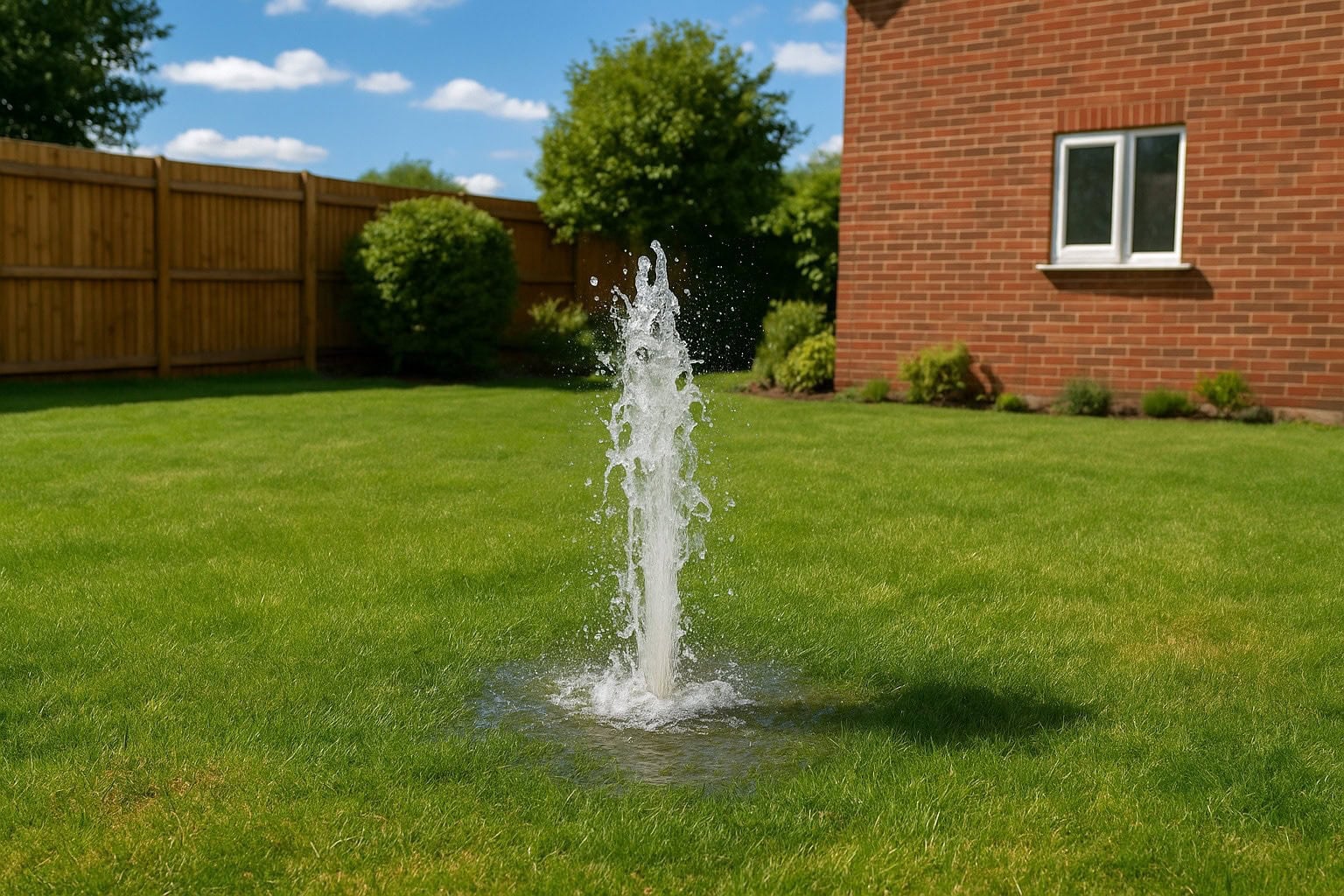
If you’ve noticed water appearing along a fence line even after a period of dry weather, it can be difficult to explain. There’s no recent rain, no obvious source, and yet moisture is showing up in a very specific location.
This kind of boundary-level issue often raises more questions than answers.
In many cases, it points to something happening below the surface rather than anything visible above it.
Why water can appear along a fence line
Fence lines often sit along boundaries where ground conditions change.
This means:
- Water can travel along natural channels in the soil
- Moisture may surface where the ground structure shifts
- The visible area may simply be where water escapes
This is why these areas can show signs before anywhere else.
If you want to understand how underground leaks behave, see underground leaks explained.
Why dry weather makes this more significant
During dry conditions, you would normally expect the ground to lose moisture, not gain it.
If water appears despite this:
- It suggests a continuous source below ground
- The ground is being supplied with water independently of weather
- The issue is not related to surface conditions
This is what makes dry-weather moisture particularly important to investigate.
Why the source may not be where you see it
The water appearing along the fence line is not always coming from directly beneath that spot.
In reality:
- Water can travel sideways through the soil
- The source may be further inside your property or beyond the boundary
- The fence line may simply be the easiest exit point
This makes surface assumptions unreliable.
What homeowners often assume
It’s common to think the issue is caused by:
- Residual moisture from previous weather
- Water runoff from neighbouring areas
- Natural differences in ground conditions
While these can play a role, they don’t usually explain persistent moisture during extended dry periods.
Why this shouldn’t be ignored
Water appearing without a clear cause often indicates an ongoing issue below ground.
If left unresolved, this can lead to:
- Increasing saturation of the surrounding soil
- Expansion of the affected area
- More complex repairs if the issue develops further
Early investigation helps prevent these outcomes.
How The Leak Hunter approaches this
The Leak Hunter will confirm whether the issue is being caused by an underground leak and pinpoint the exact source without unnecessary excavation.
This ensures the situation is clearly understood before any repair work begins.
To see how this works, visit how we find underground leaks.
Why the fence line is only part of the picture
The location where water appears is just one part of the overall situation.
In reality:
- The source may sit deeper or elsewhere underground
- Water movement is influenced by ground structure, not boundaries
- The visible signs reflect where water emerges, not where it begins
This is why accurate detection is essential.
What happens once the cause is confirmed
Once the source is identified, the repair can be planned in a controlled and targeted way.
This may involve:
- Accessing the pipe at the correct location
- Repairing or replacing the affected section
- Restoring the area once the work is complete
You can read more about this stage here: what happens after an underground leak is found.
Final thoughts
If water is appearing along a fence line during dry weather, it’s worth taking seriously.
The conditions suggest the source is not environmental — but something happening below ground.
The Leak Hunter will confirm the cause, locate the source accurately, and carry out the right repair — ensuring the problem is resolved without unnecessary disruption.
To learn more about how we diagnose and resolve these issues, visit underground leak detection.
Frequently asked questions
Do you only cover my area?
If you’re outside these areas, don’t worry — our team covers most of the South East, providing trusted leak detection services throughout London, Kent, Sussex, and Surrey.
Is this likely to be coming from next door?
It’s possible, but the source needs to be confirmed before making assumptions.
Can water travel along a boundary line?
Yes. Water can move through the ground and follow natural paths before surfacing.
Should I investigate even if it’s only a small area?
Yes. Small, consistent signs can indicate a developing issue below ground.