

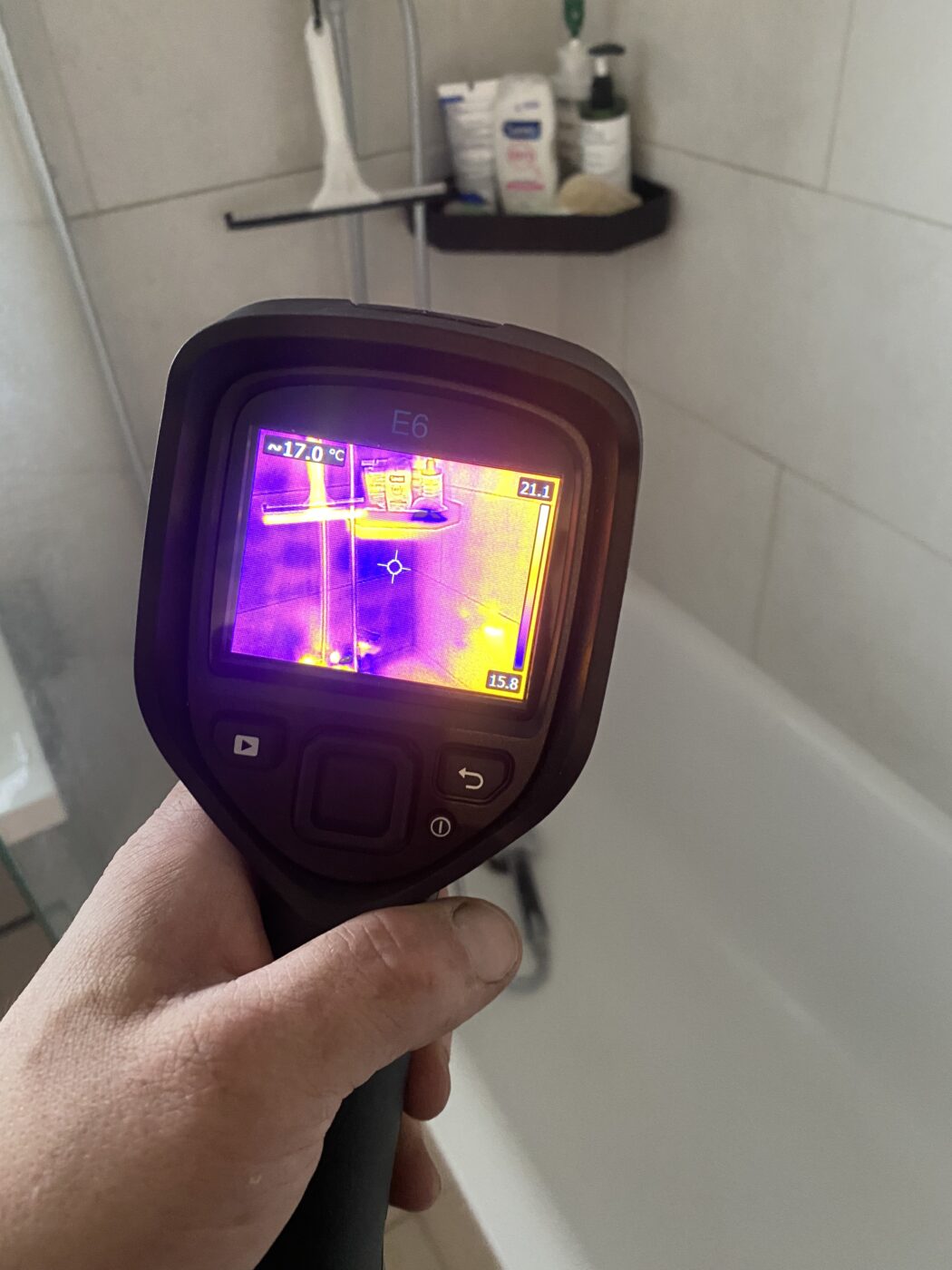
If a water leak is suspected but the pipework can’t be accessed — behind walls, under floors, or within fixed structures — it can feel like there are very few options available. The problem is there, but reaching it isn’t straightforward.
This is one of the most common situations where uncertainty leads to unnecessary disruption.
Why some pipework isn’t accessible
Modern and older properties alike often have pipework hidden within:
- Walls and ceilings
- Floors and subfloors
- Boxed-in or concealed areas
This makes direct inspection difficult without opening up parts of the property.
What people often assume
When access is limited, it’s common to assume that large areas will need to be opened to find the leak. This can lead to concerns about damage, cost, and disruption.
In some cases, work is started without knowing exactly where the problem is.
Why this approach can cause more disruption
Opening up walls or floors without confirming the leak location can result in:
- Unnecessary damage to the property
- Missing the actual source of the leak
- Multiple areas needing to be opened
This is where the situation can quickly become more complicated than it needs to be.
What the correct approach is
The key is to locate the leak before attempting to access it.
By identifying the exact source, access can be limited to the specific area affected rather than large sections of the property.
This is where How We Find Water Leaks becomes essential.
It allows the problem to be traced accurately, even when the pipework cannot be seen directly.
What happens once the leak is located
Once the source is confirmed, access can be planned carefully. Instead of opening up multiple areas, only the necessary section is exposed.
This keeps disruption to a minimum and ensures the repair is targeted.
You can read more about this stage in What Happens After a Water Leak Is Found.
What your options are
When pipework isn’t accessible, your options typically include:
- Accurately locating the leak first
- Gaining controlled access to the affected area
- Carrying out a targeted repair
The important point is that access should follow identification — not the other way around.
How The Leak Hunter can help
The Leak Hunter specialises in locating water leaks within inaccessible pipework. By identifying the exact source first, we ensure that access is controlled and unnecessary damage is avoided.
Learn more about our service here: Water Leak Detection.
Frequently asked questions
Will walls or floors need to be opened?
Only in the specific area where the leak is located. Accurate detection avoids unnecessary disruption.
Can a leak be found without access?
Yes. The source can be traced using non-invasive methods before any access is required.
Do you only cover my area?
If you’re outside these areas, don’t worry — our team covers most of the South East, providing trusted leak detection services throughout London, Kent, Sussex, and Surrey.
If a leak is in pipework you can’t access, the key is not to start opening everything up — it’s to locate the problem properly first. That’s what keeps disruption under control and ensures the issue is resolved efficiently.
Find out more about Water Leak Detection.