

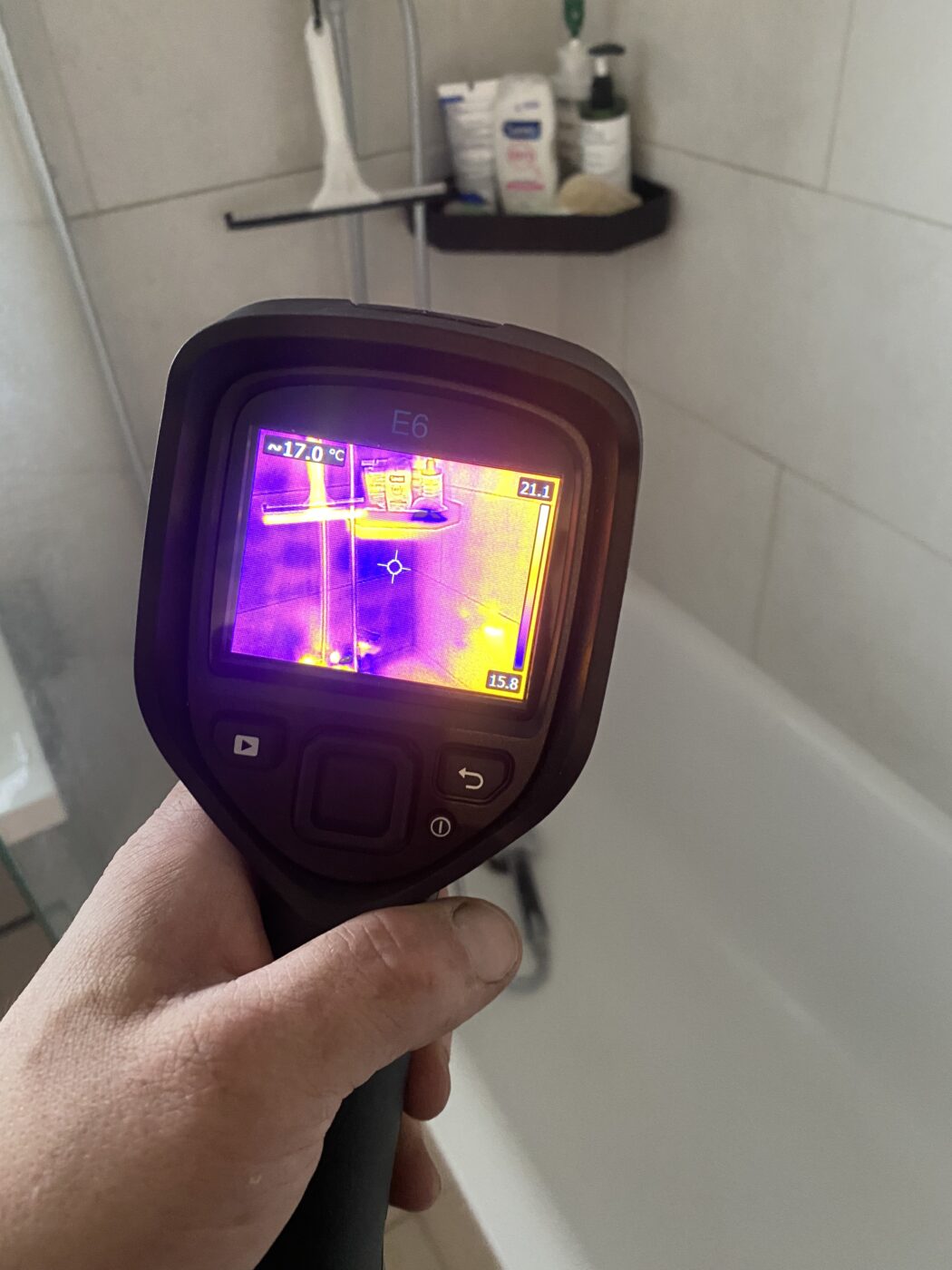
If you only notice a leak when a tap is turned on, it usually points to a pressure-related issue within your plumbing. Everything appears dry when water isn’t being used, but as soon as you run a tap, signs of a leak start to show.
This type of problem can be easy to overlook at first, especially if the leak disappears again quickly. But the pattern itself is an important clue.
Why leaks only appear when taps are used
When water flows through your system, it creates pressure inside the pipework. If there is a weakness — such as a small crack, loose joint, or worn fitting — it may only leak when that pressure is present.
When the tap is turned off, the pressure drops, and the leak may stop or become less noticeable.
This is why the issue seems to come and go.
Where this type of leak usually occurs
Leaks linked to tap use are often found in:
- Pipework behind walls or under floors
- Connections near sinks or appliances
- Areas where pipework has been altered or extended
Because these areas are hidden, the water may travel before becoming visible elsewhere in the property.
Why this can be misleading
It’s common to assume the problem is directly under the tap or sink. In reality, the visible water may be appearing some distance from the actual source.
This is where many people focus on the wrong area and the issue continues.
Signs to look for
If the leak is linked to tap use, you may notice:
- Water appearing only when taps are running
- Damp patches that worsen after use
- Moisture under floors or near skirting boards
- No visible signs when water isn’t being used
These patterns help narrow down the cause.
Why it shouldn’t be ignored
Because the leak is not constant, it’s easy to delay dealing with it. However, repeated exposure to water — even in small amounts — can cause long-term damage.
This may include:
- Damage to flooring and subfloors
- Deterioration of walls or internal structures
- Moisture build-up in hidden areas
Over time, what seems minor can become more serious.
What the correct next step is
The key is to locate the leak accurately while the system is under pressure.
This allows the source to be identified based on how the leak behaves, rather than guessing where it might be.
This is where How We Find Water Leaks becomes important.
It ensures the problem is traced without unnecessary disruption.
What happens once the leak is found
Once the source is identified, the repair can be targeted. This may involve fixing a joint, replacing a section of pipe, or securing a connection.
The important part is that the repair is based on confirmed findings, not assumptions.
You can read more about this stage in What Happens After a Water Leak Is Found.
How The Leak Hunter can help
The Leak Hunter specialises in identifying hidden water leaks, including those that only appear when taps are used. By tracing the exact source, we ensure repairs are targeted and unnecessary damage is avoided.
Learn more about our service here: Water Leak Detection.
Frequently asked questions
Why does the leak stop when I turn the tap off?
Because the pressure in the system drops. The leak is still there, but it may not be active without water flow.
Is this type of leak serious?
Yes. Even intermittent leaks can cause damage over time, especially in hidden areas.
Do you only cover my area?
If you’re outside these areas, don’t worry — our team covers most of the South East, providing trusted leak detection services throughout London, Kent, Sussex, and Surrey.
If a leak only appears when a tap is turned on, the pattern itself is the key to finding it. Identifying the source properly is what ensures the issue is resolved quickly and doesn’t return.
Find out more about Water Leak Detection.