

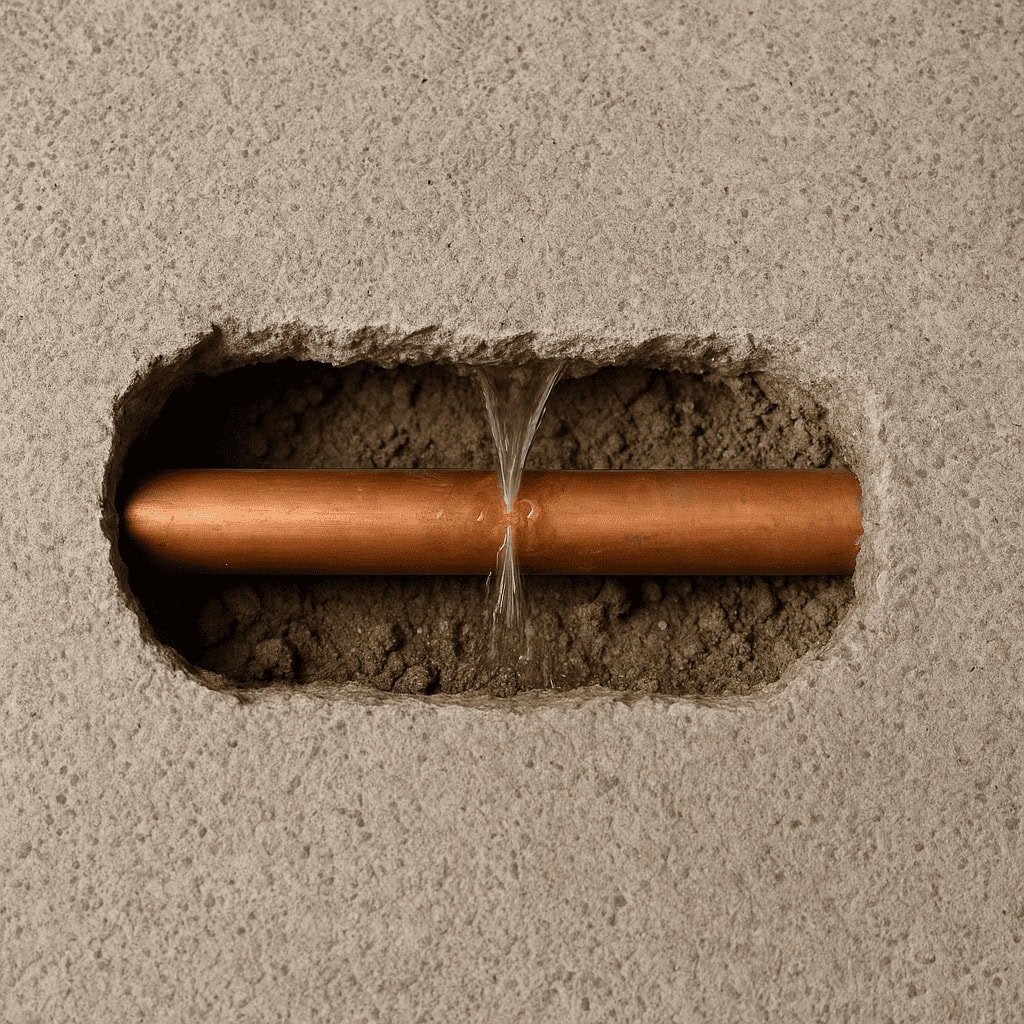
If you suspect there’s water beneath your floor but can’t see an obvious leak, it can be difficult to know what’s actually happening. Many homeowners notice something feels wrong before there are any visible signs — a floor that feels unusually cold, a slight musty smell, unexplained moisture readings, or concerns about water sitting somewhere beneath the surface.
In properties with a solid concrete floor or screed, this can point to a hidden leak developing beneath the slab rather than within the visible parts of the property.
The difficulty is confirming whether water is genuinely present below the floor and locating the exact source without unnecessary excavation.
Why water beneath a concrete floor is difficult to identify
Water beneath a solid floor does not always rise to the surface immediately.
In many cases, the surrounding ground and concrete slab temporarily contain or disperse the moisture, meaning the problem can continue underneath the floor long before visible damage appears inside the property.
- Moisture may spread beneath the slab before surfacing
- The concrete floor can delay visible warning signs
- Water may travel away from the original leak location
- The first signs may appear later in the process
This is one reason concrete floor leaks are often harder to recognise than standard visible plumbing leaks.
What water beneath the slab could indicate
If water is suspected beneath a concrete floor, it may suggest:
- A leaking pipe beneath the slab
- Water escaping from buried heating or water pipework
- Moisture slowly building up below the screed
- A hidden leak saturating the surrounding ground
In most situations, the main issue is not the repair itself — it’s accurately locating the hidden source beneath the floor first.
Why there may still be no visible signs
One of the most confusing parts of a beneath-slab leak is how little visible evidence there can be initially.
This can happen because:
- The leaking section of pipe may sit deep below the floor
- The surrounding ground may absorb moisture temporarily
- Floor finishes can conceal early symptoms
- Water may disperse underneath the property before rising visibly
As a result, many homeowners suspect a problem long before they can physically see water damage.
Why hidden water beneath a floor should not be ignored
Even without obvious surface damage, water beneath a concrete floor can continue spreading over time.
If the issue is left unresolved, this can eventually lead to:
- Increasing moisture beneath the slab
- Damage to flooring materials later on
- Damp-related symptoms appearing internally
- More disruptive repair work if the leak worsens
Confirming the cause early allows the problem to be isolated before unnecessary damage develops further.
How The Leak Hunter investigates beneath-slab leaks
The Leak Hunter specialises in locating hidden leaks beneath concrete floors using non-invasive leak detection methods designed for buried pipework and beneath-slab leaks.
Rather than guessing where the issue may be, we accurately trace the source beneath the floor before any controlled repair work begins. This helps avoid unnecessary disruption and ensures the correct area is accessed from the start.
You can learn more here: how we find concrete floor leaks.
Why the lack of visible water does not rule out a leak
A common misconception is that water must appear quickly above the floor if a pipe beneath the slab has failed.
In reality, many concrete floor leaks remain hidden for extended periods because the escaping water spreads underneath the property first.
- The leak may remain entirely below the slab initially
- Moisture may spread beneath the property before surfacing
- The first visible signs may appear gradually rather than suddenly
This is why accurate leak detection is essential before assumptions are made about the source.
What happens once the source is confirmed
Once The Leak Hunter confirms the exact source beneath the floor, the repair can be planned accurately and with minimal unnecessary disruption.
This may involve:
- Opening only the required section of floor
- Repairing or replacing the affected pipework
- Pressure testing the system after repair
- Restoring the area once the issue has been resolved
Final thoughts
If you suspect there’s water beneath your floor but cannot see an obvious source, it’s important not to ignore the possibility of a hidden beneath-slab leak.
Concrete floor leaks often develop quietly below the surface before visible symptoms appear inside the property.
The Leak Hunter will accurately locate the source beneath the floor, confirm the cause, and carry out the correct repair without unnecessary disruption or guesswork.
To learn more, visit concrete floor leak detection.
Frequently asked questions
Can water sit beneath a concrete floor without becoming visible?
Yes. Water can remain beneath a concrete slab for some time before visible signs appear inside the property.
Does this always mean there is a leaking pipe?
Not always, but hidden moisture beneath a solid floor should be investigated properly to confirm the cause.
Can a leak beneath a concrete floor be located without removing the whole floor?
Yes. Non-invasive leak detection methods allow The Leak Hunter to accurately trace beneath-slab leaks before controlled access takes place.
Do you only cover my area?
If you’re outside these areas, don’t worry — our team covers most of the South East, providing trusted leak detection services throughout London, Kent, Sussex, and Surrey.