

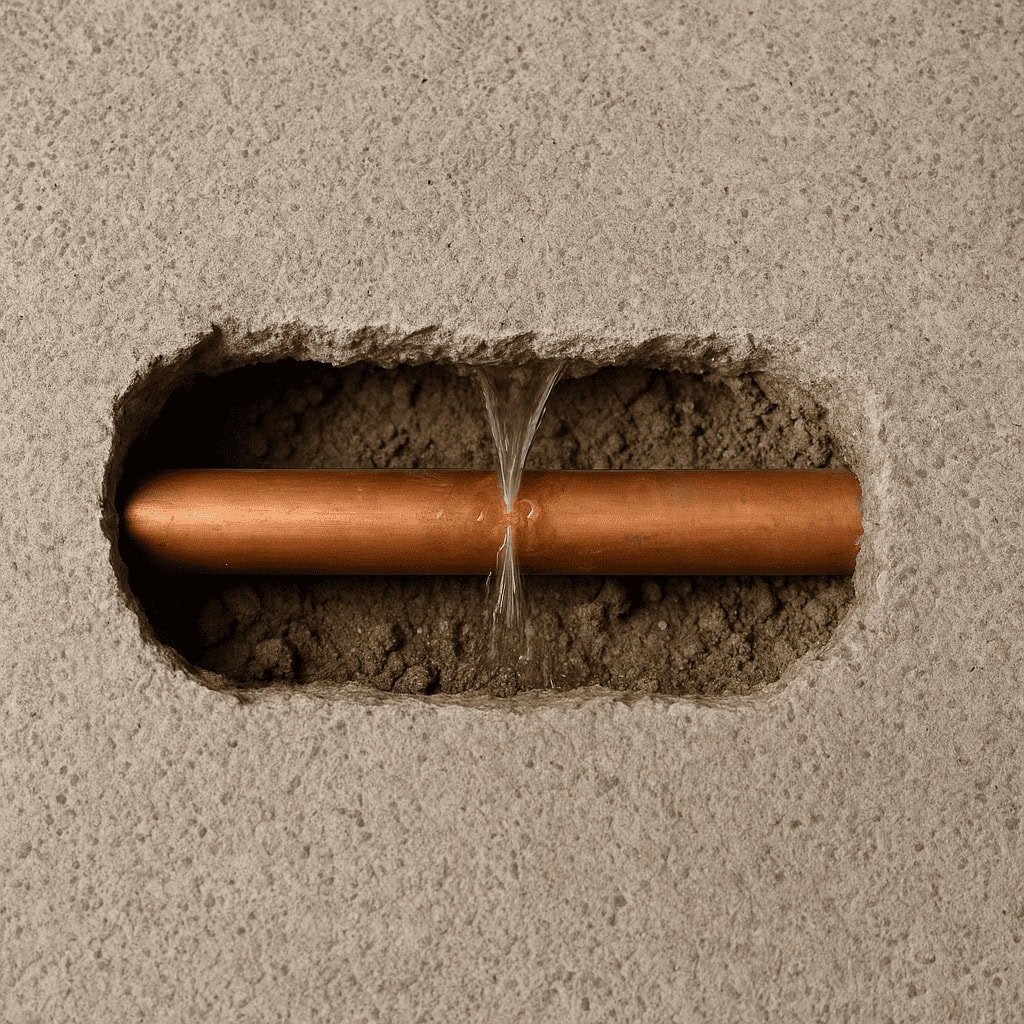
If you’ve noticed a wet area on your concrete floor that never seems to dry out completely, it can be frustrating. You wipe it up, improve ventilation, and perhaps even leave the heating on, yet the same patch continues to reappear.
In properties built on a solid concrete floor or screed, persistent dampness often suggests moisture is reaching the surface from below rather than being caused by a spill or everyday condensation.
The important question is why that particular area remains wet while the rest of the floor stays dry.
Why a concrete floor may never fully dry
A concrete floor should normally dry once the source of moisture has been removed. If one area remains damp day after day, it often indicates an ongoing supply of moisture rather than a temporary event.
This can happen when:
- Moisture is continually feeding the surface from beneath the slab
- A hidden leak is supplying water below the floor
- The ground beneath the concrete remains saturated
- Water is slowly working its way through the floor structure
Instead of drying naturally, the same area simply becomes damp again because the moisture source has not stopped.
What persistent dampness beneath the floor could indicate
If one area of floor never fully dries, it may suggest:
- Water is present beneath the concrete slab
- A hidden pipe is leaking below the floor
- The subfloor is remaining saturated over time
- Moisture is continuously reaching the surface
The fact that the damp patch never completely disappears is often one of the strongest clues that the moisture source remains active.
Why the damp area is usually localised
Most persistent damp patches affect one particular section of floor rather than the whole room.
This can suggest:
- A localised source of moisture beneath that area
- Water escaping from buried pipework
- Conditions allowing moisture to reach the surface in one location
- A hidden beneath-slab leak affecting a specific section of floor
The location of the damp patch often helps narrow down where further investigation should begin.
What homeowners often assume
It’s common to believe the dampness is being caused by:
- A spill that has soaked into the floor
- Condensation caused by temperature changes
- General humidity within the property
- Slow drying after cleaning
While these situations can leave a floor temporarily damp, they rarely explain a patch that continually returns or never fully dries in exactly the same place.
Why persistent dampness should not be ignored
A wet area that remains damp for days or weeks can indicate an ongoing moisture problem beneath the floor.
If left unresolved, this can eventually lead to:
- Increasing saturation beneath the slab
- Damage to flooring materials or finishes
- Musty odours developing indoors
- More extensive repairs if the leak continues
The longer moisture remains beneath the floor, the greater the likelihood of further damage developing.
How The Leak Hunter investigates wet concrete floors
The Leak Hunter specialises in locating hidden leaks beneath concrete floors using non-invasive leak detection methods designed specifically for beneath-slab pipework and buried leaks.
Rather than repeatedly drying the floor or replacing floor finishes, we identify whether a hidden leak is supplying the moisture and accurately trace its source before repairs begin.
Learn more here: how we find concrete floor leaks.
Why the wet patch is only part of the story
The damp area you see is usually just the point where moisture finally becomes visible.
In reality:
- The leak may be some distance beneath the slab
- Water may spread below the floor before reaching the surface
- The visible damp patch is often the symptom rather than the source
This is why accurate leak detection is essential before attempting repairs or replacing flooring.
What happens once the cause is confirmed
Once The Leak Hunter identifies the source, repairs can be planned accurately and with minimal unnecessary disruption.
This may involve:
- Accessing only the required section of floor
- Repairing or replacing the affected pipework
- Pressure testing after repair
- Restoring the area once the issue has been resolved
Final thoughts
If a wet area on your concrete floor never fully dries, it’s worth investigating what may be happening beneath the surface rather than continually treating the symptoms.
In properties with solid floors, persistent damp patches can indicate hidden moisture or a beneath-slab leak that requires specialist investigation.
The Leak Hunter will accurately locate the source, confirm the cause, and carry out the correct repair without unnecessary disruption or guesswork.
To learn more, visit concrete floor leak detection.
Frequently asked questions
Why won’t my concrete floor dry?
If the same area stays wet despite drying attempts, it may indicate moisture is continually reaching the surface from beneath the slab.
Does a permanently damp floor always mean there’s a leak?
Not always, but persistent dampness in one location should be investigated properly to confirm the cause.
Should I keep drying the floor or have it investigated?
If the damp patch continually returns or never fully dries, identifying the underlying cause is usually more effective than repeatedly treating the surface.
Do you only cover my area?
If you’re outside these areas, don’t worry — our team covers most of the South East, providing trusted leak detection services throughout London, Kent, Sussex, and Surrey.