

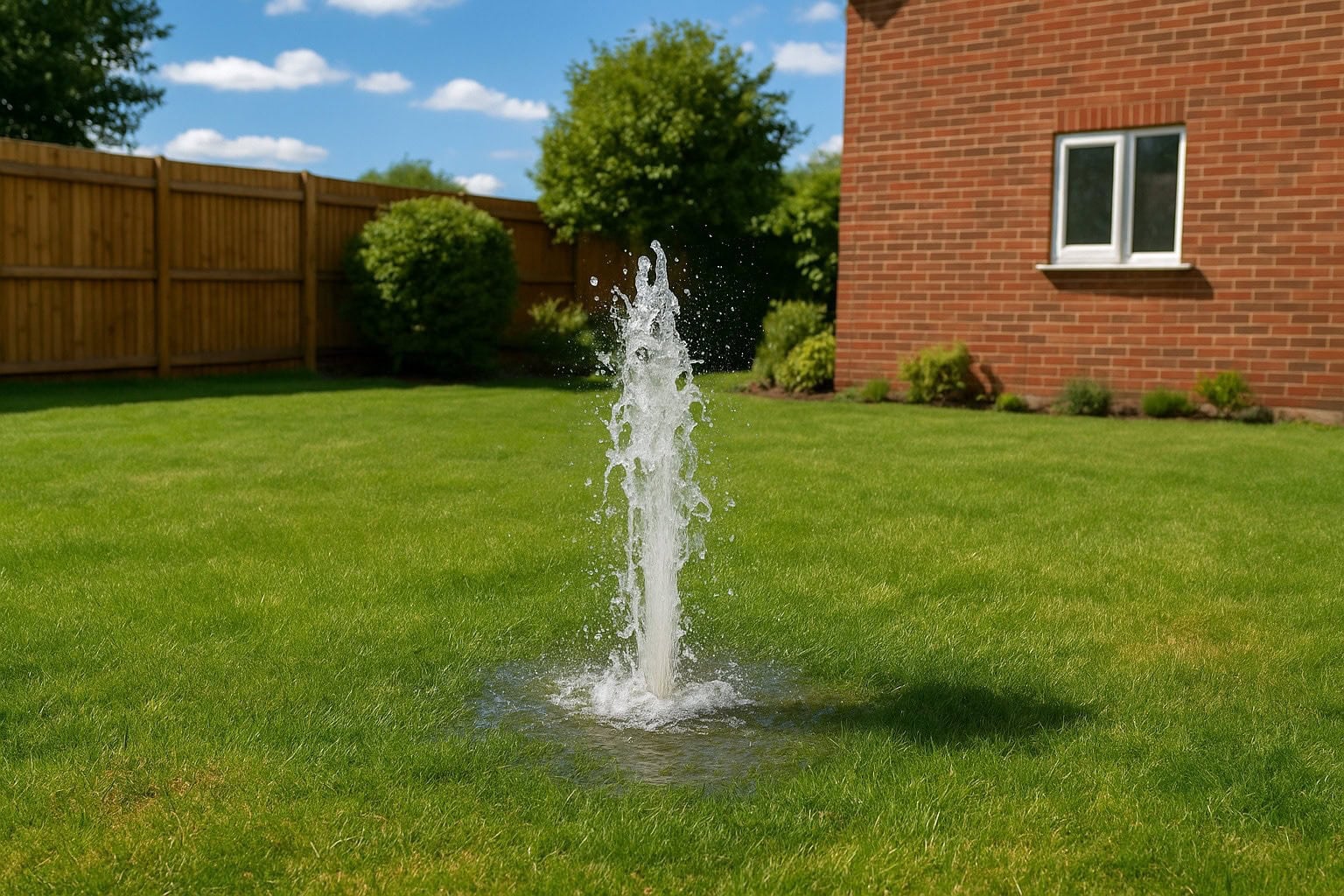
If a section of ground around your property never seems to fully dry out, even during warm or dry weather, it can start to feel unusual. At first, it may be easy to dismiss — but when the same area stays consistently damp, it often points to something more persistent beneath the surface.
This is a common sign of a potential ongoing underground leak.
The key is understanding whether the moisture is temporary — or being continuously fed from below.
Why ground should naturally dry out
Under normal conditions, soil absorbs water and then gradually releases it through evaporation and drainage.
This means:
- Wet areas should reduce over time
- The ground should return to a stable condition
- Moisture should not remain constant without cause
When this natural cycle doesn’t happen, it suggests an ongoing source of water.
If you want to understand how underground leaks behave, see underground leaks explained.
What causes persistent damp ground
When the ground never fully dries, it often means water is continuously entering the soil.
This can happen when:
- A pipe below ground is allowing water to escape
- The surrounding soil remains saturated due to ongoing flow
- Moisture is being replenished faster than it can drain or evaporate
This creates a steady state of dampness rather than a temporary condition.
Why it’s usually confined to one area
Persistent dampness is often localised rather than spread across the entire garden.
This typically indicates:
- A specific underground source affecting that section
- A consistent leak feeding moisture into one area
- Ground conditions that allow water to collect there
The consistency of the location is often a key clue.
What homeowners often assume
It’s common to think the issue is caused by:
- Shaded areas drying more slowly
- Poor drainage in one part of the garden
- Residual moisture from previous weather
While these can affect drying times, they don’t usually prevent the ground from drying altogether over extended periods.
Why this can develop into a bigger issue
Ongoing moisture may not seem urgent at first, but it can lead to:
- Increasing saturation of the surrounding ground
- Soft or unstable areas forming over time
- More extensive repair work if the underlying cause continues
What starts as persistent dampness can gradually worsen if left unresolved.
How The Leak Hunter approaches this
The Leak Hunter will confirm whether the persistent damp ground is being caused by an underground leak and pinpoint the exact source without unnecessary excavation.
This allows the issue to be clearly understood before any repair work begins.
To see how this works, visit how we find underground leaks.
Why the visible area may not be the source
The damp patch you see is not always directly above the leak.
In reality:
- Water can move through the soil before settling
- The source may be deeper or slightly offset
- The surface only reflects where moisture accumulates
This is why accurate detection is essential.
What happens once the cause is confirmed
Once the source is identified, the repair can be planned in a controlled and targeted way.
This may involve:
- Accessing the pipe at the correct location
- Repairing or replacing the affected section
- Restoring the ground once the work is complete
You can read more about this stage here: what happens after an underground leak is found.
Final thoughts
If the ground around your property never fully dries out, it’s worth investigating further.
The issue may not be environmental — it could be a sign of a continuous underground problem.
The Leak Hunter will confirm the cause, locate the source accurately, and carry out the right repair — ensuring the problem is resolved without unnecessary disruption.
To see how we investigate and resolve underground leaks, visit underground leak detection.
Frequently asked questions
Do you only cover my area?
If you’re outside these areas, don’t worry — our team covers most of the South East, providing trusted leak detection services throughout London, Kent, Sussex, and Surrey.
Is slow drying always a problem?
Not always, but if the ground never dries out, it’s worth investigating.
Can this happen without visible water?
Yes. The ground can remain saturated without pooling water appearing.
Will it get worse over time?
It can. Continuous moisture can gradually affect a larger area.