

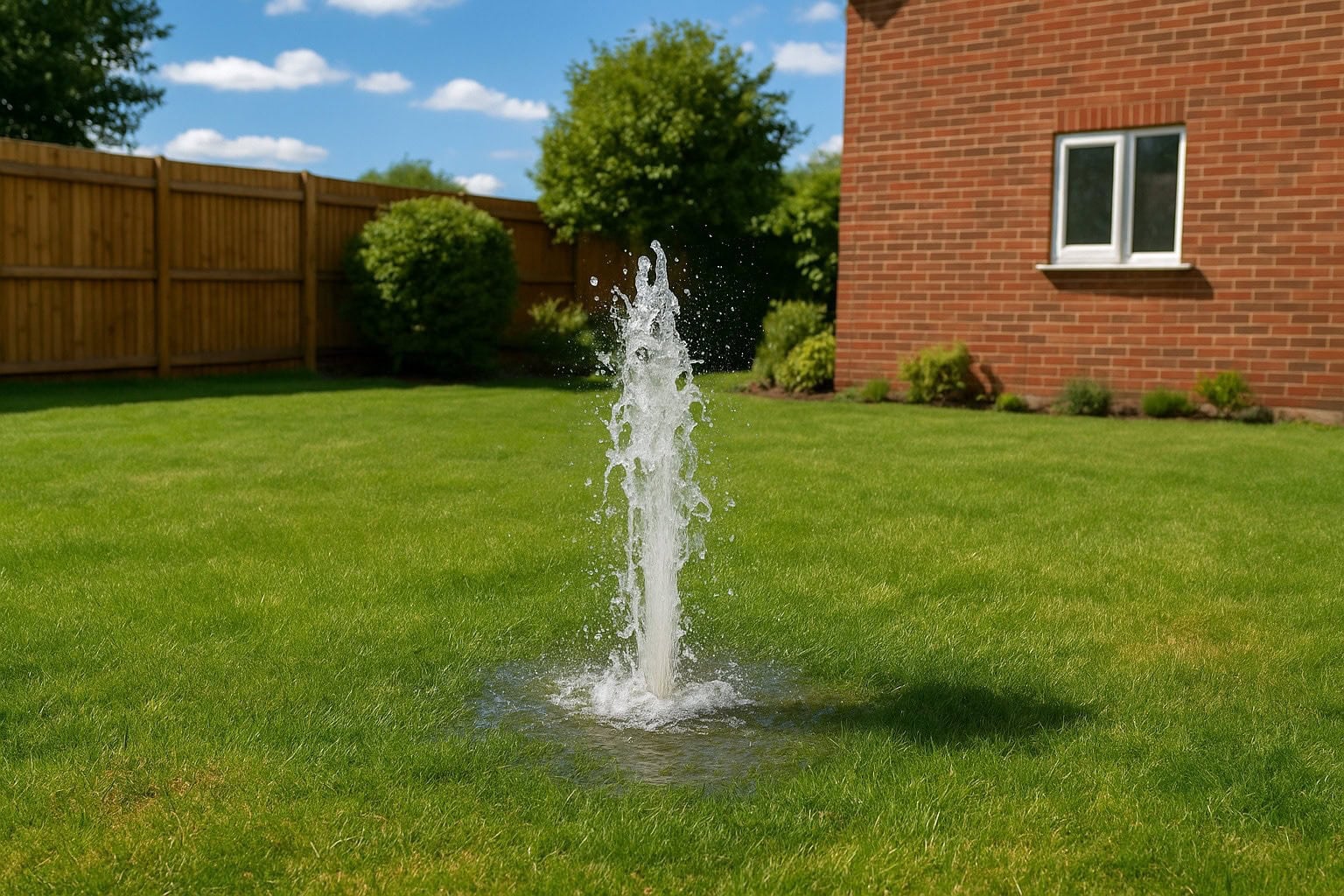
If you’ve spotted a wet patch in your garden but everything else seems fine, it can be tempting to leave it alone. There’s no visible damage, no disruption, and nothing that feels urgent.
At this stage, it often feels like something to keep an eye on rather than act on.
But in many cases, early signs like this are where problems begin — not where they end.
Why a small wet patch can appear harmless
When there’s no visible damage, it’s natural to assume the issue is minor.
This is especially true if:
- The area is small and contained
- The ground still feels relatively stable
- There are no obvious changes over time
At this stage, the issue can feel more cosmetic than structural.
If you want to understand how underground leaks develop over time, see underground leaks explained.
What a wet patch usually indicates
Even without visible damage, a wet patch often means that water is present below the surface.
This can happen when:
- A small leak is allowing water to escape into the soil
- The ground is becoming gradually saturated
- Moisture is building up without yet affecting the surface significantly
The absence of damage doesn’t mean the absence of a cause.
Why problems often start this way
Many underground issues begin subtly.
At first:
- The affected area is small
- The impact on the ground is minimal
- The signs are easy to overlook
Over time, however, these early signs can develop into more noticeable problems.
What happens if you leave it alone
In some cases, a wet patch may not change immediately.
But if it’s being caused by an ongoing issue, it can lead to:
- Gradual expansion of the affected area
- Softening of the ground beneath the surface
- More visible changes appearing later
The key risk is that the problem develops quietly rather than suddenly.
Why early investigation can help
At this stage, the situation is often easier to assess and resolve.
Confirming the cause early can:
- Prevent unnecessary escalation
- Reduce disruption if repairs are needed
- Provide clarity instead of ongoing uncertainty
It allows you to move from “watching it” to understanding it.
How The Leak Hunter approaches this
The Leak Hunter will determine whether the wet patch is being caused by an underground leak and pinpoint the exact source without unnecessary digging.
This ensures the issue is clearly understood before any repair work begins.
To see how this works, visit how we find underground leaks.
Why the lack of damage can be misleading
The absence of visible impact often gives a false sense of reassurance.
In reality:
- The issue may still be developing below the surface
- The ground may not yet show the full effect
- The visible signs may lag behind the underlying cause
This is why early-stage issues can be easy to underestimate.
What happens once the cause is confirmed
Once the source is identified, the repair can be planned in a controlled and targeted way.
This may involve:
- Accessing the pipe at the correct location
- Repairing or replacing the affected section
- Restoring the area once the work is complete
You can read more about this stage here: what happens after an underground leak is found.
Final thoughts
If you have a wet patch in the garden but no visible damage yet, it’s worth considering what might be happening below the surface.
Early signs are often the easiest point to act — before the issue becomes more noticeable.
The Leak Hunter will confirm the cause, locate the source accurately, and carry out the right repair — ensuring the problem is resolved without unnecessary disruption.
To see how we investigate and resolve underground leaks, visit underground leak detection.
Frequently asked questions
Do you only cover my area?
If you’re outside these areas, don’t worry — our team covers most of the South East, providing trusted leak detection services throughout London, Kent, Sussex, and Surrey.
Is it safe to leave a small wet patch?
It may not cause immediate problems, but it’s worth confirming the cause to avoid future issues.
Does no damage mean no leak?
No. Early-stage leaks may not cause visible damage straight away.
Should I monitor it first?
You can monitor it, but if it remains or grows, it’s best to investigate.