

Many homeowners only start thinking about their underground water supply pipe once a leak, pressure problem, or water company warning appears.
One of the first questions that often follows is:
“What type of supply pipe do I actually have?”
The answer can matter more than many people realise.
The material, age, and condition of a supply pipe can affect:
- how likely leaks are to occur
- whether repairs are practical
- future reliability
- water quality considerations
- whether replacement may eventually become sensible
In many cases, the age and type of property can provide useful clues about the type of underground supply pipe likely to be present.
Understanding the likely pipe material can also help explain why some leaks are relatively straightforward to repair while others may require more extensive investigation or replacement planning.
Lead Supply Pipes
Lead supply pipes were widely used in older UK properties for many decades.
Although installation reduced significantly after the 1970s, some older homes may still contain lead supply pipes today.
Most commonly found in
- Victorian houses
- Edwardian houses
- 1930s properties
- older terraces and cottages
- period properties with older plumbing systems
Typical era
- pre-1970s properties
What lead pipe often looks like near the stopcock
- dull grey metal
- soft-looking pipework
- slightly swollen appearance before joints
- rounded bends rather than formed fittings
- scratches easily compared to steel or copper
One of the most recognisable signs is the slightly enlarged “bulb” or swell before older wiped lead joints near fittings or stopcocks.
Typical lifespan and reliability
Some lead supply pipes have remained in service for many decades. However, age, historic repairs, and joint deterioration can eventually make leaks and flow issues more likely.
Common issues
- age-related deterioration
- joint failures
- restricted flow
- water quality concerns
- older repair history
Where lead supply pipes are still present, homeowners sometimes choose replacement for long-term reliability and drinking water quality reasons.
MDPE Water Supply Pipes
MDPE (Medium Density Polyethylene) is one of the most common modern underground water supply pipe materials used today.
These systems are generally very durable and resistant to corrosion.
Most commonly found in
- modern detached homes
- new-build estates
- modern extensions
- recently renovated properties
- replacement supply pipe systems
Typical era
- roughly late 1980s onwards
What MDPE pipe often looks like near the stopcock
- usually blue plastic pipe
- smooth outer surface
- compression fittings at joints
- clean modern appearance
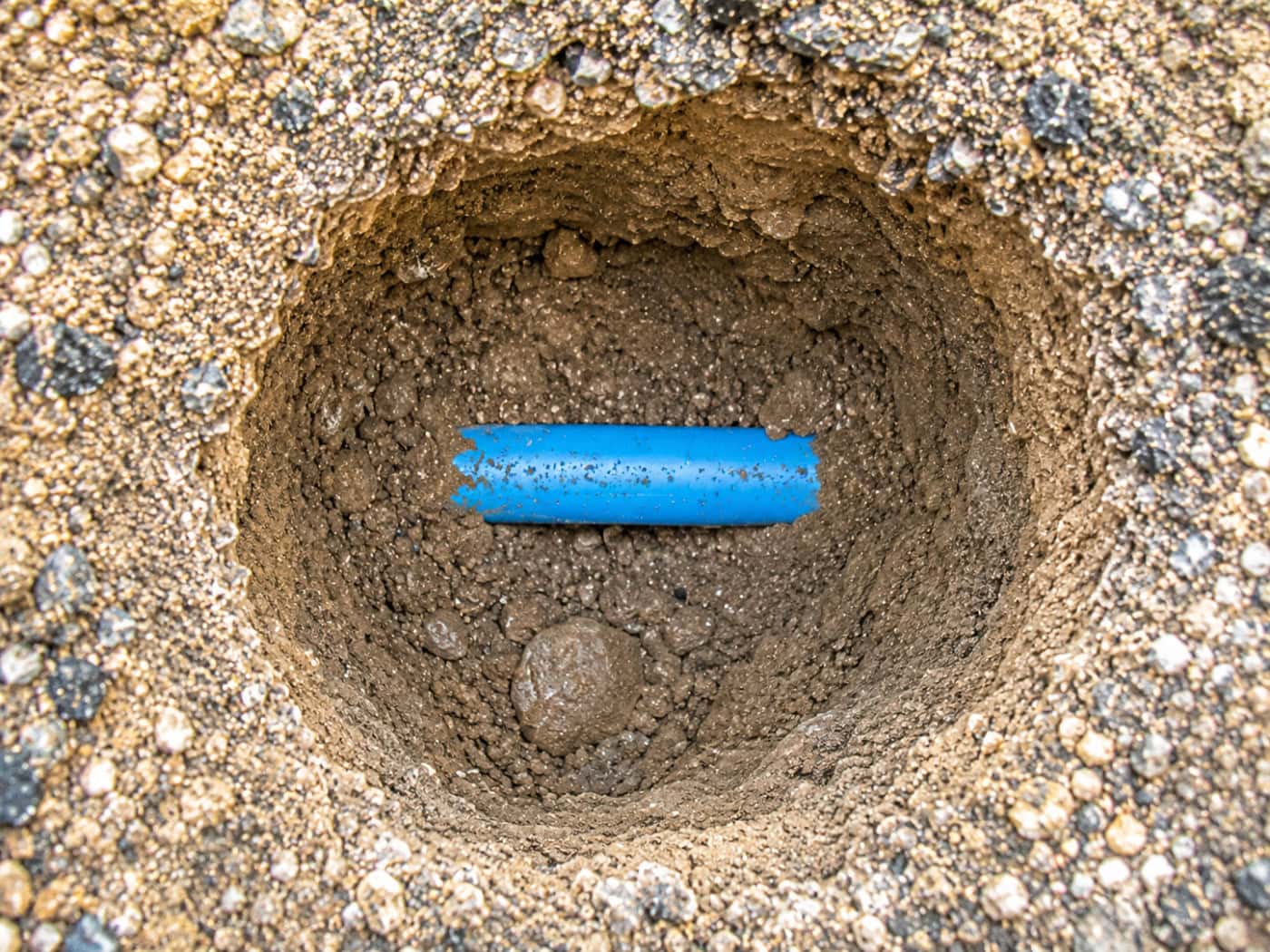
Blue MDPE pipe is now one of the most recognisable modern water supply materials in the UK.
Typical lifespan and reliability
MDPE systems are generally designed for long service life and can often remain reliable for 50 years or more when installed correctly.
Common issues
- joint failures
- accidental damage
- ground movement affecting fittings
- isolated connection leaks
In many cases, leaks on MDPE systems are isolated rather than widespread, making targeted repair a very viable option once the exact leak location has been identified properly.
LDPE Water Supply Pipes
LDPE (Low Density Polyethylene) pipework was commonly used before MDPE became standard.
Older LDPE systems are also sometimes referred to as “alkathene” pipework, particularly on older UK plumbing installations.
Many of these systems still perform well today, although older pipework can sometimes become more brittle with age.
Most commonly found in
- 1970s and 1980s housing
- suburban family homes
- properties updated during the late 20th century
Typical era
- 1960s to 1980s
What LDPE pipe often looks like near the stopcock
- usually black plastic pipe
- slightly softer appearance than MDPE
- older compression fittings
- sometimes wider wall thickness
Black plastic incoming pipework is often an indicator of older LDPE systems.
Typical lifespan and reliability
Many LDPE systems have remained serviceable for decades. However, some older installations may now be approaching the stage where age-related brittleness becomes more common.
Common issues
- aging fittings
- joint movement
- pipe brittleness developing over time
- isolated weak points
- damage from previous excavation works
Many LDPE leaks are still localised and suitable for repair. However, older LDPE systems can sometimes become more brittle with age, particularly where pipework has experienced movement, stress, or previous disturbance underground.
Galvanised or Mild Steel Supply Pipes
Some older properties and flats may still contain galvanised steel or mild steel supply pipes.
These systems were often used where rigid pipework was preferred or where pipe movement was expected to be limited.
Most commonly found in
- older flats
- apartment blocks
- some mid-century developments
- older commercial or converted buildings
Typical era
- 1930s to 1960s
What steel pipe often looks like near the stopcock
- dark metallic appearance
- threaded joints
- heavier industrial appearance
- visible corrosion or rusting
- magnetic metal pipework
Typical lifespan and reliability
Steel pipe systems can remain functional for many years, but internal corrosion and flow restriction often become more likely as the pipe ages.
Common issues
- internal corrosion
- reduced water flow
- rust-related deterioration
- threaded joint failures
- age-related weakening
Where steel pipe systems begin deteriorating internally, replacement may sometimes become more practical than repeated repair.
Copper Supply Pipes
Copper pipework is more commonly seen internally, but some underground supply sections may also be copper.
Most commonly found in
- mid-century homes
- updated plumbing systems
- properties with partial supply upgrades
Typical era
- 1950s onwards
What copper pipe often looks like near the stopcock
- copper or brown metallic colour
- smooth formed pipework
- soldered or compression fittings
- may darken with age
Typical lifespan and reliability
Copper pipework can remain reliable for many years, although localised pinhole leaks or fitting failures can still develop over time.
Common issues
- pinhole leaks
- joint failures
- damage from movement
- wear at fittings
Shared Supply Pipes in Flats and Older Conversions
Some flats, maisonettes, and converted properties may also have shared supply arrangements.
These systems can sometimes be more complicated to investigate because multiple properties may connect into sections of shared underground pipework.
In some older developments, steel or older metallic systems may still be present where rigid pipework was historically preferred.
Accurately identifying the pipe material and leak location is often especially important in these situations before major repair or replacement decisions are made.
Why Pipe Material Matters During Leak Detection
Different supply pipe materials behave differently underground.
Some materials are more prone to:
- joint movement
- corrosion
- ground movement damage
- internal deterioration
- repeated failures
Other systems may remain structurally sound for decades with only isolated repair issues.
This is one reason professional diagnosis is so important before deciding whether repair or full replacement is genuinely necessary.
Accurately identifying the pipe material and narrowing down the exact leak location can often help homeowners avoid unnecessary disruption or replacement work where a targeted repair may still be viable.
Why Specialist Mains Water Leak Detection Matters
Professional non-invasive mains water leak detection focuses on accurately locating concealed supply pipe leaks while also helping assess the likely condition of the surrounding pipework.
The Leak Hunter carries out specialist non-invasive mains water leak detection across concealed water systems and underground supply infrastructure.
As a WaterSafe Register registered company, we investigate hidden leaks using specialist diagnostic methods designed to identify the source accurately while minimising unnecessary disruption.
For many homeowners, understanding the pipe material and overall condition first can make later repair or replacement decisions much clearer and more cost-effective.
You can learn more about professional mains water leak detection and how concealed supply pipe leaks are professionally traced before repair decisions are made.
Frequently Asked Questions
How can I tell if I have a lead water supply pipe?
Lead pipes are usually dull grey, softer-looking, and often have swollen wiped joints near fittings or stopcocks.
What colour is modern MDPE water pipe?
Modern MDPE underground water supply pipe is usually blue.
What colour is older LDPE water pipe?
Older LDPE systems are commonly black plastic pipework and are sometimes referred to as alkathene pipe.
Are lead supply pipes more likely to need replacement?
In many situations, yes. Older lead systems may have age-related deterioration, water quality concerns, or repeated repair history.
Can modern plastic supply pipes usually be repaired?
Often yes. Many modern MDPE and LDPE leaks are isolated faults occurring at joints or fittings rather than widespread pipe failure.