

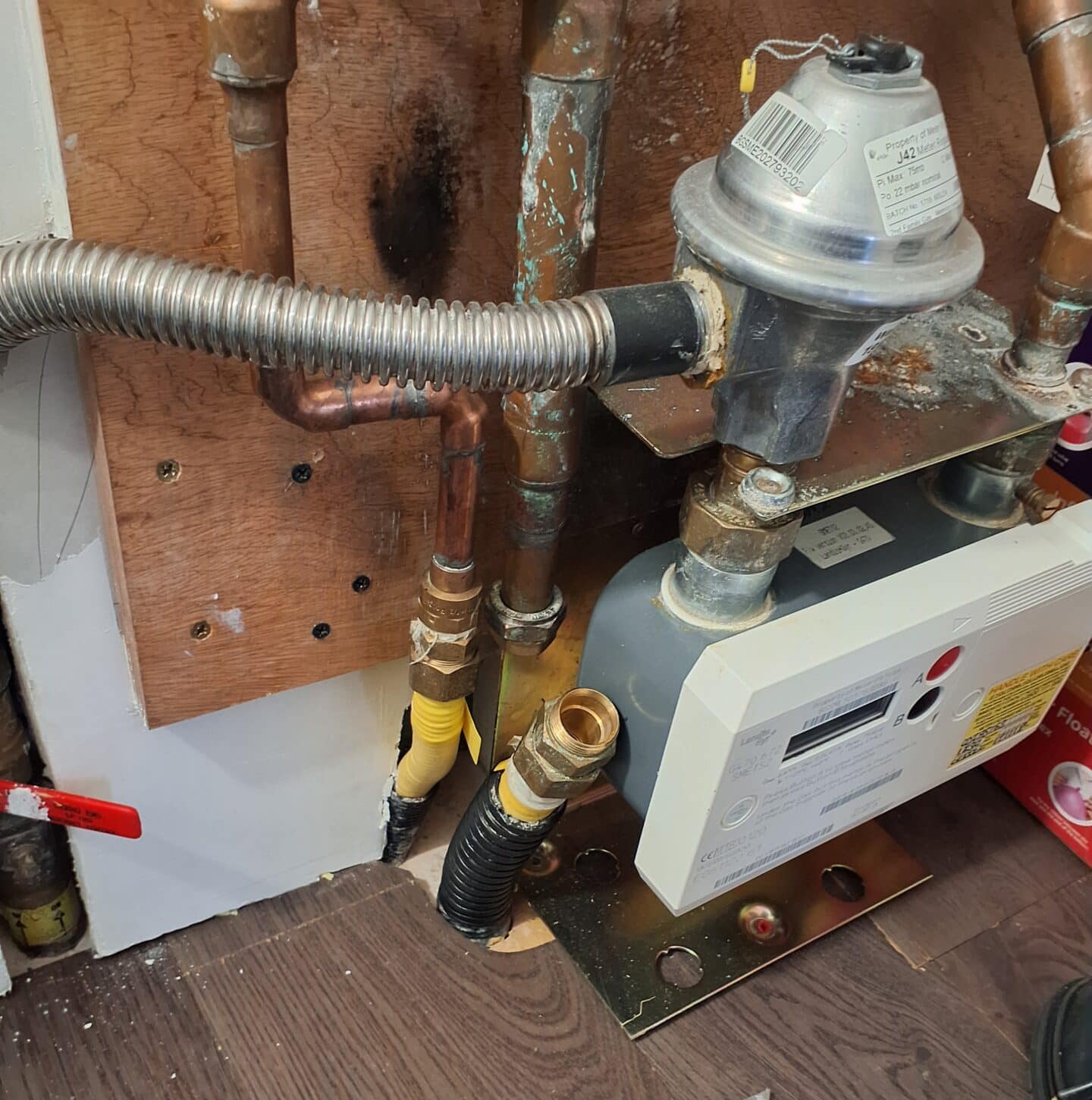
If you’ve had a visit from the Gas Emergency Service and your supply has been capped due to a leak, you’re not alone. This is increasingly common, particularly after smart meter installations or system testing where small pressure drops are identified.
Once the supply has been isolated, many homeowners are told the next step is to rerun new external pipework. While this is sometimes presented as the quickest solution, it is not always necessary.
In many cases, the leak can be located and repaired within the existing system without replacing the full pipe run.
What happens after your gas supply is capped
When a leak is identified, the priority is always safety. The emergency engineer will isolate the supply to remove any immediate risk.
However, they do not usually locate or repair the exact source of the leak within the property. This leaves a key question unanswered — where is the fault, and does it actually require replacement?
This is where the next stage begins: confirming the exact location of the issue before any major decisions are made.
Do you always need new pipework?
No. A pipe rerun is one option, but it is not the only option.
Without proper investigation, leaks are often assumed to be unrepairable. In reality, many are localised and can be resolved without replacing the entire pipe run.
Leaks are commonly found in:
- Internal pipework beneath floors
- Joints or fittings within walls
- Specific sections affected by age, movement, or wear
Replacing all pipework without identifying the exact fault can lead to unnecessary cost and disruption.
For more info see our guides on what happens after a gas leak is found and gas capped off what next?
Why pipe reruns are often recommended
Pipe reruns are sometimes suggested because they are straightforward from a labour perspective. Rather than locating the leak, the entire affected section is replaced.
While this can resolve the issue, it may not be the most efficient or least disruptive solution.
How The Leak Hunter approaches the problem
At The Leak Hunter, we focus on identifying the exact source of the leak before recommending any form of replacement.
- Gas Safe registered engineers qualified to work on gas systems
- Non-invasive tracing methods to locate leaks precisely
- A repair-first approach wherever possible
This allows many homeowners to avoid unnecessary pipe reruns and restore their supply with minimal disruption.
What you should do next
If you suspect a gas leak or your supply has just been capped, always follow safety guidance first. Contact the National Gas Emergency Service and ensure the property has been made safe.
Once the system is isolated, the focus should shift to confirming the exact issue before agreeing to any major work.
If your gas supply has been capped and you want to avoid unnecessary pipe rerouting, our Gas Leak Detection service focuses on tracing confirmed leaks and resolving them accurately.