

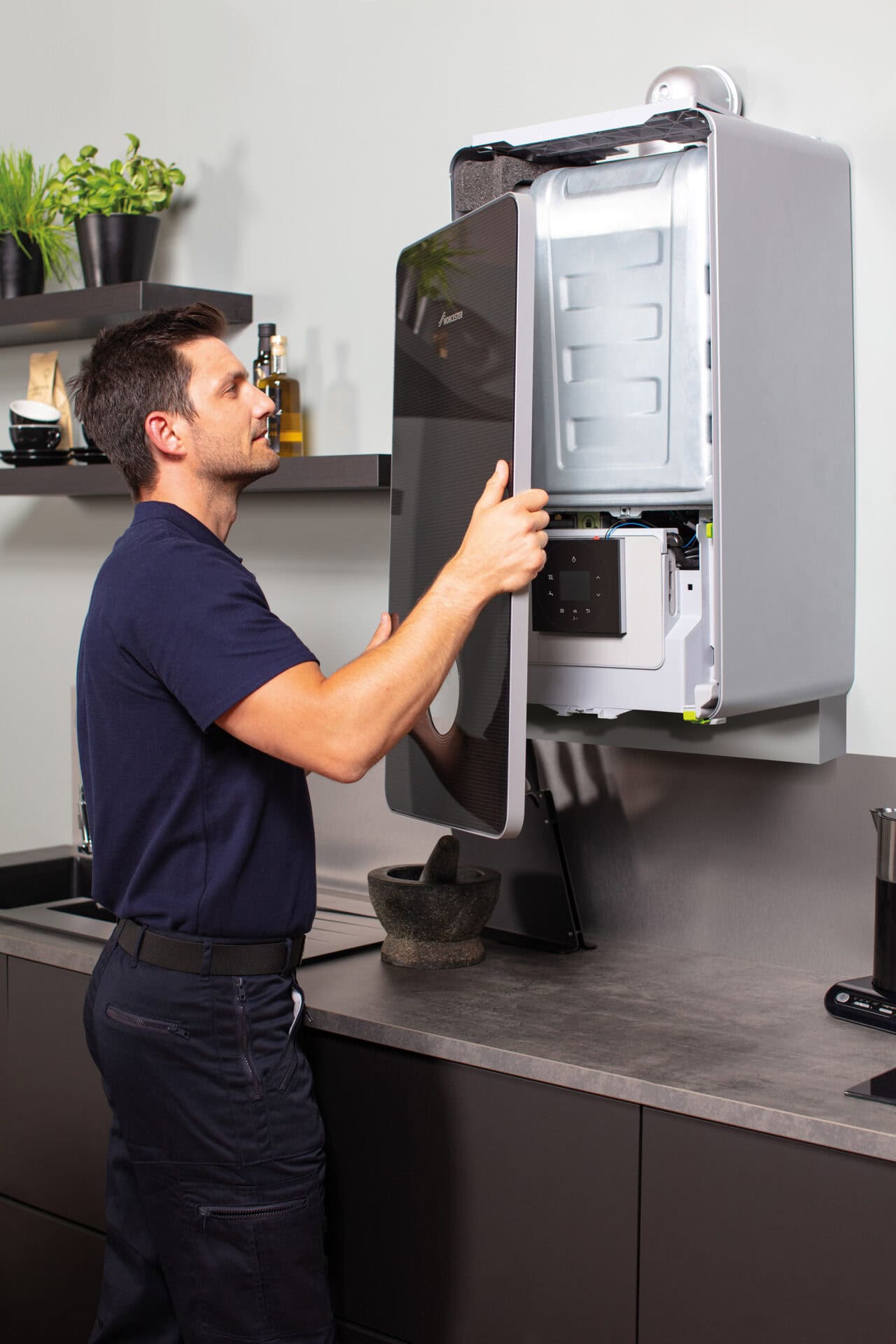
Many homeowners assume that having their boiler serviced means it has been fully checked, tested, and cleared of all potential problems — much like an MOT for a car. Recently, we’ve even heard a major national gas company describe a boiler service in a national advertising campaign as being “like an MOT”.
While that comparison sounds reassuring, it doesn’t quite hold up — and in reality, it can be a little misleading.
This guide explains what a boiler service actually covers, what it doesn’t, and why problems such as leaks and pressure loss can still develop even after a service has been completed.
What a Boiler Service Is Designed to Do
A standard boiler service is primarily focused on safety and basic operation, not a full system inspection.
During a typical service, a Gas Safe engineer will usually:
- Check that the boiler is burning gas safely
- Inspect key internal components
- Test the flue and ventilation
- Look for obvious signs of corrosion or damage
- Confirm the boiler is operating within safe parameters
This is important maintenance and should be done every year — but it has clear limits.
Why Comparing a Boiler Service to an MOT Is Misleading
An MOT is a legal pass-or-fail test carried out against strict standards. If a car fails, it must be repaired before it can be driven legally.
A boiler service doesn’t work like that.
A boiler can be serviced and left running even if:
- A small leak is developing elsewhere in the system
- Pressure is being lost slowly
- Pipework under floors is deteriorating
- Problems exist outside the boiler casing
In other words, a boiler service is not a certification that everything connected to your heating system is fault-free.
Common Problems a Boiler Service May Miss
Hidden Leaks
Leaks under concrete floors, behind walls, or in ceilings are often invisible. A standard service doesn’t include specialist leak detection equipment.
Boiler Pressure Loss
If pressure has recently been topped up, a slow leak may not be obvious during a short service visit.
Central Heating Pipework Issues
Pipework runs throughout your property. A boiler service focuses on the appliance itself — not the entire heating circuit.
Early-Stage Faults
Some faults only appear as the system heats and cools over time, not during a single inspection.
Why This Matters for Homeowners
Many homeowners understandably think:
“The boiler was serviced recently, so everything must be fine.”
Then weeks later, they notice:
- Boiler pressure dropping
- Radiators not heating evenly
- Damp patches appearing
- Repeated need to top up the system
These issues often point to leaks or system problems, not boiler failure.
When a Boiler Service Isn’t Enough
A boiler service alone may not be enough if:
- You’re topping up pressure regularly
- The boiler loses pressure overnight
- Damp or mould is appearing
- Your water bill has increased unexpectedly
- Radiators stay cold at the top
These are signs that further investigation is needed.
How The Leak Hunter Can Help
At The Leak Hunter, we specialise in identifying hidden leaks and heating system faults that a standard boiler service may not uncover.
Using non-invasive methods such as:
- Acoustic leak detection
- Thermal imaging
- Tracer gas testing
we locate problems accurately without unnecessary disruption — helping prevent repeated call-outs and costly damage.
Boiler Servicing Still Matters — Just Know Its Limits
Annual boiler servicing is essential for safety and efficiency. But it’s important to understand what it is — and what it isn’t.
A boiler service is maintenance, not an MOT.
Knowing the difference helps you act early when something doesn’t feel right, protecting both your heating system and your home.
For a full breakdown of causes and pressure behaviour, see our central heating leaks explained guide.
If your system is losing pressure or showing signs of a leak, it’s important to identify the cause rather than repeatedly topping it up. Our central heating leak detection service will locate the issue accurately,=.