

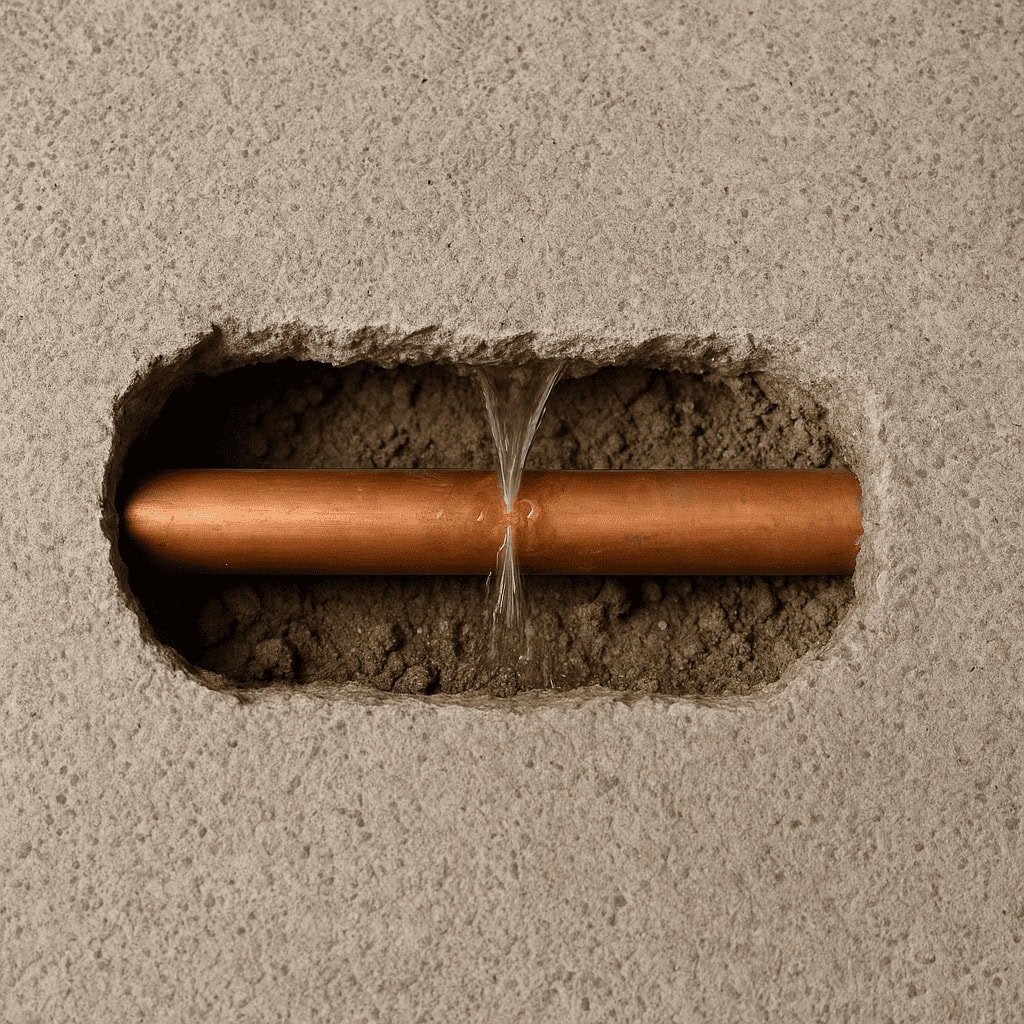
If you suspect a leak beneath your floor but can’t see any clear signs, it can feel confusing. You may check visible pipework, look for damp patches and still find nothing obvious, yet something suggests there could be a problem below the surface.
In properties with a solid floor (typically a concrete slab or screed), leaks often remain hidden for much longer because they occur beneath the slab rather than in visible pipework.
Locating them requires a different approach from finding an exposed plumbing leak.
Why leaks beneath concrete floors are difficult to find
Pipework buried beneath a concrete floor cannot be inspected in the same way as exposed pipework.
This means:
- The pipework is hidden beneath the floor.
- Water can escape without immediately reaching the surface.
- The visible symptoms may appear some distance from the actual leak.
- The source often remains concealed until specialist testing is carried out.
As a result, the location of the leak is rarely obvious from visual inspection alone.
Why visible signs don’t always appear immediately
One of the biggest challenges with beneath-slab leaks is that visible damage can take time to develop.
This happens because:
- The surrounding ground absorbs escaping water.
- The concrete slab slows moisture reaching the surface.
- Water can spread beneath the floor before becoming visible.
By the time a damp patch appears, the leak itself may have been present for some time.
Why the visible signs don’t always match the leak location
Even when signs become visible, they don’t necessarily identify where the pipe has failed.
Water beneath a concrete floor often follows the path of least resistance, meaning it can travel before reaching the surface.
- The leak may be several feet away from the damp patch.
- Moisture can spread beneath the slab before surfacing.
- Surface damage often reflects where water emerges rather than where it escaped.
This is why guessing the location can easily lead to unnecessary disruption.
What homeowners often try first
It’s perfectly understandable to carry out a few basic checks before calling a specialist.
Many homeowners begin by:
- Checking visible plumbing.
- Looking for damp patches.
- Monitoring water pressure or meter movement.
- Trying to identify where the water is appearing.
These checks can suggest that something is wrong, but they rarely identify the exact position of a hidden leak beneath a concrete floor.
Why specialist leak detection is often needed
Because the pipework is concealed, locating the leak accurately requires specialist equipment designed for beneath-slab investigations.
The aim is to:
- Confirm whether a leak is actually present.
- Pinpoint its location beneath the floor.
- Avoid unnecessary excavation.
- Ensure repairs are carried out in the correct place.
Learn more about the techniques we use on our how we find concrete floor leaks page.
Why guessing can become expensive
Breaking into the floor without accurately locating the leak first can result in unnecessary disruption and may still fail to expose the damaged section of pipe.
Confirming the location before repairs begin helps keep access as targeted as possible.
How The Leak Hunter approaches hidden concrete floor leaks
The Leak Hunter uses non-invasive leak detection methods to investigate beneath concrete floors, accurately locating hidden leaks before any repair work begins. This allows repairs to be planned around the confirmed location rather than assumptions.
Final thoughts
If you suspect a leak beneath your floor but can’t see where it’s coming from, remember that this is entirely normal with buried pipework beneath solid floors.
Accurately locating the source before carrying out repairs helps minimise unnecessary disruption and ensures the correct area is accessed.
To learn more about our concrete floor leak detection service, visit the main page.
Frequently asked questions
Why can’t I see the leak?
Leaks beneath concrete floors are concealed by the slab, so water can remain hidden before visible signs appear.
Can I locate the leak myself?
Basic checks may indicate that a problem exists, but accurately locating a concealed leak beneath a concrete floor usually requires specialist detection equipment.
Will the floor always need to be broken up?
Not necessarily. The aim of leak detection is to locate the source first so that any access required is as targeted and controlled as possible.