

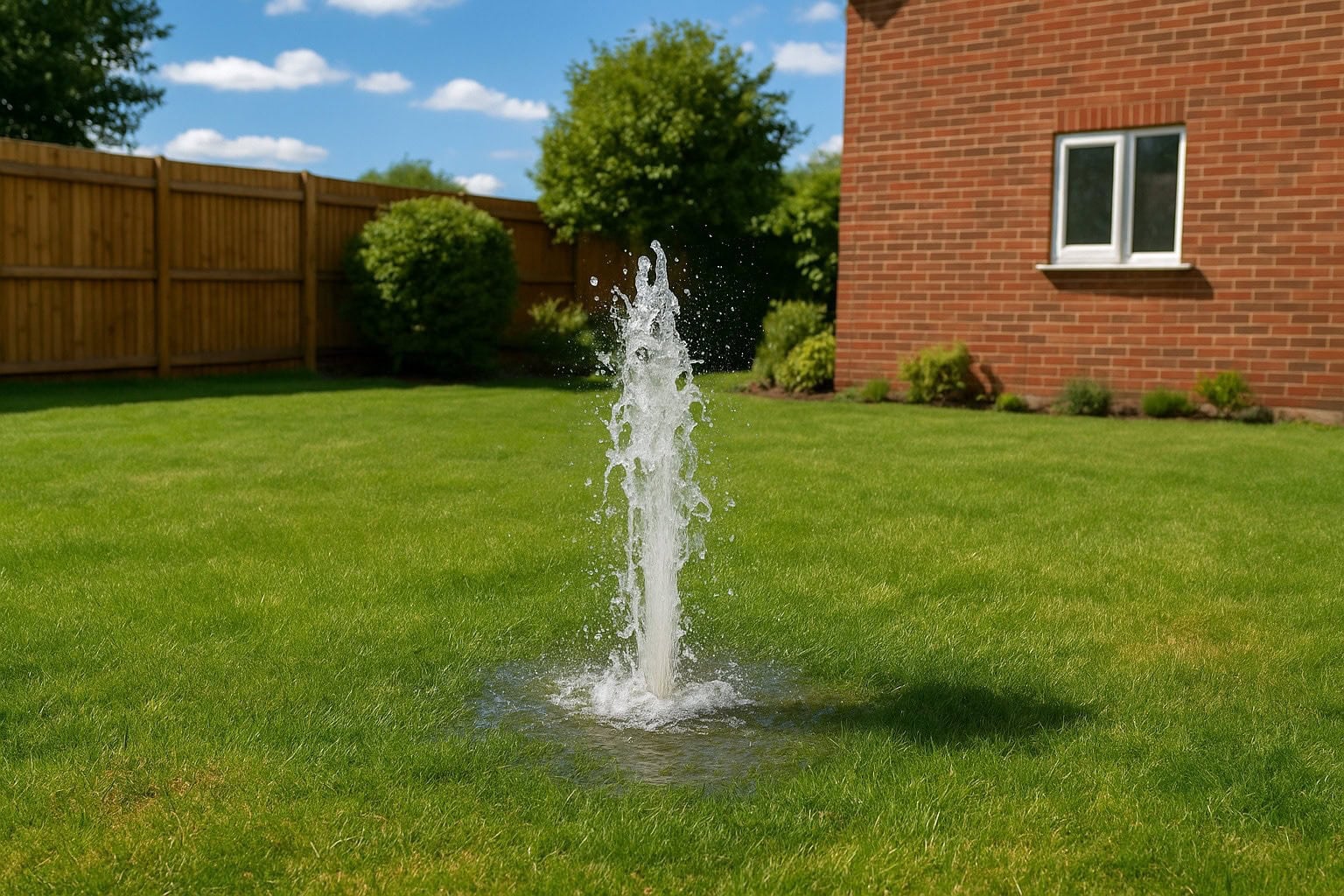
Underground leaks are among the most difficult problems for homeowners to identify without specialist tools. In many cases, attempts at finding underground water leaks fail because the signs are subtle and don’t behave like visible plumbing issues inside the home.
DIY checks can be useful for surface-level problems, but they often fall short when pipework is buried beneath soil, concrete, or hard landscaping.
Why underground leaks don’t behave like internal leaks
Most homeowners expect leaks to drip, pool, or cause immediate flooding. Underground leaks rarely do this.
Instead, water escaping below ground may:
- Disperse into surrounding soil
- Drain away naturally
- Surface far from the leak location
- Evaporate before becoming visible
This makes underground leaks much harder to identify using visual inspection alone.
The limits of common DIY checks
Homeowners often rely on surface-level checks that simply aren’t designed for underground pipework.
Checking for visible water
Looking for puddles or wet patches can help, but underground leaks often don’t create obvious pooling.
Inspecting indoor plumbing
Turning off taps and checking visible pipes may rule out internal leaks, but it doesn’t confirm where water is escaping outside or below ground.
Monitoring pressure changes
Pressure drops can indicate a leak, but they don’t reveal its location. Pressure can fluctuate for several reasons, leading to false conclusions.
Why underground leaks hide so well
Underground pipework is surrounded by soil that absorbs and redistributes water. As a result, leaks can remain active for long periods without leaving obvious surface signs.
Water may follow trenches, foundations, or drainage routes before appearing, making the source difficult to trace without proper equipment.
How DIY assumptions delay proper diagnosis
Because signs aren’t obvious, homeowners often assume:
- The issue is temporary
- The problem is condensation or damp
- The leak must be inside the house
These assumptions can delay investigation while damage continues unnoticed.
The risks of trial-and-error repairs
Without accurate location, DIY attempts can lead to unnecessary digging, lifting paving, or disturbing landscaping.
This can result in:
- Increased disruption
- Higher repair costs
- Damage to property features
- Failure to fix the actual leak
Guesswork rarely resolves underground issues effectively.
Why specialist detection methods are more reliable
Accurate underground leak detection relies on methods that can trace water escape below ground without excavation.
These techniques focus on:
- Listening for water movement
- Identifying pressure anomalies
- Tracking moisture patterns underground
This approach avoids unnecessary disruption and improves accuracy.
When DIY checks should stop
DIY checks may confirm that a leak exists, but they should stop when:
- The leak source remains unclear
- Signs persist or worsen
- Water bills continue to rise
- Pressure issues develop
At this point, further guessing often makes the problem worse.
Why early investigation saves time and money
The longer an underground leak remains active, the greater the potential damage. Early investigation limits:
- Soil erosion
- Foundation damage
- Moisture entering the building
- Overall repair costs
Accurate location allows repairs to be targeted and efficient.
The takeaway
Underground leaks are often missed during DIY checks because they don’t behave like visible plumbing issues. Water disperses below ground, signs appear indirectly, and surface inspections rarely reveal the source.
Recognising the limits of DIY checks and acting early helps prevent long-term damage and unnecessary disruption.