

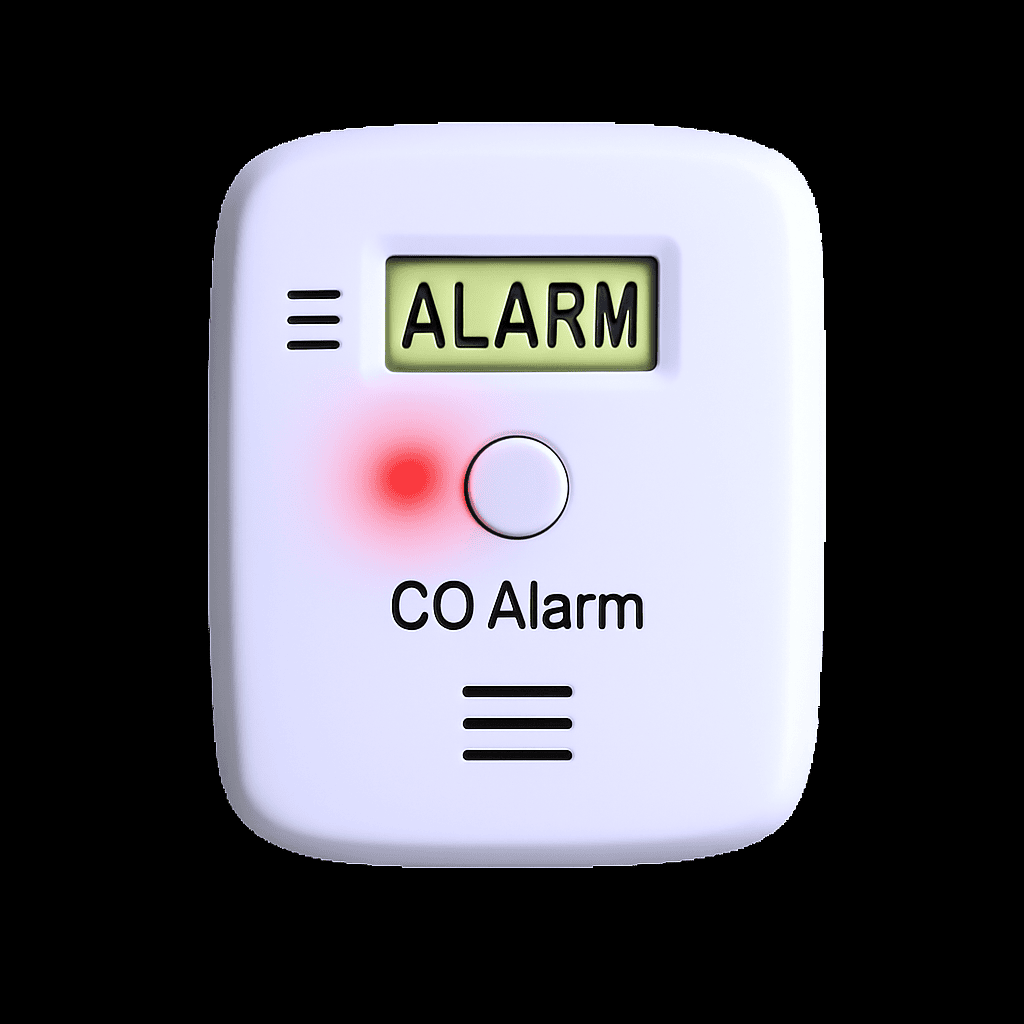
Protecting your home from both gas leaks and carbon monoxide requires understanding that they are two different risks, each needing the correct approach.
Carbon monoxide (CO) is a toxic gas produced by faulty or incomplete combustion. Natural gas (methane or LPG) is the fuel itself and becomes dangerous when it escapes from pipework or appliances.
Because of this, no single device covers both risks. Proper protection comes from having the right systems in place and knowing how to respond.
What you need for carbon monoxide safety
A working carbon monoxide alarm is essential in any property with fuel-burning appliances.
- Install CO alarms near boilers and living areas
- Test them regularly
- Replace batteries as required
These alarms provide early warning of carbon monoxide, which cannot be seen or smelt.
What you need for gas leak safety
Gas leaks are typically identified by smell, appliance issues, or during safety testing. Unlike carbon monoxide, they are not detected by CO alarms.
Gas safety relies on:
- Regular appliance servicing
- Maintaining pipework and fittings
- Recognising warning signs such as gas smells or pressure issues
If a leak is suspected, it must always be treated as a safety issue.
What to do if you suspect a gas leak
If you smell gas or believe there may be a leak, contact the National Gas Emergency Service immediately on 0800 111 999 and follow their safety advice.
Once the situation has been made safe and the gas supply has been turned off, the next step is to identify exactly where the fault is within the system.
For a detailed explanation of this stage, see how gas leaks are traced after isolation.
Why both risks need to be managed separately
Carbon monoxide alarms protect against poisoning from faulty appliances. Gas safety focuses on preventing leaks and managing fire or explosion risk.
Understanding the difference ensures the correct action is taken in each situation and prevents gaps in protection.
Professional follow-up after a gas leak
Once a gas leak has been confirmed and the system has been made safe, the issue needs to be properly investigated. This involves locating the exact source of the leak and assessing whether it can be repaired without unnecessary pipe replacement.
Our Gas Leak Detection service focuses on tracing confirmed leaks and resolving them accurately, helping avoid unnecessary disruption and pipe reruns.