

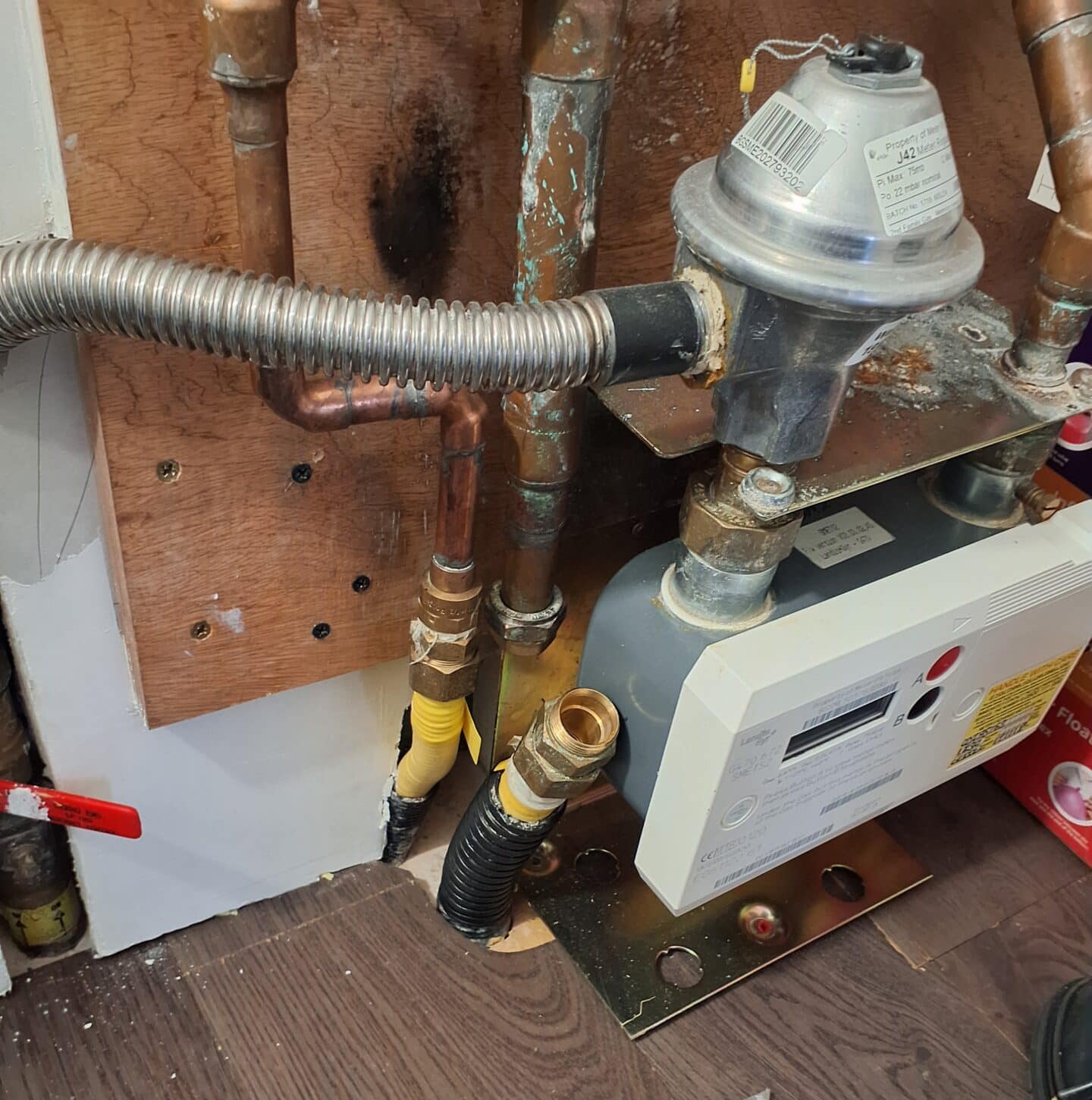
If you suspect a gas leak in the UK, call 0800 111 999 immediately.
The following guide is for awareness only and does not replace emergency action.
Gas leaks are a serious safety risk in any property. Knowing the warning signs can help you act quickly and reduce the risk of fire, explosion, or damage. In most homes, leaks involve natural gas (methane) or LPG, both of which require immediate attention if suspected.
Signs of a gas leak
The most common sign of a gas leak is smell. Natural gas is odourless, but a chemical is added to create a strong sulphur or “rotten egg” smell. LPG has a similar warning odour.
Other possible signs include:
- Hissing sounds near pipework or appliances
- Dead or dying plants near buried gas lines
- Unexplained increases in gas usage
Carbon monoxide is different and cannot be smelt, which is why alarms are essential for that specific risk.
How gas leaks are identified
In most cases, homeowners will only notice general warning signs rather than the exact source of a leak. Gas leaks are typically confirmed through professional testing rather than visual inspection.
Emergency engineers and gas networks use pressure testing and safety checks to confirm whether gas is escaping from the system. Once a leak is confirmed, the supply is often isolated or capped to remove immediate risk.
What to do if you suspect a gas leak
If you suspect a gas leak:
- Call 0800 111 999 immediately
- Do not use electrical switches or devices
- Open doors and windows if safe to do so
- Turn off the gas supply at the meter if safe
- Leave the property and follow safety advice
Only Gas Safe registered engineers are legally allowed to work on gas systems in the UK.
What happens after a leak is confirmed
Once a leak has been confirmed, the gas supply is usually turned off or capped. This makes the property safe, but it does not identify where the fault is within the system.
At this stage, the focus shifts from safety to diagnosis — locating the exact source of the leak so it can be properly repaired.
For a detailed explanation of this stage, see how gas leaks are traced after isolation.
Preventing future gas issues
- Have appliances checked regularly by Gas Safe engineers
- Install carbon monoxide alarms for combustion safety
- Do not ignore changes in smell or appliance performance
Conclusion
Recognising the signs of a gas leak is important, but safety must always come first. If you suspect a leak, act immediately and contact emergency services.
Once the property has been made safe and a leak has been confirmed, our Gas Leak Detection service focuses on accurately locating the source and resolving the issue without unnecessary disruption.