

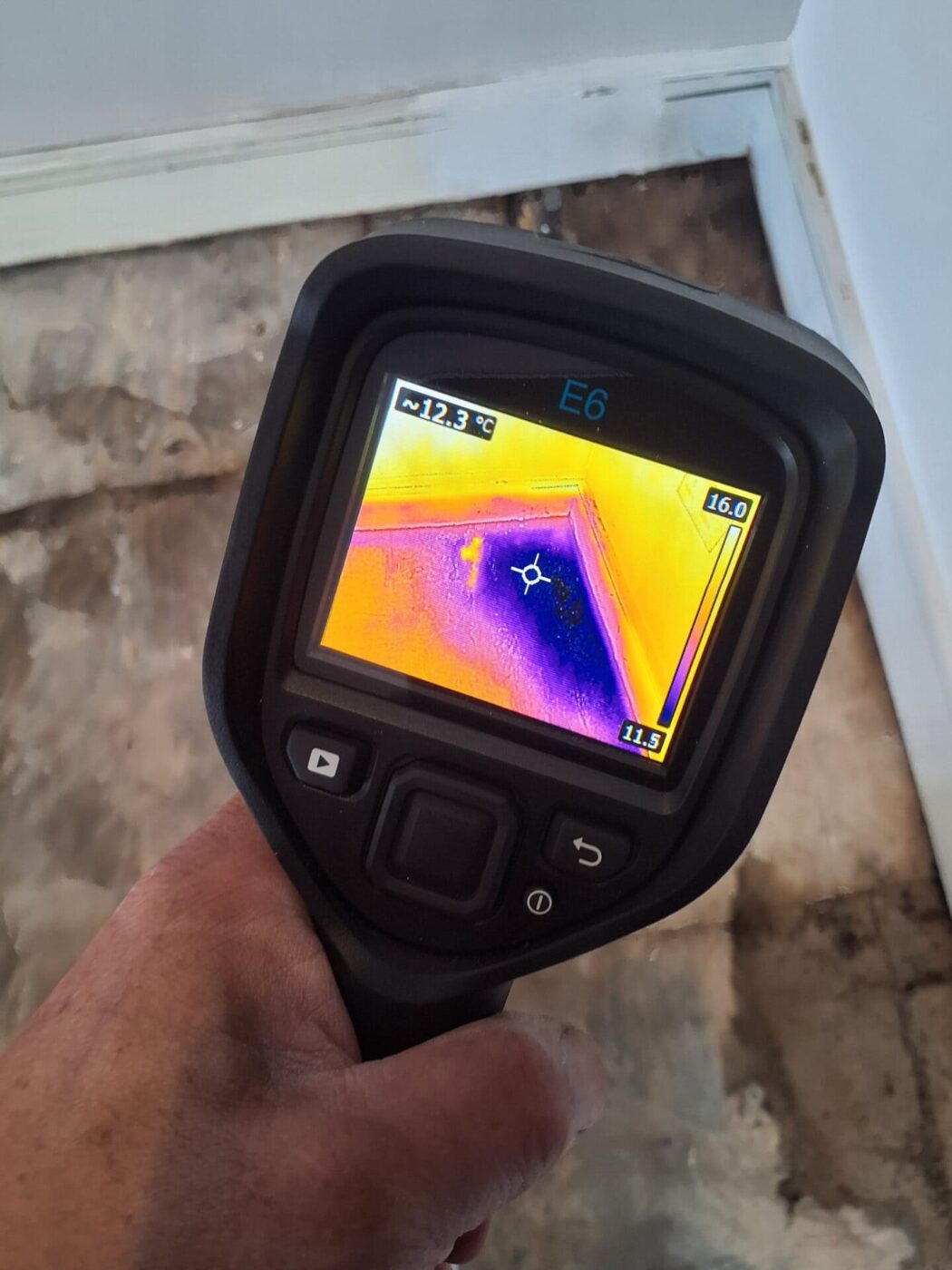
If your skirting board feels damp but the wall above it looks completely dry, it can be difficult to understand what’s going on. The mismatch between what you feel and what you see makes it harder to diagnose.
Dampness at the base of a wall often means moisture is coming from below or travelling through materials rather than appearing on the surface.
This is exactly the kind of issue our Leak Detection service is designed for. When symptoms don’t match what you expect, it’s important to trace the source properly rather than rely on assumptions.
This page explains what this usually means, why it happens, and what to do next.
What This Usually Means
If the skirting board is damp but the wall above is dry, it usually indicates that moisture is affecting the lower part of the structure. This could be from beneath the floor, within the wall base, or from a nearby hidden source.
Because the moisture hasn’t spread upward, the wall can still appear completely normal.
The lowest point is often where moisture becomes noticeable first.
Why This Happens
Water tends to settle and collect at lower levels. If moisture is entering from below or travelling through materials, it will often show first at the base of a wall rather than higher up.
This creates a situation where the skirting board is affected, but the wall above shows no signs yet.
Understanding where leaks typically occur helps explain why symptoms often appear in unexpected places.
The visible symptom is influenced by how moisture moves, not just where it starts.
How to Tell If This Is the Problem
- The skirting board feels damp to the touch
- The wall above appears dry and unaffected
- The dampness persists over time
- There is no obvious spill or visible source
- The issue is localised to one area
If this sounds familiar, it may indicate moisture coming from below or within the structure rather than from the surface.
What Most People Get Wrong
Many people assume that if the wall looks dry, there isn’t a problem. Others may treat or replace the skirting board without investigating further.
The issue is that surface fixes won’t resolve the cause if moisture is still entering the area.
Focusing on what’s visible can lead to missing what’s happening underneath.
How the Problem Is Actually Solved
At The Leak Hunter, we focus on identifying where the moisture is coming from and how it’s reaching the skirting area. Because the symptom appears low down, the source is often not where people expect.
Using non-invasive detection methods, we trace the origin, confirm the cause, and provide a clear plan to resolve it.
The goal is to locate the source accurately and stop the issue at its origin.
What to Do Next
If your skirting board feels damp but you can’t see any visible cause, it’s best to investigate early.
Our Leak Detection service is designed to identify hidden moisture issues and give you a clear answer.
Addressing the cause early helps prevent further spread or damage.
FAQs
Can skirting boards become damp without a visible leak?
Yes, moisture can travel through materials and show at lower levels before becoming visible elsewhere.
Why is only the bottom affected?
Water tends to settle at lower points, so the base of a wall is often affected first.
Should I replace the skirting board?
It’s better to find the cause first. Replacing it won’t solve the issue if moisture is still present.
Do you only cover my area?
If you’re outside these areas, don’t worry — our team covers most of the South East, providing trusted leak detection services throughout London, Kent, Sussex, and Surrey.
If you’re dealing with this issue, our Leak Detection service focuses on identifying the exact source and resolving it without unnecessary disruption.