

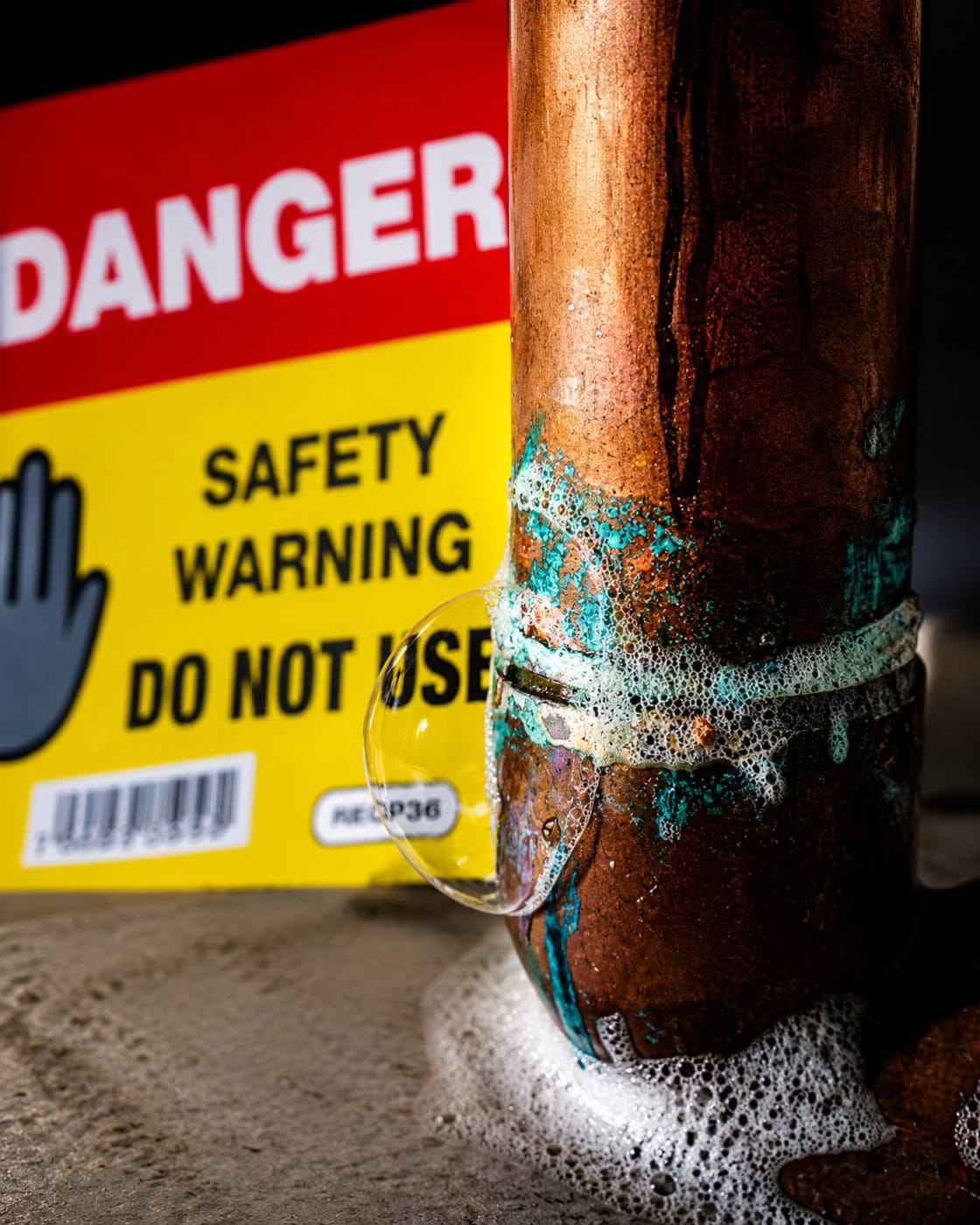
If a smart meter engineer has capped your gas supply, it usually means a leak has been detected during the installation process. This can feel sudden, especially if there were no obvious problems beforehand.
If you suspect a gas leak, call 0800 111 999 first. The Leak Hunter works on confirmed gas leaks after the supply has been turned off or isolated.
Why the gas gets capped during a smart meter visit
Smart meter installations include safety checks on the gas system. If the engineer detects a leak or cannot confirm the system is safe, they must isolate the supply immediately.
This is not a fault with the meter itself — it is a safety response to a problem already present in the pipework.
This is something we see regularly. The system works normally day to day, but the issue only becomes visible during testing.
What this means straight away
Once the gas is capped, the situation changes from installation to investigation. The priority is no longer fitting the meter — it is identifying and fixing the leak.
You can understand this stage more clearly in Gas Capped Off What Next.
Does this mean major work is needed?
No — and this is where people often assume the worst too quickly.
A capped supply confirms there is a leak, but it does not confirm how serious the issue is. In many cases, the problem is limited to a specific section of pipework.
Without locating the leak, it is impossible to know whether a full pipe replacement is actually necessary.
Why full pipe replacement is often suggested
When the leak location is unknown, replacing the entire pipe run removes uncertainty. It guarantees the problem is resolved.
However, this approach can lead to unnecessary cost and disruption if the leak is actually localised.
This is where many property owners end up committing to work that may not be needed.
What you should do next
- Confirm the gas supply has been safely isolated
- Understand that the leak location is still unknown
- Avoid agreeing to full pipe replacement immediately
- Arrange for the leak to be traced accurately
This approach gives you a clear understanding of the issue before making a decision.
How leak tracing changes the situation
Once the leak is located, the next step becomes much clearer. A localised fault can often be repaired without replacing large sections of pipework.
This is why How We Trace Gas Leaks After Isolation is such an important part of the process.
It allows you to move from uncertainty to a clear repair plan.
What this means for landlords and tenants
For landlords, the focus is on restoring the gas supply while avoiding unnecessary cost. For tenants, the priority is understanding how long the issue will take to resolve.
Once the leak has been identified, both timelines and decisions become much clearer.
How The Leak Hunter can help
The Leak Hunter specialises in tracing and repairing gas leaks after isolation. We identify the source of the issue and provide a clear repair solution wherever possible.
Learn more about our service here: Gas Leak Detection.
Frequently asked questions
Why did the engineer cap the gas during installation?
Because a leak was detected or suspected during safety testing. The supply must be isolated until the issue is resolved.
Can the gas be turned back on straight away?
No. The leak must be identified and repaired before the system can be safely used again.
Do you only cover my area?
If you’re outside these areas, don’t worry — our team covers most of the South East, providing trusted leak detection services throughout London, Kent, Sussex, and Surrey.
If your gas has been capped during a smart meter visit, the most important step is to locate the problem before deciding how to fix it. In many cases, that is what prevents unnecessary disruption and cost.
Find out more about Gas Leak Detection.