

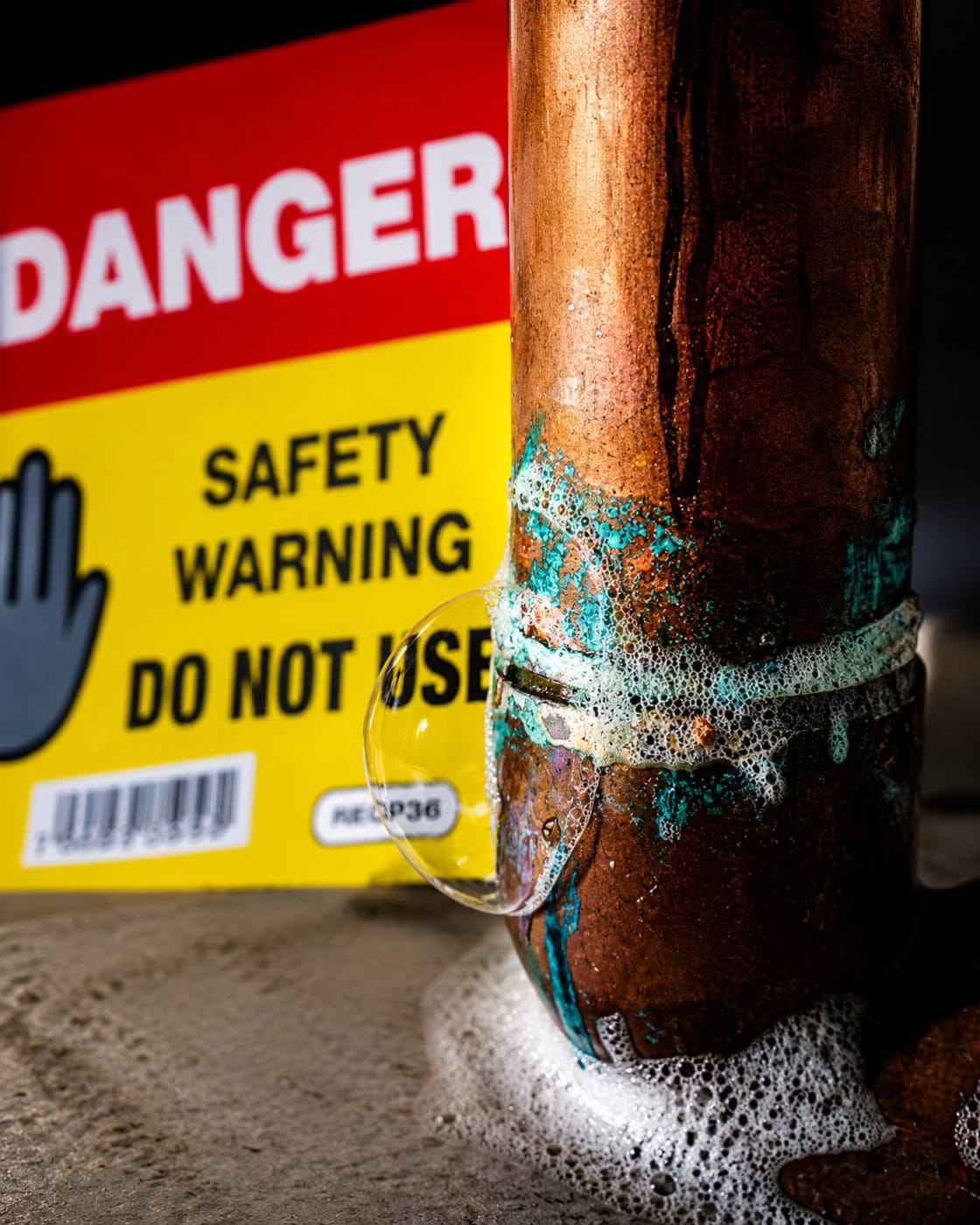
If a gas leak has been found and the supply has been turned off, one of the biggest decisions is whether to repair the pipework or replace it completely. This is where many landlords and homeowners feel unsure — and where the wrong decision can lead to unnecessary cost.
If you suspect a gas leak, call 0800 111 999 first. The Leak Hunter works on confirmed gas leaks after the supply has been turned off or isolated.
Why this decision is often made too early
When a leak is confirmed, there is pressure to fix the issue quickly. In some cases, full pipe replacement is suggested before the exact location of the leak has been identified.
This is where many property owners commit to a larger solution without knowing if it is actually needed.
You can understand what happens next in Gas Capped Off What Next.
What determines whether repair is possible
The key factor is where the leak is located.
If the issue is in a specific joint or section of pipe, it can often be repaired without replacing the entire system. This is the outcome in many cases once the leak has been properly identified.
Without locating the leak, it is impossible to know whether repair is a viable option.
When replacement may be the right decision
There are situations where replacing pipework is necessary. This can include:
- Multiple leaks across different areas
- Severely deteriorated pipework
- Inaccessible pipe routes
The key difference is that this decision should be based on confirmed findings rather than assumption.
Why many systems can be repaired instead
In many properties, leaks are localised. Once identified, the affected section can be repaired, allowing the rest of the system to remain in place.
This is where landlords and homeowners often avoid unnecessary cost and disruption.
This is explained further in Can a Gas Leak Be Repaired Without Replacing Pipes.
Why diagnosis comes before decision
Choosing between repair and replacement without locating the leak is effectively guesswork.
This is where costs can escalate quickly, as the safest assumption often leads to full replacement.
Proper diagnosis removes that uncertainty.
This is where How We Trace Gas Leaks After Isolation becomes essential.
It provides a clear understanding of the system before any major work is agreed.
What landlords and homeowners should do next
- Confirm the gas supply has been safely isolated
- Avoid making immediate decisions on replacement
- Arrange for the leak to be traced accurately
- Choose repair or replacement based on confirmed findings
This approach keeps the decision controlled and based on evidence.
How The Leak Hunter can help
The Leak Hunter specialises in tracing and repairing gas leaks after isolation. We identify the exact source of the problem and provide clear guidance on whether repair or replacement is the best option.
Learn more about our service here: Gas Leak Detection.
Frequently asked questions
Is repair always cheaper than replacement?
In many cases, yes — but it depends on the condition of the system. Proper diagnosis is needed to confirm this.
Can you decide without locating the leak?
No. The location of the leak determines the correct solution.
Do you only cover my area?
If you’re outside these areas, don’t worry — our team covers most of the South East, providing trusted leak detection services throughout London, Kent, Sussex, and Surrey.
If a gas leak has been found, the most important decision is not how to fix it quickly — but how to fix it correctly. Locating the problem first is what determines whether repair or replacement is actually needed.
Find out more about Gas Leak Detection.