

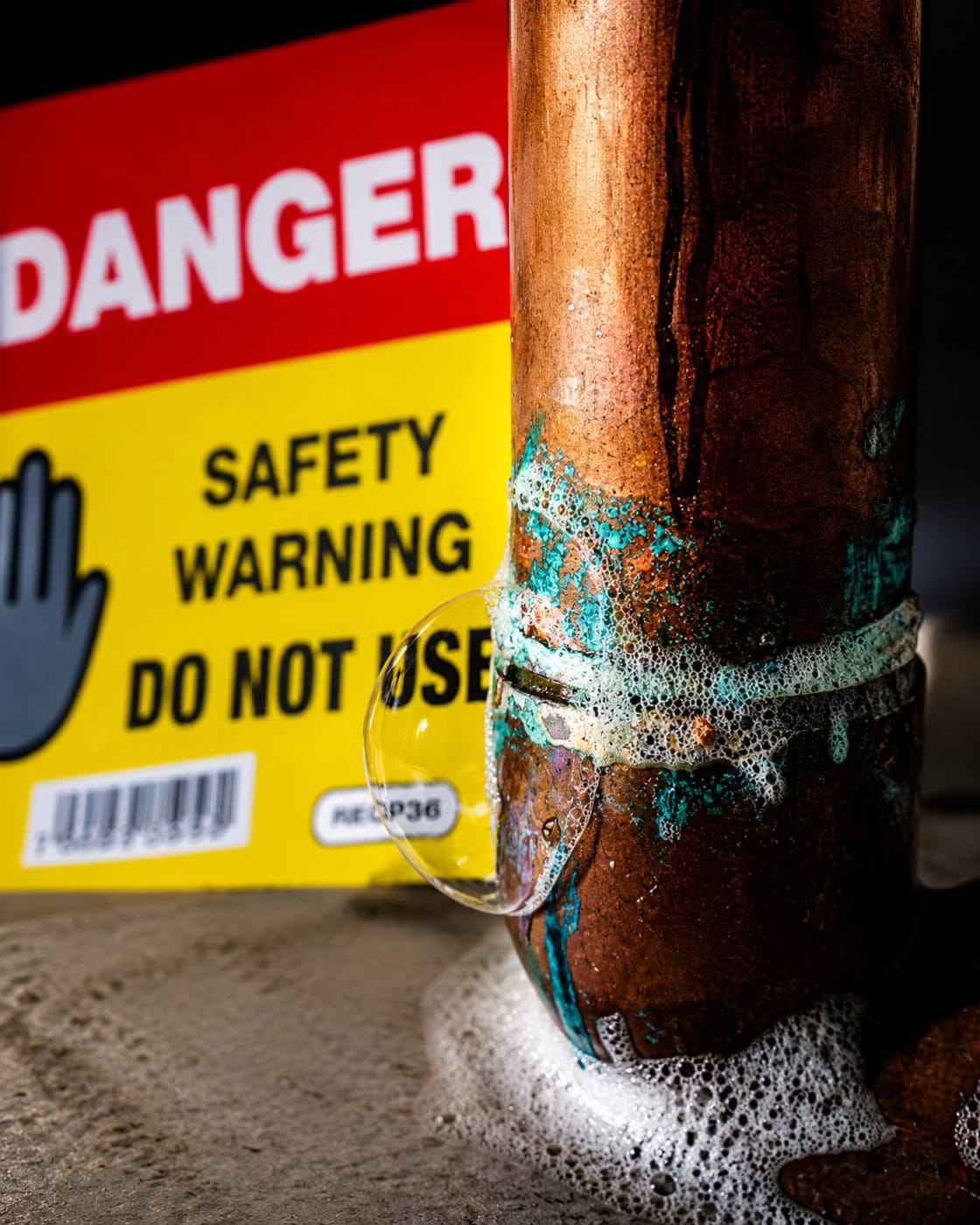
If your gas has been capped during a landlord safety check, it usually means the engineer could not safely leave the supply on. This can feel like a major issue, especially with tenants affected, but it does not automatically mean you need a full gas pipe replacement.
If you suspect a gas leak, call 0800 111 999 first. The Leak Hunter works on confirmed gas leaks after the supply has been turned off or isolated.
Why the gas gets capped during a safety check
During a landlord gas safety check, the engineer must confirm the system is safe to leave in operation. If a leak is detected or suspected, the gas supply may be capped immediately to prevent risk.
This often happens without warning. A routine check can quickly turn into a situation where the property has no gas, and a decision needs to be made quickly.
Does this mean you need a full pipe re-run?
No — and this is where many landlords get caught out.
A capped gas supply means there is a problem somewhere in the system. It does not confirm that the entire pipework has failed. In many cases, the leak can be located and repaired without replacing all the pipes.
You can understand this stage better in Gas Capped Off What Next.
Why jumping straight to replacement can be a mistake
When gas is turned off, there is often pressure to resolve it quickly. Some properties are immediately recommended for a full pipe re-run without the leak being properly traced.
This can lead to unnecessary cost, visible pipework changes, and disruption to tenants and property layout.
In many situations, locating the leak first gives a far clearer and more cost-effective route forward.
What landlords should do next
- Confirm the supply has been safely isolated
- Avoid agreeing to full replacement immediately
- Arrange proper gas leak tracing
- Assess repair vs replacement based on the actual fault
The key step is diagnosis. Until the leak is located, you are making decisions without the full picture.
How leak tracing changes the outcome
Once the leak is identified, the situation becomes much clearer. You can see whether the issue is localised or affects larger sections of pipework.
This is where How We Trace Gas Leaks After Isolation becomes important. Proper tracing allows you to make a decision based on evidence, not assumption.
What tenants need to know
From a tenant’s perspective, the main concerns are safety and timescale. Clear communication helps reduce stress while the issue is being resolved.
Once the issue has been properly investigated, a realistic repair plan can be put in place and the process moves forward quickly.
How The Leak Hunter can help
The Leak Hunter specialises in tracing and repairing gas leaks after the supply has been isolated. Instead of defaulting to full pipe replacement, we locate the issue and provide a clear repair approach where possible.
Learn more about our service here: Gas Leak Detection.
Frequently asked questions
Does a capped gas supply always mean major work?
No. It means the system needs investigation. In many cases, the issue can be repaired without replacing all pipework.
How quickly can gas be restored?
This depends on how quickly the leak is located and repaired. Accurate tracing speeds up the process significantly.
Do you only cover my area?
If you’re outside these areas, don’t worry — our team covers most of the South East, providing trusted leak detection services throughout London, Kent, Sussex, and Surrey.
If your gas has been capped during a safety check, the next step is not guesswork — it is proper diagnosis. In many cases, that is what prevents unnecessary cost and disruption.
Find out more about Gas Leak Detection.