

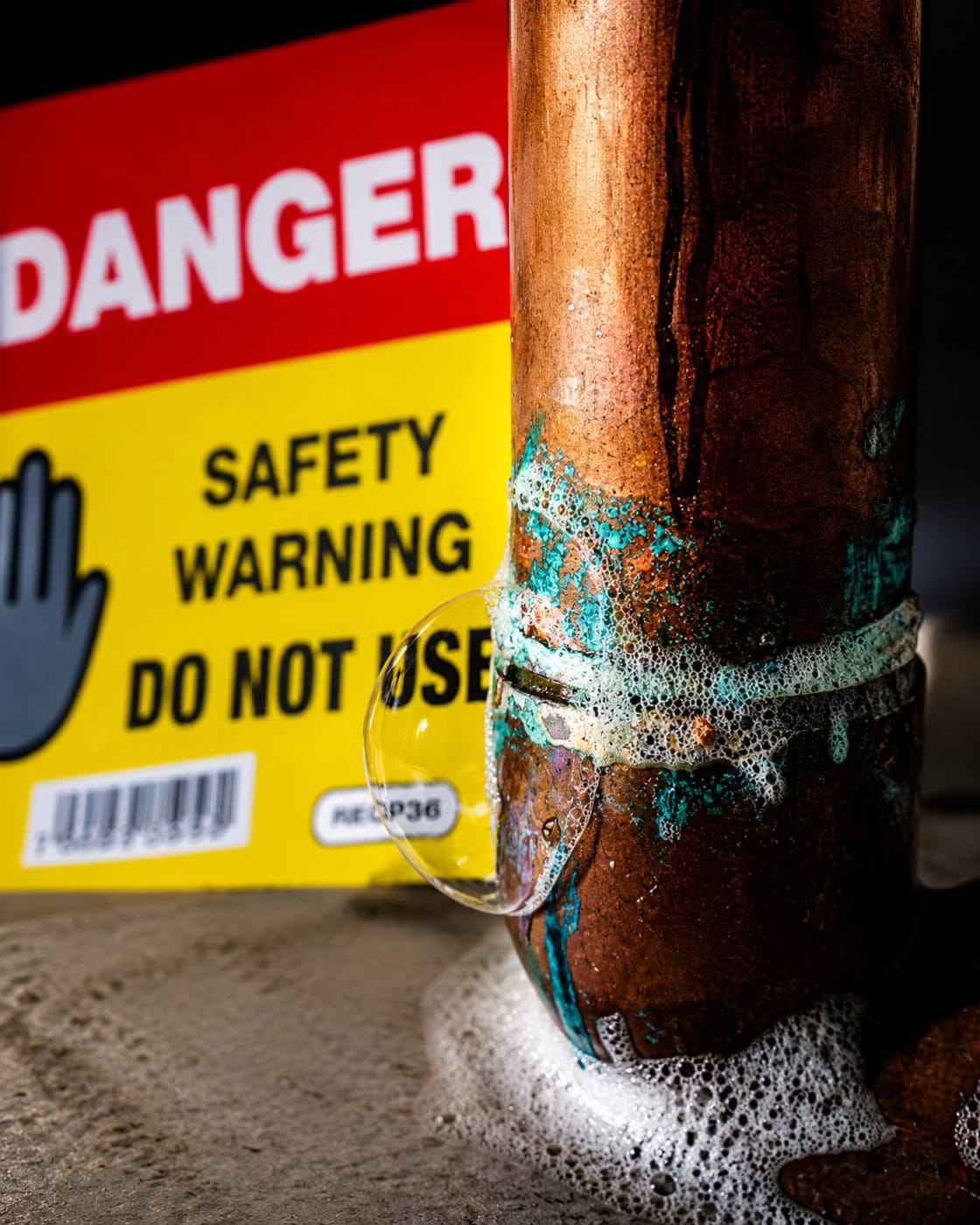
If a gas leak has been detected after an inspection, the immediate focus is safety. The supply is usually turned off, and you’re left deciding how to fix the issue — often with a recommendation for a full pipe re-run.
If you suspect a gas leak, call 0800 111 999 first. The Leak Hunter works on confirmed gas leaks after the supply has been turned off or isolated.
What happens when a leak is detected
Once a leak is identified during or after an inspection, the engineer cannot confirm the system is safe to use. This is why the gas is often capped or isolated.
At this stage, the key issue is not just that a leak exists — it’s that the location of the leak is still unknown.
Does this automatically mean full replacement?
No.
A detected gas leak confirms there is a fault, but it does not confirm that the entire pipe system has failed. In many cases, the issue is limited to a specific section of pipework.
You can explore this further here: Can a Gas Leak Be Repaired Without Replacing Pipes.
Why full pipe re-runs are often recommended
When the leak location is unknown, replacing the full pipe run removes uncertainty. It guarantees the issue is resolved without needing to trace the fault.
However, this approach can lead to unnecessary work if the leak is actually localised.
It can also result in higher costs, disruption to the property, and visible changes to pipework.
Why tracing the leak matters first
Before agreeing to a full re-run, it’s important to identify where the leak actually is. Without this step, you are making a decision based on assumption rather than evidence.
Leak tracing turns a broad issue into a specific one. It allows you to understand whether the problem is isolated or widespread.
This is where How We Trace Gas Leaks After Isolation becomes essential.
What landlords should do next
- Confirm the gas supply has been safely isolated
- Do not commit to a full re-run immediately
- Arrange for the leak to be traced accurately
- Assess repair options based on the findings
This approach ensures you are making the right decision for both safety and cost.
When a full pipe re-run may be necessary
There are situations where a full replacement is the correct option. This may include extensive pipe deterioration, multiple leaks, or inaccessible pipe routes.
The key is that this decision should follow proper diagnosis, not come before it.
What this means for tenants
For tenants, the main concern is how long the gas will be off. A targeted repair is often quicker and less disruptive than a full system replacement.
Clear communication and a defined plan help reduce uncertainty while the issue is resolved.
How The Leak Hunter can help
The Leak Hunter specialises in tracing and repairing gas leaks after isolation. We locate the exact source of the problem and provide a clear repair solution wherever possible.
Learn more about our service here: Gas Leak Detection.
Frequently asked questions
Does a detected gas leak always mean major work?
No. It means there is a fault that needs investigation. Many leaks can be repaired once located.
Can one leak cause the whole system to fail a test?
Yes. A single leak can cause a failure, even if the rest of the system is in good condition.
Do you only cover my area?
If you’re outside these areas, don’t worry — our team covers most of the South East, providing trusted leak detection services throughout London, Kent, Sussex, and Surrey.
If a gas leak has been detected after inspection, the most important step is to locate it properly before deciding on replacement.
Find out more about Gas Leak Detection.