

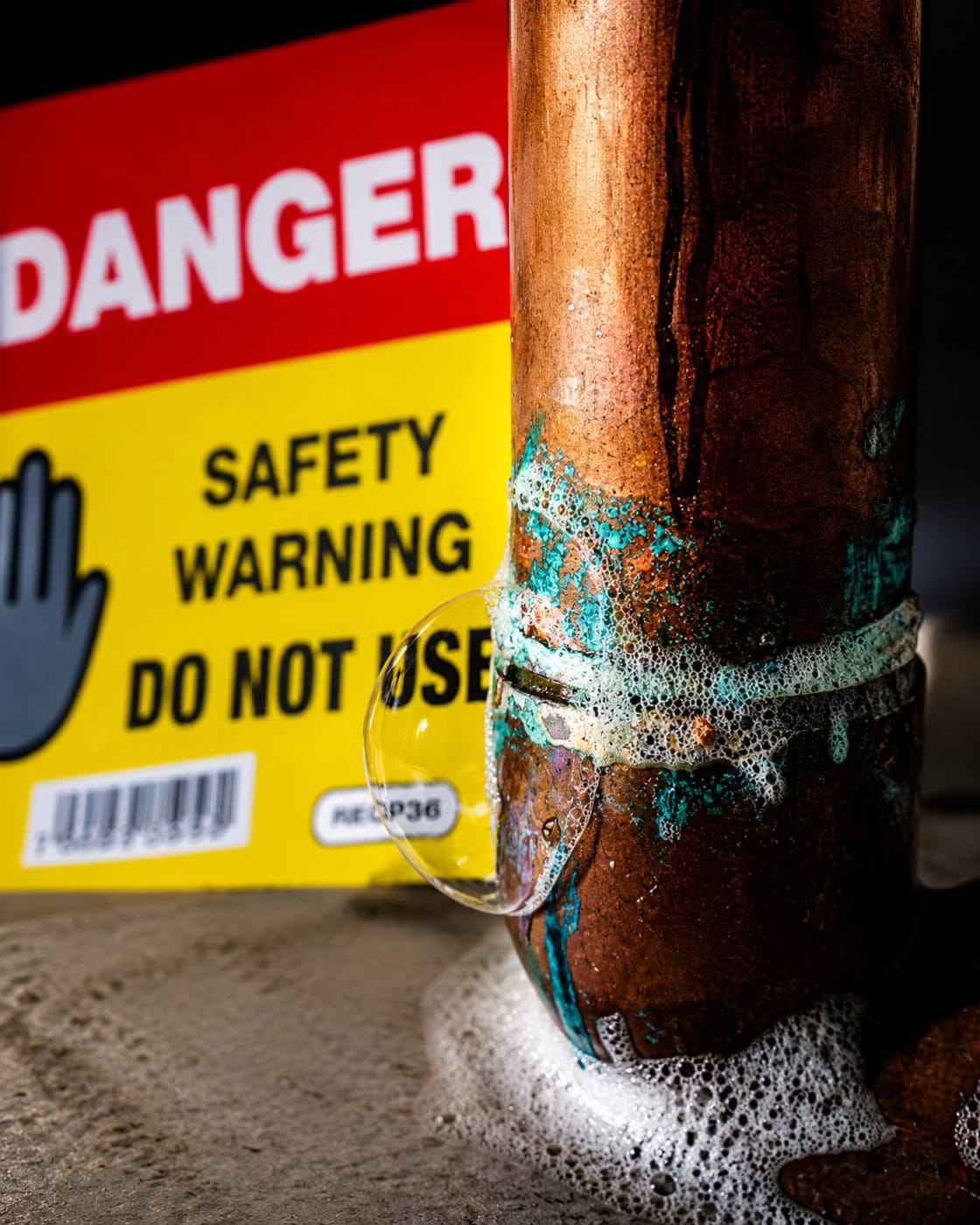
If a gas leak has been found in a flat and the supply has been turned off, one of the first questions is who is actually responsible for fixing it. In flats and shared buildings, this is not always as straightforward as in a standard house.
If you suspect a gas leak, call 0800 111 999 first. The Leak Hunter works on confirmed gas leaks after the supply has been turned off or isolated.
Why responsibility can be unclear in flats
In flats, gas pipework may run through multiple areas — including private property, communal spaces, and shared systems. This makes it less obvious who owns which part of the installation.
At the point the gas is turned off, the leak has been confirmed — but not yet located. This is where confusion begins.
You can understand what happens next in Gas Capped Off What Next.
Who is usually responsible
Responsibility often depends on where the leak is located:
- Inside the flat: usually the flat owner or landlord
- Communal areas: often the freeholder or managing agent
- Shared pipework: can vary depending on building setup
The challenge is that until the leak is located, it is not clear which category it falls into.
Why this situation often causes delays
When responsibility is unclear, decisions can be delayed while different parties try to establish who should act.
Meanwhile, the gas supply remains off, and the issue cannot move forward.
This is where uncertainty around location directly impacts responsibility.
Why locating the leak is the key step
Before responsibility can be confirmed, the exact source of the leak needs to be identified.
Without this, any decision about who should pay or arrange repairs is based on assumption.
This is where How We Trace Gas Leaks After Isolation becomes essential.
It provides a clear answer to where the problem actually is.
What happens once the location is known
Once the leak is identified, responsibility becomes much clearer. The relevant party can then arrange the repair based on confirmed information.
This removes uncertainty and allows the process to move forward properly.
What flat owners and landlords should do
- Confirm the gas supply has been safely isolated
- Avoid making assumptions about responsibility
- Arrange for the leak to be traced accurately
- Use the findings to determine who is responsible
This approach avoids delays and ensures the issue is handled correctly.
Why guessing responsibility can increase cost
If the wrong party acts without understanding the problem fully, it can lead to duplicated work, delays, or unnecessary repairs.
This is where many situations become more complicated than they need to be.
How The Leak Hunter can help
The Leak Hunter specialises in tracing gas leaks after isolation, including in flats and shared buildings. By identifying the exact source of the issue, we help clarify responsibility and ensure the correct repair path is taken.
Learn more about our service here: Gas Leak Detection.
Frequently asked questions
Who pays for a gas leak in a flat?
It depends on where the leak is located. Responsibility can sit with the flat owner, landlord, or building management.
Why is it harder to resolve leaks in flats?
Because pipework can run through multiple areas, making ownership and responsibility less clear.
Do you only cover my area?
If you’re outside these areas, don’t worry — our team covers most of the South East, providing trusted leak detection services throughout London, Kent, Sussex, and Surrey.
If a gas leak has been found in a flat, the most important step is to locate the issue properly. That is what determines responsibility and allows the problem to be resolved without delay.
Find out more about Gas Leak Detection.