

It’s a common and frustrating situation. The damp patch was covered with stain block paint, the area looked fine for a while, and then slowly the mark started coming back through again.
Many homeowners assume stain block products permanently solve the issue, especially after spending time and money redecorating the area.
Unfortunately, if moisture is still present behind the surface, the problem often returns.
What Stain Block Paint Is Designed to Do
Stain block products are designed to stop marks and discolouration bleeding through decorative finishes.
They are commonly used after:
- Water damage
- Ceiling leaks
- Historic staining
- Smoke or nicotine discolouration
Oil-based stain blockers are especially popular because they create a stronger barrier than standard emulsion paint.
However, they are designed to cover staining — not stop active moisture.
Why the Damp Patch Came Back
If the patch returns after stain block has been applied, it usually means one of two things is happening:
- The area was not fully dry before decorating
- Moisture is still entering the structure
In many properties, walls and ceilings continue drying internally long after the visible surface feels dry.
This is particularly common after slow leaks or prolonged water saturation.
Why the Problem Often Returns Gradually
Most homeowners don’t see the stain return immediately.
Instead, they notice:
- A faint shadow appearing again
- Discolouration slowly bleeding through
- The patch becoming darker over time
- Fresh paint starting to look uneven
Because the mark returns in the same place, it often creates concern that the original leak was never repaired properly.
Does This Mean the Leak Is Still Active?
Not always.
In many cases, residual moisture trapped within the wall or ceiling structure continues affecting the decoration long after the original repair has been completed.
However, if the staining continues worsening or moisture levels remain unusually high, it’s important to confirm whether the issue is historic moisture or an active leak that still requires attention.
Why Repainting Again Often Becomes Expensive
Repeatedly repainting the same area can quickly become frustrating — especially when expensive products and decorating materials have already been used.
Many homeowners end up paying for:
- Additional stain block products
- Fresh paint
- Replacement materials
- Professional decorating work
If the underlying moisture source hasn’t been fully understood, the same patch often continues returning regardless of how many coats are applied.
When Further Investigation Makes Sense
If the patch keeps returning despite stain block and repainting, it becomes important to confirm whether moisture is still active within the structure.
This is particularly relevant where:
- Hidden pipework runs behind walls
- Bathrooms sit above ceilings
- Central heating pipes are concealed within floors or walls
- The original leak lasted for a long period
You can learn more about how these issues are investigated through Water leak detection.
How The Leak Hunter Helps
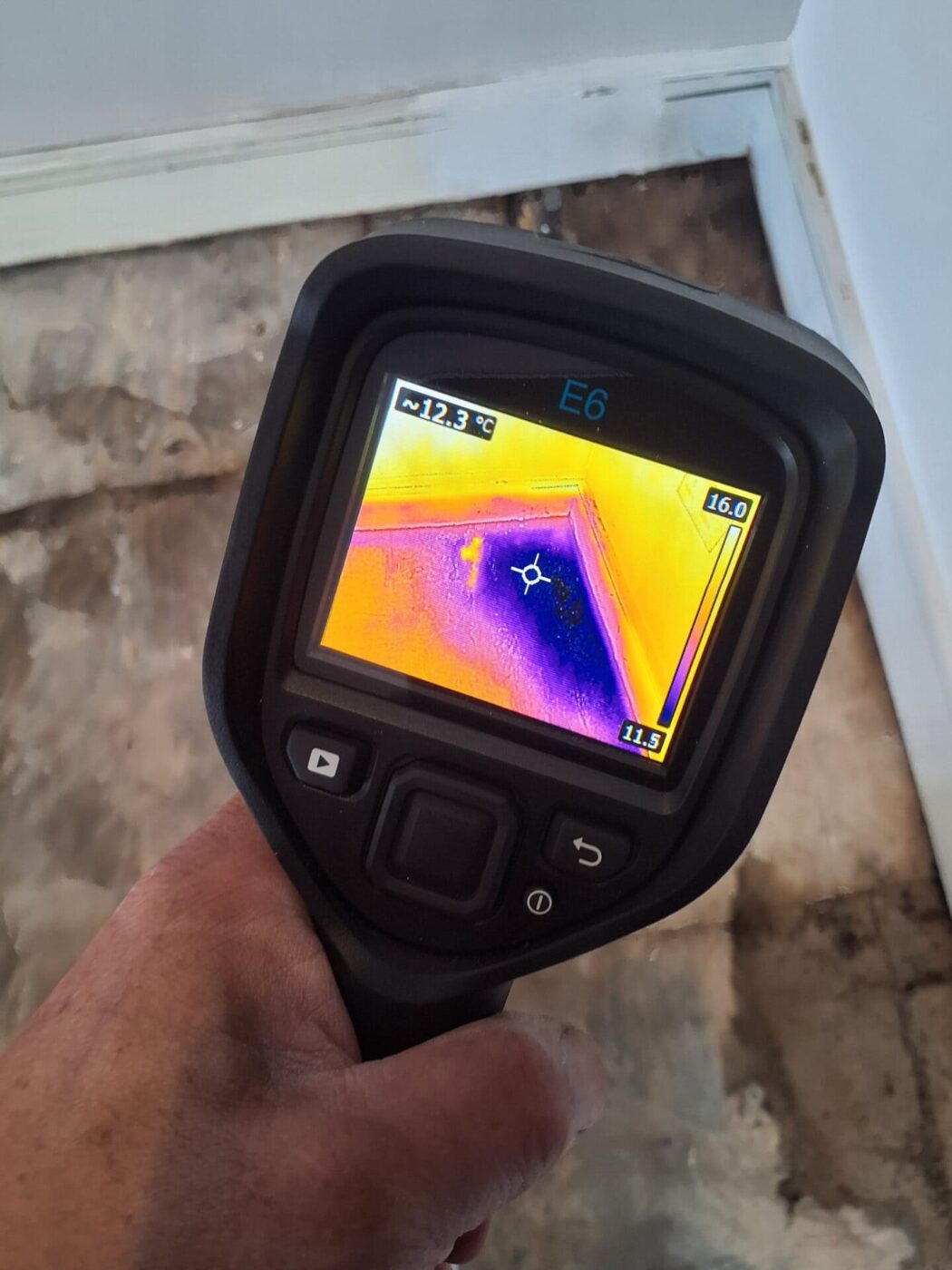
The Leak Hunter takes ownership of determining whether recurring damp patches are simply residual moisture from a previous leak or a sign that the issue is still active.
We use non-invasive leak detection methods to investigate hidden moisture problems without unnecessary disruption, helping homeowners avoid wasting more money repeatedly decorating the same area.
If stain block paint hasn’t solved the problem, we’ll help identify whether the structure is still drying or whether further repairs are genuinely needed.
You can also learn more about ceiling leaks and how hidden moisture can continue affecting decorated surfaces after water damage.