

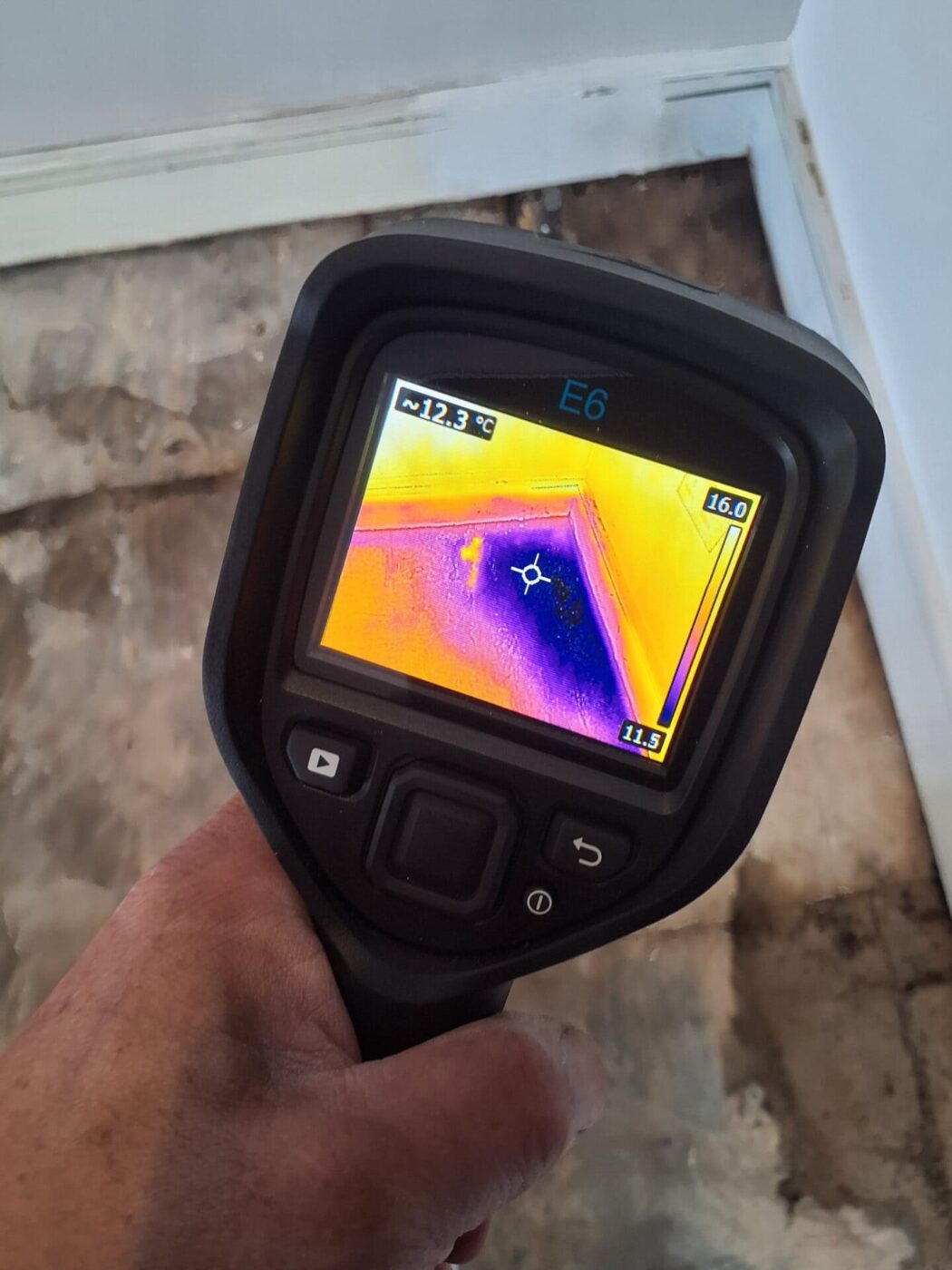
It’s a frustrating situation. The leak was repaired, the area was redecorated, and everything finally looked normal again — then slowly the damp patch or stain starts coming back.
For many homeowners, the immediate reaction is panic. It feels like the leak must still be active.
In some cases that can be true, but very often the situation is less dramatic than it first appears.
Why Damp Patches Sometimes Return After Decorating
After a leak, walls and ceilings can hold moisture for far longer than expected. Even once the source of the leak has been repaired, the surrounding materials may still be drying internally.
This is particularly common with:
- Plaster and plasterboard
- Ceilings below bathrooms
- Solid walls and chimney breasts
- Areas that experienced prolonged saturation
If the area is redecorated before the structure has fully dried, residual moisture can continue moving through the material and slowly affect the new paint finish.
Why the Mark Often Looks Like the Leak Is Back
One of the biggest problems with recurring moisture marks is that they often reappear gradually.
At first, it may just look like:
- A faint shadow returning
- Discolouration beneath fresh paint
- A patch becoming slightly darker again
- Staining slowly bleeding through
Because the mark returns in the same location, it’s natural to assume the original leak was never fixed.
Does This Always Mean There’s Still an Active Leak?
No — not always.
In many cases, the area may simply still be drying from the original leak, particularly if decorating took place too early or the materials remained saturated beneath the surface.
However, recurring dampness should never be ignored completely. If moisture levels remain unusually high or the staining continues worsening, it’s important to confirm whether the issue is historic moisture or an active leak that still needs attention.
Why Repainting the Area Again Often Doesn’t Help
Many homeowners try repainting the area repeatedly once the mark reappears.
This can quickly become frustrating — especially after spending money on:
- Fresh paint
- Stain block products
- Decorating materials
- Professional decorating work
If moisture is still trapped within the wall or ceiling structure, the problem often returns again because the underlying cause was never fully understood.
What Happens If the Area Was Never Properly Dried?
After a leak, drying times can vary significantly depending on:
- How long the leak was active
- The type of material affected
- Ventilation and airflow
- The amount of water saturation present
Some structures can hold moisture internally long after the visible surface feels dry to the touch.
This is why an area can appear ready for decoration while still containing residual moisture deeper within the material.
When It’s Worth Investigating Further
If the patch continues growing, feels wet again, or keeps returning despite repeated decorating work, it becomes important to rule out an ongoing leak.
This is especially relevant where hidden pipework sits behind walls, beneath floors, or above ceilings.
You can learn more about how these problems are investigated through leak detection.
How The Leak Hunter Helps
The Leak Hunter takes ownership of confirming whether a recurring damp patch is simply residual moisture from a historic leak or a sign that the problem is still active.
We use non-invasive leak detection methods to investigate hidden moisture issues without unnecessary disruption, helping homeowners avoid repeatedly redecorating the same area without understanding the real cause.
If a damp patch has returned after decorating, we’ll help determine whether the structure is still drying or whether further repairs are actually needed.
You can also learn more about hidden leaks and how concealed moisture problems can continue affecting walls and ceilings after a leak has been repaired.