

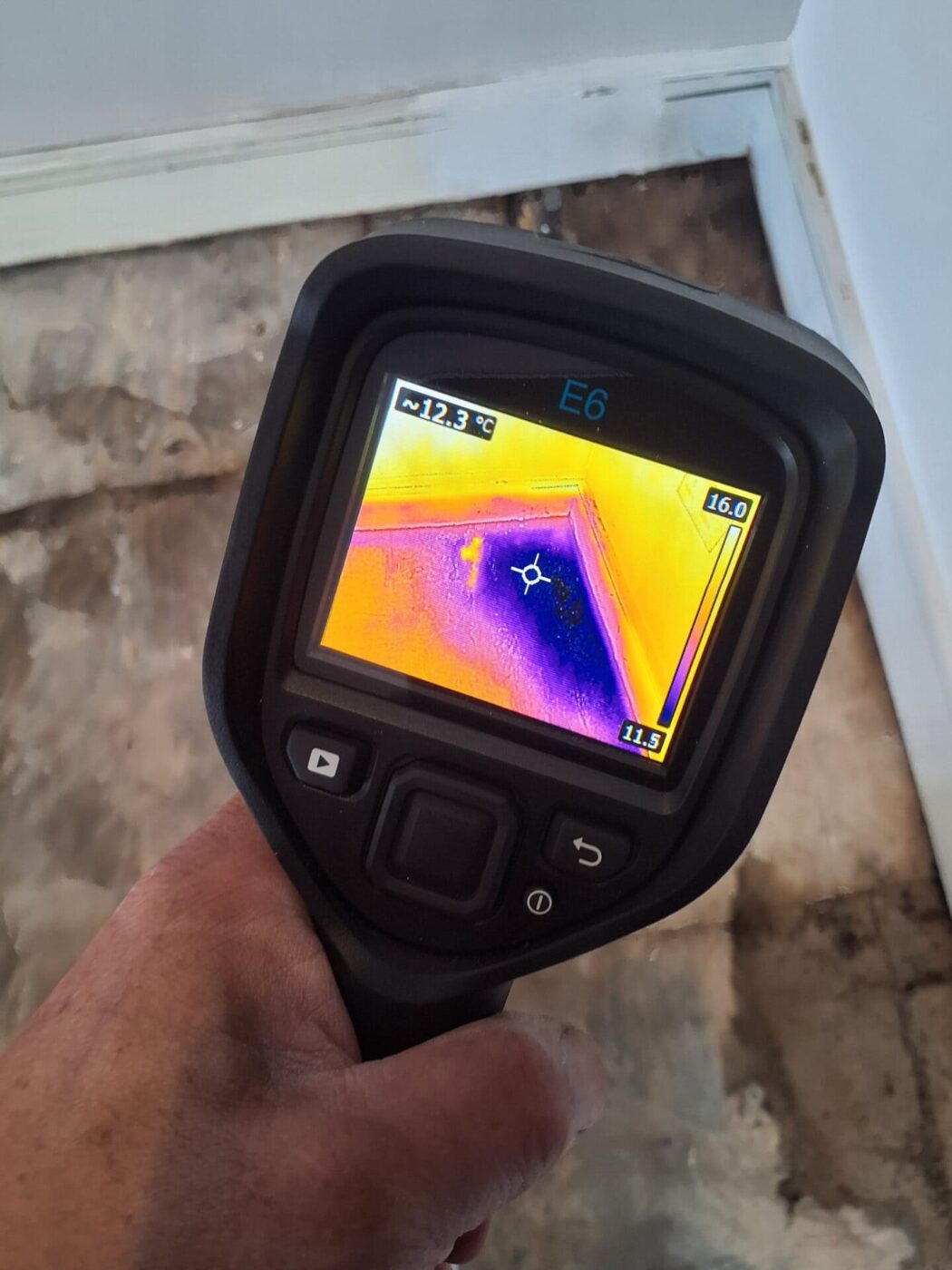
If one room in your home suddenly feels noticeably colder than the rest, even though the heating is working normally, it’s natural to wonder why. You may assume it’s poor insulation, a draught, or simply the way that room has always been.
Sometimes those explanations are correct. However, an unexplained change in temperature can also be caused by hidden moisture within walls, floors, or ceilings, particularly if the room has never felt noticeably colder before.
The important step is understanding why the change has occurred rather than simply trying to compensate by turning the heating up.
Why one room can suddenly feel colder
Building materials affected by moisture behave differently to dry materials. Damp walls, floors and ceilings often lose heat more quickly, making part of a room feel cooler than surrounding areas.
This doesn’t always mean a leak is present, but when there is no obvious explanation for the temperature difference, hidden moisture is one possibility that should be considered.
- The room has recently become colder than the rest of the house.
- The heating system appears to be working normally.
- No obvious draughts or insulation changes explain the difference.
- The temperature difference persists over time.
What homeowners often assume
Many people assume a cold room must be caused by poor insulation, ventilation or an ageing heating system. While those can certainly be responsible, they are not the only possibilities.
If the room has changed without any obvious reason, it’s worth considering whether hidden moisture could be affecting the structure of the building.
How The Leak Hunter investigates unexplained cold spots
The Leak Hunter specialises in investigating hidden leaks using non-invasive leak detection methods. Rather than relying on temperature changes alone, we investigate whether hidden moisture is present and trace it back to its source.
Many of these investigations involve hidden leaks that have remained unnoticed until secondary symptoms begin to appear.
When should you investigate?
If one room suddenly becomes colder than the rest of your home and the usual explanations don’t fit, it’s worth investigating before more obvious symptoms develop. Early diagnosis can identify hidden moisture before it leads to visible damage.
To learn more about how we investigate concealed leaks, visit our Leak Detection page.
Frequently asked questions
Can a hidden leak make a room feel colder?
It can. Moisture can affect how building materials retain heat, although other causes such as insulation or ventilation issues should also be considered.
Does a cold room always mean there’s a leak?
No. A colder room has many possible causes. Leak detection becomes relevant when hidden moisture is suspected or the temperature change cannot be explained.
Should I improve the insulation first?
If the room has only recently become colder without any obvious reason, identifying the underlying cause first can help avoid unnecessary work.
Do you only cover my area?
If you’re outside these areas, don’t worry — our team covers most of the South East, providing trusted leak detection services throughout London, Kent, Sussex, and Surrey.