

You repaint the ceiling, but something doesn’t seem right.
The paint struggles to bond properly, certain areas look uneven, or sections begin peeling, flaking, or separating again shortly after decorating.
This is especially frustrating when the ceiling has previously been affected by a leak and you thought the problem had already been resolved.
Why Ceiling Paint Sometimes Won’t Adhere Properly
Ceilings affected by moisture often continue behaving differently long after the original leak appears to have been repaired.
Even if the visible surface feels dry, residual moisture deeper within the ceiling structure can still interfere with fresh paint finishes.
This can lead to:
- Poor paint adhesion
- Uneven finishes
- Flaking or peeling paint
- Areas refusing to take paint properly
Because the issue is often isolated to one specific section of ceiling, it usually points to something still affecting the surface beneath.
Why This Commonly Happens After Leaks
Ceilings can retain moisture internally for much longer than expected after water damage.
This is particularly common following:
- Bathroom leaks
- Shower tray leaks
- Central heating leaks
- Slow plumbing leaks above ceilings
- Water ingress from hidden pipework
If decorating takes place before the ceiling has fully dried internally, fresh paint may struggle to bond correctly to the affected area.
Why Homeowners Often Think It’s a Paint Problem
Most people naturally assume the decorating materials are to blame first.
This usually leads to attempts such as:
- Applying additional coats
- Changing paint brands
- Using stain block products
- Repainting the ceiling repeatedly
But if moisture remains within the ceiling structure, changing the paint rarely solves the underlying issue.
Does This Mean the Leak Is Still Active?
Not always.
In many properties, the original leak may already be repaired and the ceiling is simply continuing to dry internally.
However, if the same area repeatedly fails after decorating or new staining and moisture signs continue appearing, it becomes important to confirm whether the issue is historic moisture or an active leak that still requires attention.
Why Repainting the Ceiling Repeatedly Becomes Expensive
Repeatedly redecorating the same ceiling quickly becomes frustrating and costly.
Many homeowners end up wasting money on:
- Ceiling paint
- Primers and stain block products
- Replacement materials
- Additional decorating work
If the moisture source hasn’t been properly understood, the same problem often continues returning regardless of how many times the area is repainted.
When Further Investigation Makes Sense
If paint repeatedly refuses to stick properly to one area of ceiling, especially below bathrooms or concealed pipework, it’s worth ruling out hidden moisture within the structure.
This is particularly important where the original source of water damage was never fully confirmed.
You can learn more about how these problems are investigated through leak detection.
How The Leak Hunter Helps
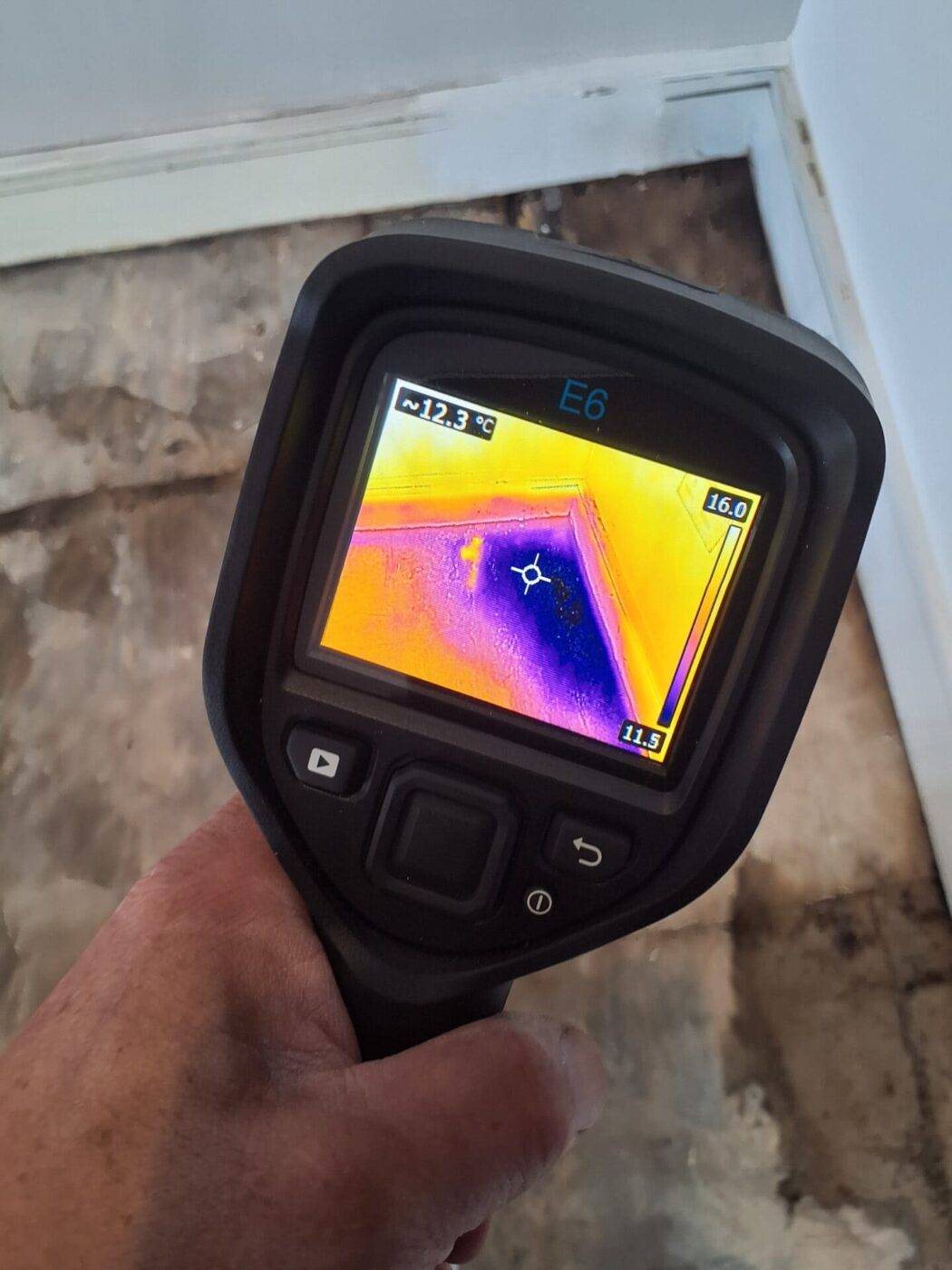
The Leak Hunter takes ownership of determining whether decorating problems are simply being caused by residual moisture or whether water is still actively entering the ceiling structure.
We use non-invasive leak detection methods to investigate hidden moisture problems without unnecessary disruption, helping homeowners avoid repeatedly repainting ceilings without understanding the real cause.
If paint won’t properly stick to part of your ceiling, we’ll help confirm whether the area is still drying or whether further repairs are genuinely needed.
You can also learn more about ceiling leaks and how concealed moisture can continue affecting ceilings long after a leak appears to have been repaired.