

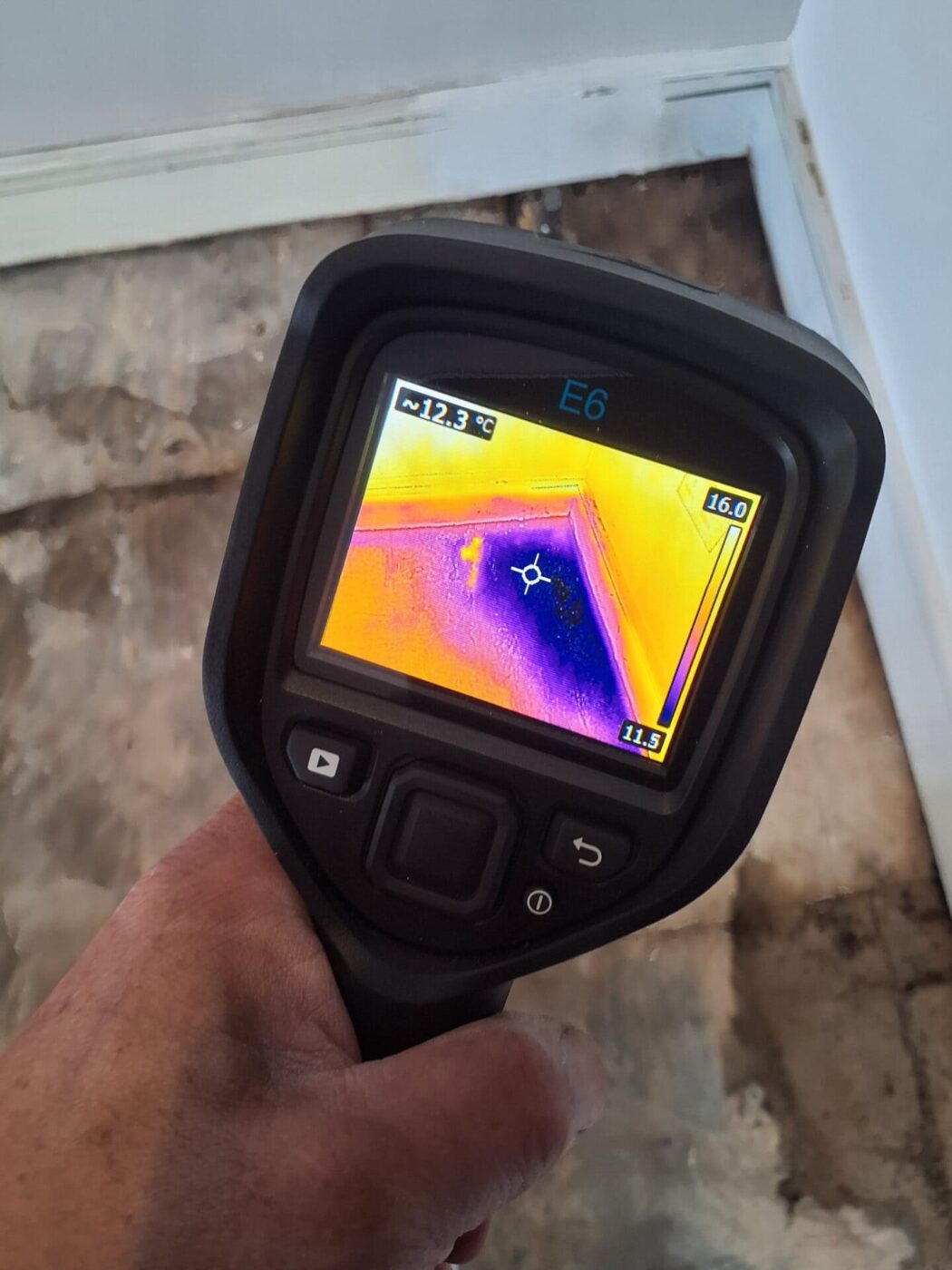
You repaint the wall, leave it for hours, and something still doesn’t feel right.
The paint stays tacky, patches dry unevenly, or certain areas continue looking darker than the rest of the wall long after they should have cured properly.
For many homeowners, this is the point where decorating starts feeling less like a paint problem and more like something happening beneath the surface.
Why Paint Sometimes Struggles to Dry Properly
Paint needs a dry, stable surface in order to cure correctly.
If moisture is still present within the wall, the drying process can be affected, particularly in areas that have previously experienced water ingress or hidden leaks.
This can lead to:
- Tacky or sticky paint
- Uneven drying patches
- Darker areas that never seem to fully dry
- A finish that feels different in one section of the wall
Because the issue often affects only one isolated area, it can feel difficult to explain.
Why the Wall May Still Contain Moisture
Walls can hold moisture internally for much longer than expected, especially after:
- Slow plumbing leaks
- Hidden pipework failures
- Bathroom or shower leaks
- Previous water damage
Even when the visible surface feels dry, deeper materials within the wall may still contain residual moisture.
If decorating takes place before the structure fully dries internally, the fresh paint finish often reacts differently in that area.
Why Homeowners Often Assume It’s the Paint
Most people naturally suspect the decorating materials first.
This usually leads to attempts such as:
- Applying additional coats
- Changing paint brands
- Using primers or stain block products
- Repainting the same section repeatedly
But if the wall itself still contains moisture, changing the paint rarely solves the underlying problem.
Does This Always Mean There’s Still an Active Leak?
Not always.
In many cases, the original leak may already be repaired and the wall is simply continuing to dry internally.
However, if moisture levels remain high or the same area repeatedly behaves abnormally after decorating, it becomes important to confirm whether the issue is historic moisture or an active leak that still requires attention.
Why Repainting Repeatedly Often Becomes Expensive
Many homeowners end up wasting time, paint, and decorating materials trying to fix the appearance of a wall that never fully dries properly.
This can quickly become frustrating after paying for:
- Fresh paint
- Primers and stain block products
- Additional decorating work
- Replacement materials
If the moisture source hasn’t been fully understood, the same problem often keeps returning regardless of how many times the area is repainted.
When Further Investigation Makes Sense
If paint consistently struggles to dry properly in the same location, especially near bathrooms, ceilings, or concealed pipework, it’s worth ruling out hidden moisture within the structure.
This is particularly important where the original cause of moisture was never fully confirmed.
You can learn more about how these issues are investigated through leak detection.
How The Leak Hunter Helps
The Leak Hunter takes ownership of determining whether decorating problems are simply being caused by residual moisture or whether water is still actively entering the structure.
We use non-invasive leak detection methods to investigate hidden moisture issues without unnecessary disruption, helping homeowners avoid repeatedly repainting walls without understanding the real cause.
If paint refuses to dry properly on part of a wall, we’ll help confirm whether the structure is still drying or whether further repairs are genuinely needed.
You can also learn more about hidden leaks and how concealed moisture can continue affecting walls long after a leak appears to have been repaired.