

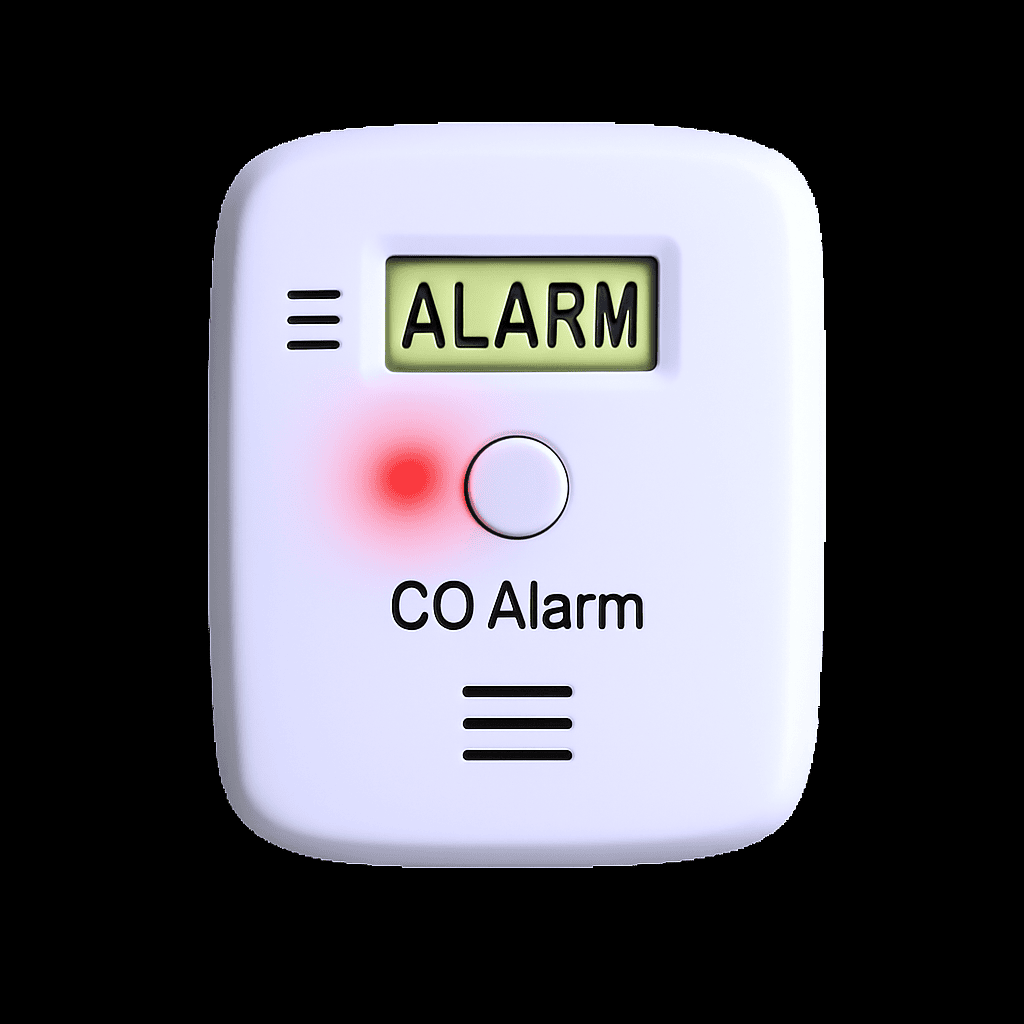
Relying on a carbon monoxide (CO) detector to protect your home from all gas-related risks is a common mistake.
Carbon monoxide alarms are designed for one specific purpose — detecting carbon monoxide produced by incomplete combustion. They do not detect natural gas (methane) or LPG leaks escaping from pipework or appliances.
This means you can have a gas leak present without any alarm being triggered.
Why this misunderstanding matters
Many homeowners assume that having a CO detector installed means they are fully protected. In reality, it only covers one type of risk.
Carbon monoxide is dangerous because it is toxic and cannot be seen or smelt. Natural gas presents a different hazard — it is highly flammable and can build up in enclosed spaces, increasing the risk of fire or explosion.
Because these risks behave differently, they require different forms of detection and awareness.
What a carbon monoxide detector actually does
A carbon monoxide detector monitors the air for CO gas levels and alerts you if they become unsafe. It is essential for protecting against faulty appliances and incomplete combustion.
However, it does not detect gas escaping from pipework, fittings, or appliances.
Where this creates a gap in safety
If you are relying solely on a carbon monoxide alarm, a gas leak may only be identified by smell or physical signs — or in some cases, not at all until further checks are carried out.
This gap in understanding is one of the main reasons gas leaks are often discovered during testing, inspections, or when the gas supply is isolated.
What to do if a gas leak is suspected
If you smell gas or believe there may be a leak, contact the National Gas Emergency Service immediately on 0800 111 999 and follow their safety advice.
Once the situation has been made safe and the gas supply has been turned off, the next step is to identify exactly where the fault is within the system.
For a detailed explanation of how this is done, see how gas leaks are traced after isolation.
Understanding the difference keeps your home protected
Carbon monoxide alarms are essential, but they are only one part of gas safety. Understanding what they do — and what they do not do — ensures the right steps are taken when needed.
Once a leak has been confirmed and the system has been made safe, our Gas Leak Detection service focuses on tracing the source accurately and resolving the issue without unnecessary disruption or pipe reruns.