

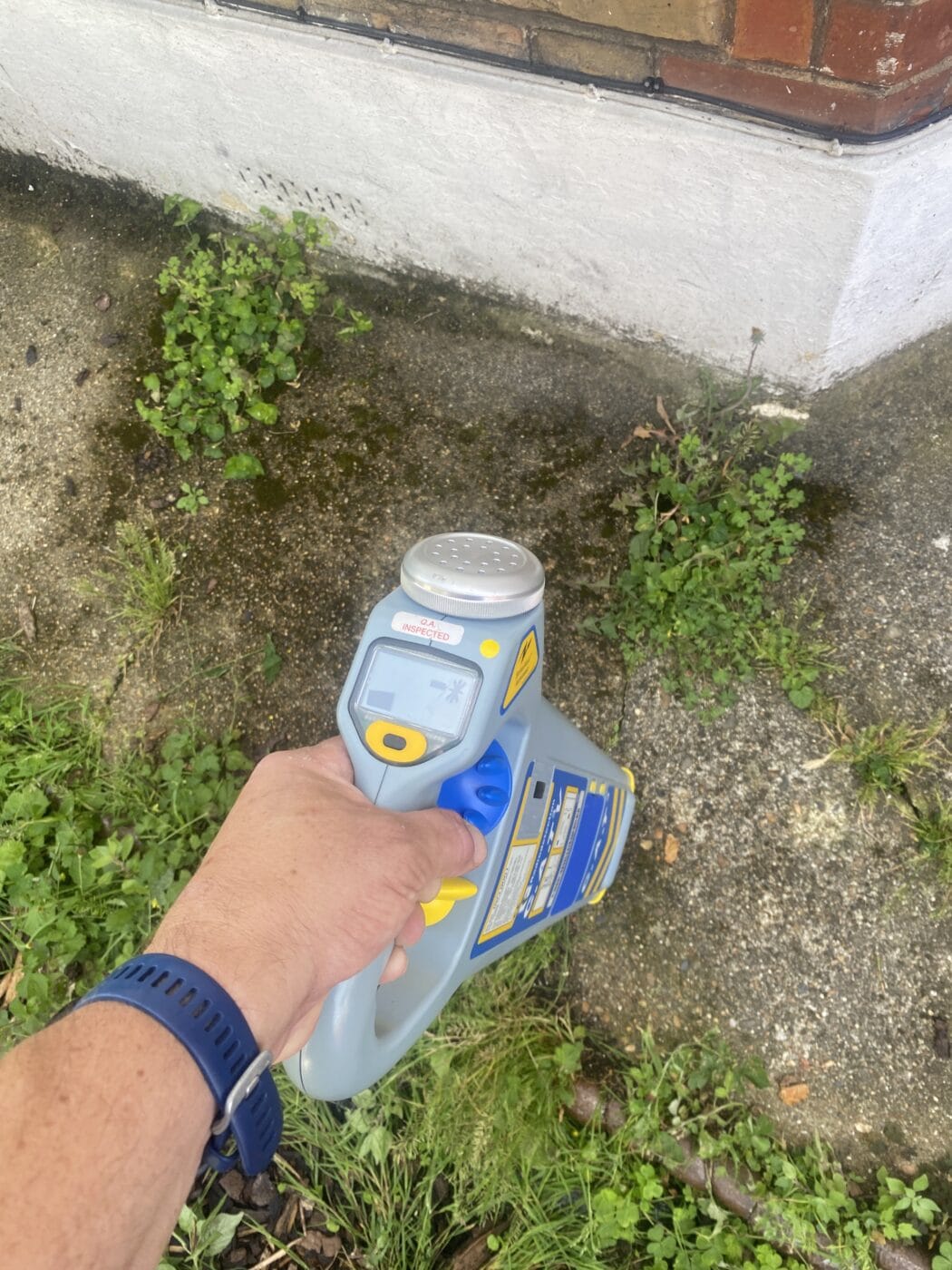
Utility and pipe tracing is a non-destructive method used to identify the route of buried pipes, cables and underground services. Before leak testing, excavation or repairs take place, tracing technology can help establish where services are located and how they travel through a property or site.
It is one of several techniques used during leak investigations. The most appropriate method depends on the type of leak, the pipe material, the construction of the property and the evidence available on site. To explore related techniques, visit our Leak Detection Technology page. You can also view our main Leak Detection service page for a wider overview.
What Utility and Pipe Tracing Is
Utility and pipe tracing is used to locate buried services and establish their route before further investigation takes place. Depending on the type of pipe or cable, different locating technologies may be used to trace its position above ground.
Understanding the route of a pipe is often an important part of leak detection. If the route is unknown, it can be difficult to interpret leak detection findings or plan safe excavation and repair work.
Pipe tracing does not usually identify the leak itself. Instead, it helps identify where the pipe runs so that other testing methods can be used more effectively.
Why Pipe Tracing Matters During Leak Investigations
Many buried pipes are hidden beneath gardens, driveways, floors and external surfaces. In some properties, the exact route may be unknown, particularly where alterations have been carried out over many years.
Establishing the route of the pipe can help:
- Identify which pipe is being investigated.
- Interpret acoustic, tracer gas and correlation findings.
- Confirm whether a leak location is consistent with the pipe route.
- Plan access and repairs more accurately.
- Reduce unnecessary excavation.
- Avoid damage to buried services.
In many cases, understanding where the pipe runs is just as important as understanding where the leak may be.
How Utility and Pipe Tracing Works
Different locating technologies are used depending on the type of service, the pipe material and whether the service can carry a detectable signal.
Common tracing methods include:
- CAT and Genny locating equipment.
- Tracing wire systems.
- Sondes and FlexiTrace systems.
- Electromagnetic locating equipment.
- Visual inspection of service entry and exit points.
The information gathered is then used alongside other evidence from the investigation.
CAT and Genny Pipe Tracing
A CAT (Cable Avoidance Tool) and Genny (signal generator) are commonly used to locate buried metallic services. The Genny applies a signal to the service, while the CAT detects and traces that signal from the surface.
This method can be highly effective for locating metallic water pipes, cables and other buried services before excavation takes place.
CAT and Genny locating is often used as part of safe digging procedures and utility avoidance planning.
Tracing Plastic Water Pipes
Plastic water pipes cannot normally be located using standard electromagnetic locating methods because the pipe itself does not carry a detectable signal.
In these situations, specialist tracing systems may be used. These can include tracing wire installations, sondes, FlexiTrace systems and other locating technologies designed for non-metallic pipework.
Some modern plastic water pipes are installed with a tracing wire alongside the pipe. This allows a signal to be applied and the route of the pipe to be traced from the surface. However, many older plastic pipe installations do not include tracing wire, which is why alternative tracing methods may be required.
Where suitable access is available, these systems can help establish the route of buried plastic pipes and support further leak investigation work.
Utility Tracing and Safe Excavation
Utility tracing is not only useful for leak investigations. It is also an important safety measure before excavation begins.
Buried services may include water pipes, gas pipes, electrical cables, communication cables and other underground infrastructure. Establishing their likely location helps reduce the risk of accidental damage during investigation or repair work.
This is one reason why pipe tracing is often carried out before excavation is considered.
What Utility and Pipe Tracing Cannot Tell You
Pipe tracing helps establish where a pipe runs. It does not normally confirm whether that pipe is leaking.
Knowing the route of a service is valuable information, but additional testing is usually required to determine whether a leak exists and where that leak is located.
This is why pipe tracing is often used alongside other leak detection technologies rather than as a standalone solution.
How Utility and Pipe Tracing Fits With Other Leak Detection Methods
Utility and pipe tracing is frequently used to support other leak detection technologies by providing information about the route of the pipe being investigated.
It is commonly used alongside:
- Acoustic Leak Detection where leak noise needs to be assessed against the pipe route.
- Correlation Leak Detection where sensor positions and pipe length need to be understood.
- Tracer Gas Leak Detection where gas readings need to be interpreted alongside the pipe route.
- Pressure Testing to confirm whether a system is losing water.
The aim is not simply to locate a buried pipe. The aim is to build enough evidence to understand the system and support accurate leak diagnosis.
Why Utility and Pipe Tracing Matters
Utility and pipe tracing helps investigators understand where services run, how they enter and leave a property and how leak detection findings relate to the pipe network being tested.
Used correctly, it can improve investigation accuracy, reduce unnecessary excavation and help support safer repair work.
Frequently Asked Questions
How do you locate underground water pipes?
Underground water pipes can be located using a range of tracing technologies, including CAT and Genny equipment, tracing wire systems, sondes and specialist locating tools designed for buried services.
Can plastic water pipes be traced?
Yes. Although plastic pipes cannot usually be detected directly using standard electromagnetic locating equipment, specialist tracing systems such as tracing wire and FlexiTrace can often be used to establish the pipe route.
What is a CAT and Genny?
A CAT (Cable Avoidance Tool) and Genny (signal generator) are used together to help locate buried metallic services. The Genny applies a signal to the service and the CAT detects that signal from the surface, helping establish the route of buried pipes and cables.
Does pipe tracing find leaks?
Not usually. Pipe tracing identifies the route of buried services. Additional leak detection methods are normally required to determine whether a leak exists and where it is located.
Need Help Locating a Hidden Leak?
Every leak investigation is different, and no single technology is suitable for every situation. The most effective approach depends on the type of leak, the pipe material, the construction of the property and the evidence available on site.
To learn more about hidden leak investigations, visit our Leak Detection hub page. If you need advice about a suspected leak or would like to discuss an investigation, please contact us and we will be happy to help.


