

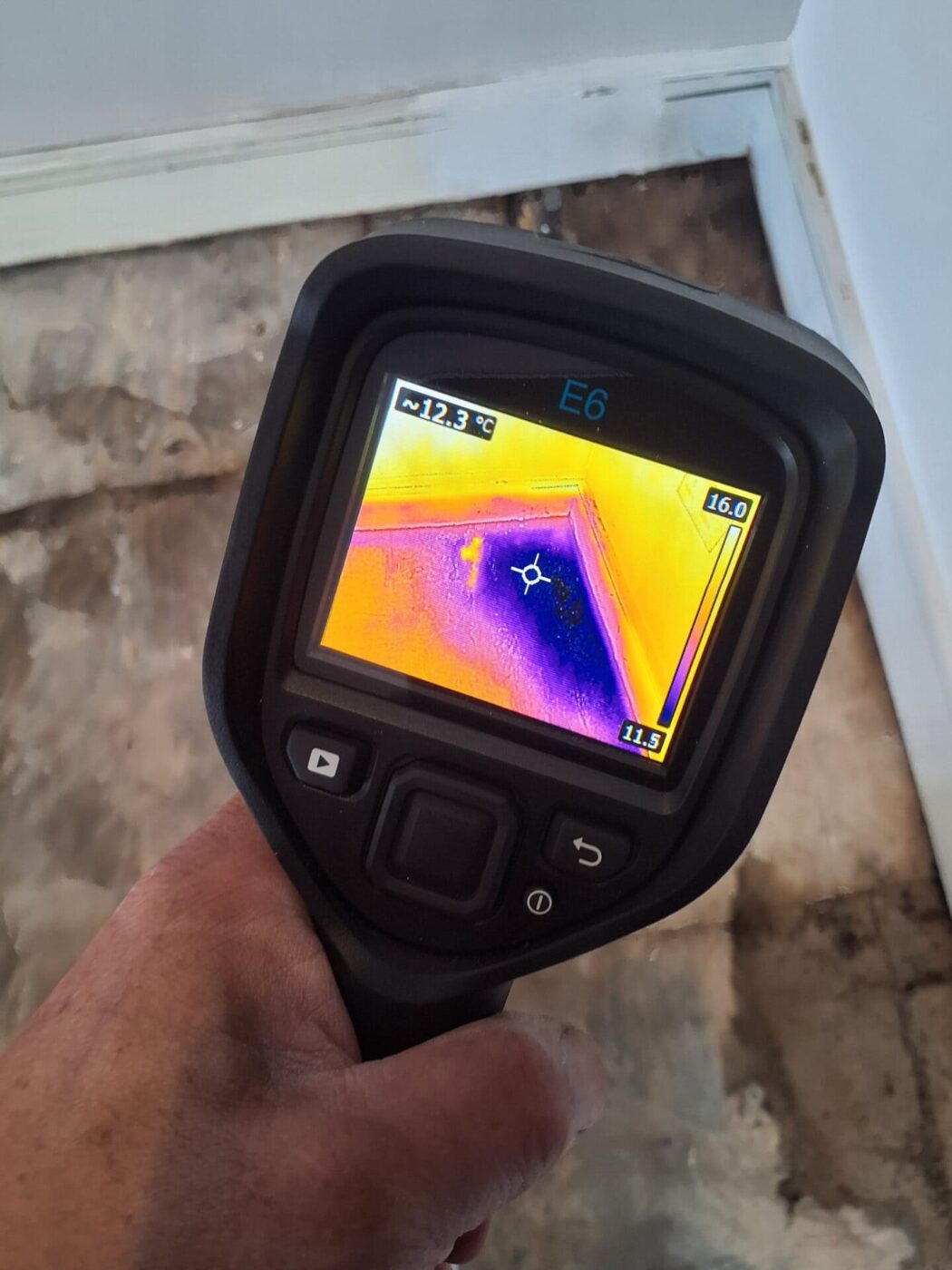
Leak detection technology refers to the range of non-destructive techniques used to investigate hidden leaks without unnecessary damage to a property. Rather than relying on guesswork, modern leak investigations use specialist equipment to gather evidence and narrow down the most likely leak location before access or excavation is considered.
Modern leak detection is not based on a single machine or piece of equipment. Different technologies provide different types of evidence, and several methods are often used together during an investigation.
No single technology is suitable for every leak. The most effective approach depends on the type of leak, the pipe material, the construction of the property and the evidence available on site.
To learn more about our wider service, visit our Leak Detection page.
How Leak Detection Technology Is Used
Different leaks behave in different ways. Some produce sound. Some create temperature changes. Some affect pressure. Others leave little visible evidence at all.
For this reason, professional leak detection is based on gathering evidence from multiple sources rather than relying on a single piece of equipment.
- Understanding how the leak is behaving.
- Selecting the most appropriate technologies.
- Interpreting the findings correctly.
- Using multiple techniques where necessary.
- Confirming the most likely leak location before access is made.
Technology provides evidence. The findings still need to be interpreted within the wider context of the investigation.
Choosing the Right Leak Detection Technology
Different technologies are suited to different situations. A hidden hot water pipe leak beneath a floor may benefit from thermal imaging, while an underground mains water leak may be better investigated using acoustic testing, correlation or tracer gas.
The most effective investigations are not based on using every technology available. They are based on selecting the most appropriate techniques for the evidence available and the conditions on site.
In many cases, multiple methods are used together to confirm findings and improve confidence in the results.
Core Leak Detection Technologies
The following technologies form the foundation of many modern leak investigations.
Thermal Imaging Leak Detection
Thermal imaging uses infrared cameras to identify temperature differences that may indicate moisture movement, hot water leaks, central heating leaks or water ingress. Thermal imaging does not detect water directly; it highlights temperature patterns that require interpretation.
Learn more about Thermal Imaging Leak Detection.
Acoustic Leak Detection
Acoustic leak detection uses sensitive listening equipment to identify the sound created when water escapes from pressurised pipework. It is particularly useful for underground leaks, mains water leaks and pressurised systems.
Learn more about Acoustic Leak Detection.
Tracer Gas Leak Detection
Tracer gas leak detection involves introducing a safe hydrogen and nitrogen tracer gas mixture into a pipe system. Escaping gas can then be detected at the surface to help identify concealed leaks.
Learn more about Tracer Gas Leak Detection.
Correlation Leak Detection
Correlation technology compares sound signals from different points on a pipe system to help identify the likely position of a leak. It is commonly used on longer pipe runs and underground water systems.
Learn more about Correlation Leak Detection.
Utility and Pipe Tracing
Utility and pipe tracing helps establish the route of buried services before testing, excavation or repairs take place. Techniques may include CAT and Genny locating equipment, tracing wire systems and specialist tracing tools for non-metallic pipes.
Learn more about Utility and Pipe Tracing.
Supporting Leak Investigation Technologies
Additional diagnostic methods are often used to support primary leak detection technologies and build a clearer picture of what is happening within a system.
Pressure Testing
Pressure testing helps determine whether a system is losing water or pressure. It can confirm that a leak exists but does not necessarily identify the location of that leak.
Learn more about Pressure Testing.
Moisture Mapping
Moisture mapping helps establish whether moisture is present and how water has moved through a property. This can assist with understanding the extent and direction of water migration.
Learn more about Moisture Mapping.
Endoscope Inspection
Endoscope inspection uses specialist cameras to examine concealed spaces, cavities and difficult-to-access areas where visual evidence may help support the investigation.
Learn more about Endoscope Inspection.
Tracer Dye Testing
Tracer dye testing uses safe, non-toxic tracer dyes to trace the movement of water through a building. It is particularly useful for investigating roof leaks, shower leaks, waterproofing defects and water ingress by helping investigators understand the route water has taken.
Learn more about Tracer Dye Testing.
Why Technology Alone Does Not Find Every Leak
Leak detection equipment provides information, but information still needs to be interpreted correctly. Temperature patterns, leak noise, tracer gas readings and moisture levels can all be influenced by property construction, pipe routes and site conditions.
This is why experienced leak investigators use technology to gather evidence and then assess that evidence within the wider context of the investigation.
Frequently Asked Questions
What is the most accurate leak detection method?
There is no single most accurate leak detection method for every situation. The most effective technology depends on the type of leak, the pipe material, the construction of the property and the evidence available. Professional leak investigations often combine multiple techniques to improve accuracy.
Can hidden leaks be found without damage?
Modern leak investigations often use non-destructive technologies to narrow down the leak location before access is required. This helps minimise unnecessary excavation, lifting of floors or opening of walls.
Why are multiple leak detection methods used?
Different technologies provide different types of evidence. Using more than one method helps confirm findings, improve confidence in the results and reduce the risk of incorrect assumptions.
Understanding Leak Detection in Practice
Modern leak detection is an evidence-based process that combines investigation experience with specialist technology. The goal is not simply to operate equipment, but to understand what the findings mean and how they relate to the reported problem.
Need Help Locating a Hidden Leak?
Every leak investigation is different, and no single technology is suitable for every situation. The most effective approach depends on the type of leak, the pipe material, the construction of the property and the evidence available on site.
To learn more about hidden leak investigations, visit our Leak Detection page. If you need advice about a suspected leak or would like to discuss an investigation, please contact us and we will be happy to help.


