

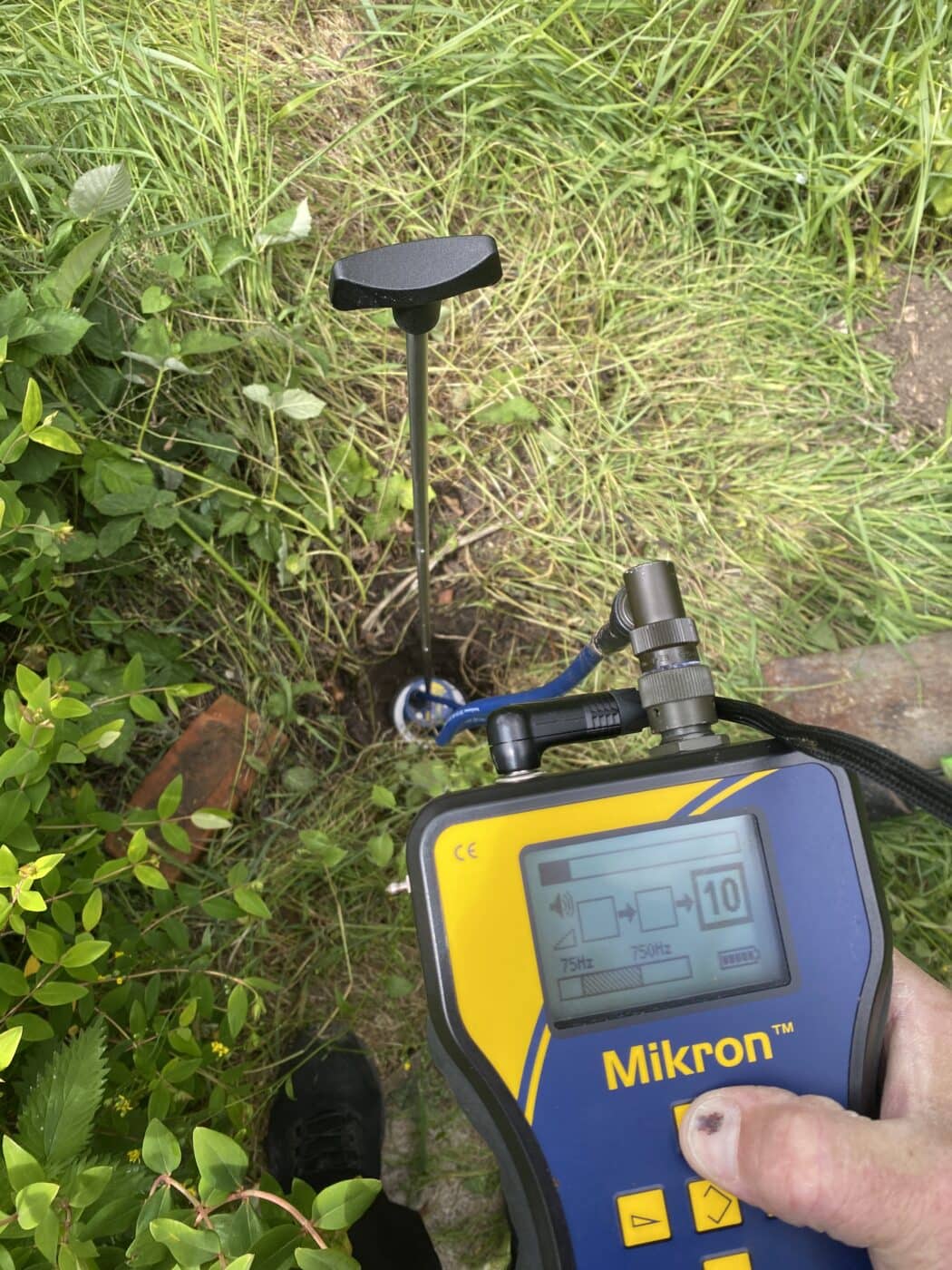
Acoustic leak detection is a non-destructive method used to help locate hidden leaks by identifying the sound created when water escapes from pressurised pipework. Using sensitive listening equipment, leak investigators can listen for leak noise through pipes, floors, walls and underground surfaces without unnecessary excavation.
It is one of several techniques used during leak investigations. The most appropriate method depends on the type of leak, the pipe material, the construction of the property and the evidence available on site. To explore related techniques, visit our Leak Detection Technology page. You can also view our main Leak Detection service page for a wider overview.
What Acoustic Leak Detection Is
When water escapes from a pressurised pipe, it can create a sound. That sound may travel along the pipework and into surrounding materials such as soil, screed, timber, masonry or concrete.
Acoustic leak detection uses specialist listening equipment to detect and assess these sounds. The aim is to narrow down the most likely leak location before any access work or excavation is considered.
Acoustic equipment does not simply “find a leak” on its own. It gathers sound evidence that needs to be interpreted correctly within the context of the property, pipework and site conditions.
How Acoustic Leak Detection Works
Acoustic testing works by listening for the sound created by escaping water. The clearer and more consistent the leak noise, the more useful acoustic testing can be.
- The pipework or suspected area is assessed.
- Listening equipment is used at suitable points.
- Leak noise is compared with background sound.
- Sound intensity and consistency are assessed.
- The findings are interpreted alongside other evidence.
In suitable conditions, acoustic leak detection can significantly reduce the search area and help avoid unnecessary digging or damage.
When Acoustic Leak Detection Is Most Useful
Acoustic leak detection is most useful where water is escaping under pressure and producing a sound that can be detected through the pipework or surrounding materials.
It is commonly used for:
- Mains water leaks.
- Underground pipe leaks.
- External supply pipe leaks.
- Pressurised central heating systems.
- Leaks beneath floors, driveways, gardens and hardstanding.
- Situations where the pipe route and leak noise can be assessed together.
Acoustic testing is particularly useful where a leak is active and the sound path is clear enough to provide reliable evidence.
What Acoustic Leak Detection Can and Cannot Tell You
Acoustic leak detection can provide valuable evidence about where leak noise is strongest or most consistent. However, the loudest sound is not always directly above the leak.
Sound can travel along pipework, through fittings, into floors and through surrounding materials. In some situations, the sound may appear stronger at an accessible point, valve, stop tap or surface that carries vibration better than the ground directly above the leak.
This is why acoustic findings must be interpreted carefully. The equipment detects sound, but the investigator must assess whether that sound is likely to indicate the leak location or the route the sound has travelled.
Why Acoustic Findings Need Interpretation
Listening for leak noise is only part of the process. The results still need to be interpreted correctly.
An experienced leak investigator understands how sound can travel through different pipe materials, fittings, floors, walls and ground conditions. This information is considered alongside other test results to identify the most likely leak location.
For example, metal pipework often carries sound more clearly than plastic pipework. A leak on a plastic supply pipe may produce a weaker or less defined sound, especially if the pipe is deep, insulated or surrounded by soft ground. In these situations, other methods may be needed to support the acoustic findings.
This is why acoustic leak detection should be viewed as a way of gathering evidence rather than a standalone answer to every hidden leak.
What Affects Acoustic Leak Detection Results?
Acoustic leak detection can be highly effective, but results depend on site conditions and the behaviour of the leak at the time of testing.
- Pipe material and pipe diameter.
- Pipe depth and surrounding ground conditions.
- Whether the leak is active and pressurised.
- The size and consistency of the leak.
- Background noise from roads, buildings, pumps or nearby services.
- Floor construction, insulation and surface finishes.
- Whether the pipe route is known.
- Whether the leak noise is travelling along the pipe or through another material.
In quiet conditions with suitable pipework, acoustic results can be very clear. In more complex environments, acoustic testing may need to be supported by other leak detection methods.
Acoustic Testing on Different Pipe Types
Acoustic testing can be used on a range of pipe materials, but sound behaves differently depending on the pipe type.
Metal pipework often transmits leak noise more clearly, which can make acoustic testing particularly useful. Plastic pipework can still be tested acoustically, but sound may be less distinct and more affected by depth, insulation, ground conditions and pipe route.
Where the pipe route is unclear, Utility and Pipe Tracing may be used to understand the route before acoustic findings are assessed further.
How Acoustic Leak Detection Fits With Other Methods
Acoustic leak detection is often used as part of a wider leak investigation. It may help identify leak noise, narrow down a search area or support findings from other diagnostic methods.
It is commonly used alongside:
- Correlation Leak Detection to compare sound signals on longer pipe runs.
- Tracer Gas Leak Detection where acoustic findings need to be confirmed or where sound evidence is limited.
- Pressure Testing to confirm whether a system is losing water.
- Thermal Imaging Leak Detection where temperature patterns may provide supporting evidence.
- Moisture Mapping to understand how water has moved through a property.
- Utility and Pipe Tracing where the pipe route needs to be established before testing or excavation.
The aim is not simply to hear a noise. The aim is to build enough evidence to identify the most likely leak location and avoid unnecessary disruption.
Why Acoustic Leak Detection Matters
Acoustic leak detection matters because it can help locate pressurised leaks without unnecessary excavation or damage. It is especially useful where pipework is hidden below floors, outside underground, or beneath driveways, gardens and hardstanding.
Used correctly, acoustic testing provides valuable sound evidence. Interpreted correctly, it can help narrow down the most likely leak location and guide the next stage of investigation or repair.
Frequently Asked Questions
Can acoustic leak detection find underground water leaks?
Yes. Acoustic leak detection is commonly used for underground water leaks where water is escaping under pressure and producing a detectable sound. The results depend on the pipe material, pipe depth, ground conditions and background noise.
Does acoustic leak detection work on plastic pipes?
It can, but results may be less clear than on metal pipework. Plastic pipes often transmit sound differently, so acoustic findings may need to be supported by methods such as tracer gas, pressure testing, correlation or utility and pipe tracing.
Does acoustic leak detection always find the exact leak location?
Not always. Acoustic testing identifies sound evidence, but sound can travel along pipework and through surrounding materials. The findings need to be interpreted alongside the pipe route, site conditions and other test results.
Need Help With a Hidden Leak?
Every leak investigation is different, and no single technology is suitable for every situation. The most effective approach depends on the type of leak, the pipe material, the construction of the property and the evidence available on site.
To learn more about hidden leak investigations, visit our Leak Detection hub page. If you need advice about a suspected leak or would like to discuss an investigation, please contact us and we will be happy to help.


