

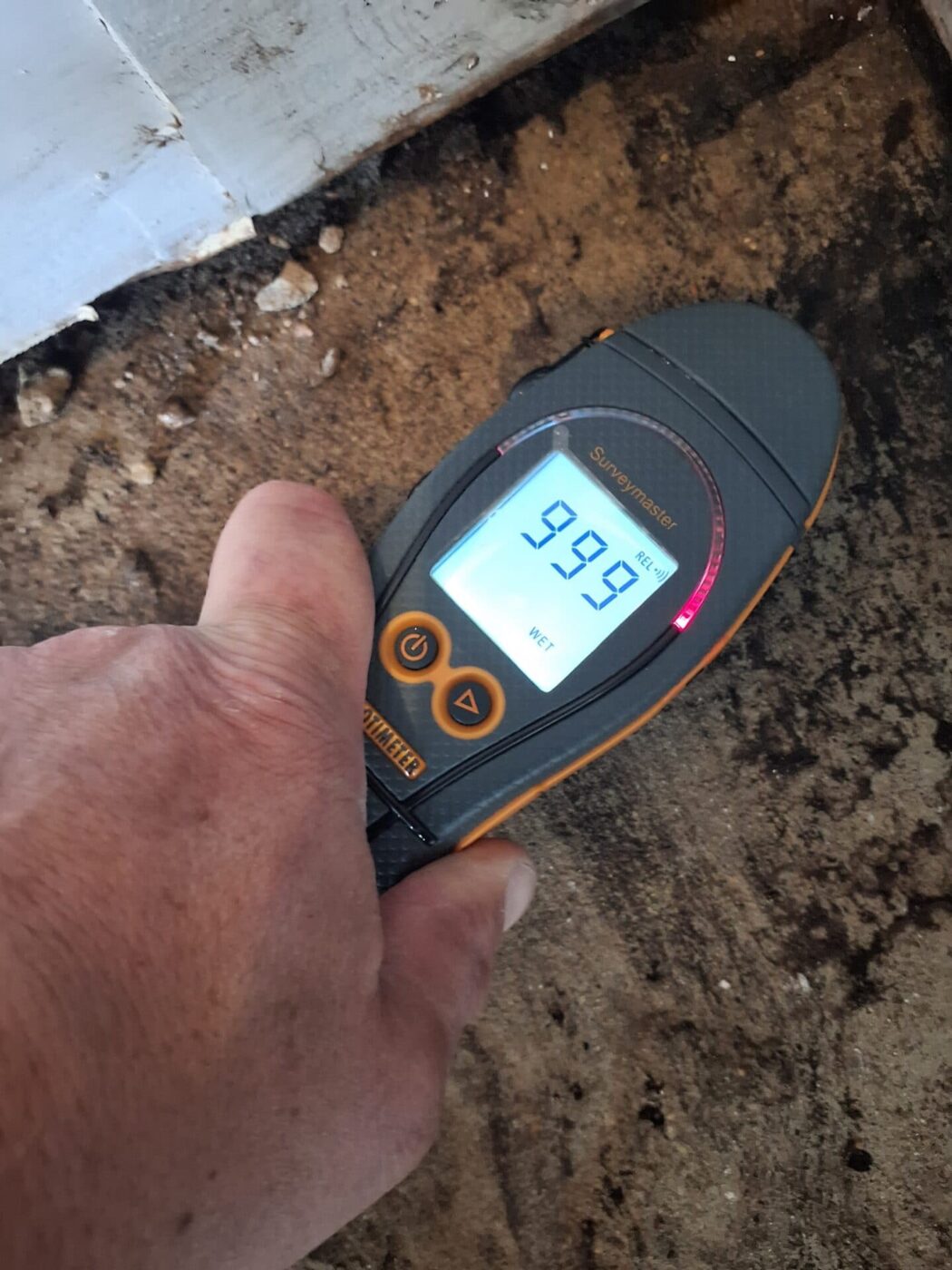
Moisture mapping is a non-destructive method used to identify where moisture is present within a property and how it has spread through building materials. It helps investigators understand the extent of moisture affected areas, but it does not normally identify the source of the water on its own.
It is one of several techniques used during leak investigations. The most appropriate method depends on the type of leak, the pipe material, the construction of the property and the evidence available on site. To explore related techniques, visit our Leak Detection Technology page. You can also view our main Leak Detection service page for a wider overview.
What Moisture Mapping Is
Moisture mapping is used to measure and record moisture levels across walls, floors, ceilings and other building materials. By comparing readings taken at different locations, investigators can build a picture of where moisture is concentrated and how it has travelled through the property.
This information helps distinguish between the area affected by water and the area where the source of the leak is most likely to be found.
Moisture mapping provides evidence about the movement of moisture. The findings still need to be interpreted alongside the construction of the property and other leak detection results.
How Moisture Mapping Works
Moisture mapping uses specialist moisture measuring equipment to assess the condition of building materials. Depending on the construction of the property and the type of investigation, different technologies may be used to build an accurate picture of how moisture is behaving.
Common equipment includes:
- Pin-type moisture meters that measure moisture between two probes.
- Non-invasive moisture meters that assess moisture without damaging decorative finishes.
- Protimeters and other specialist moisture measuring instruments.
- Hygrometers used to assess humidity and environmental conditions.
- Thermal Imaging Leak Detection cameras used to compare temperature patterns with moisture readings.
No single instrument provides all the answers. Moisture readings are compared across multiple locations and interpreted alongside other evidence gathered during the investigation.
- Suitable surfaces are assessed.
- Moisture readings are taken at multiple locations.
- The results are recorded and compared.
- Areas of higher and lower moisture are identified.
- The findings are interpreted alongside other evidence.
The aim is not simply to find damp materials, but to understand how water has moved through the building.
Moisture Meters and Building Materials
Different building materials respond differently to moisture. Timber, plaster, concrete, screed, brickwork, insulation and floor finishes can all absorb, retain and release moisture at different rates.
Moisture meters measure the condition of the material being tested rather than the amount of water escaping from a leak. A high reading does not automatically mean the leak is directly beneath that location.
This is why moisture readings are always interpreted alongside the construction of the property, the pattern of moisture movement and the results of other leak detection methods.
Why Moisture Mapping Is Useful
Water rarely remains where it first escapes. It can travel through concrete, screed, insulation, timber, plaster and masonry before becoming visible.
Moisture mapping helps investigators understand:
- The extent of moisture affected areas.
- The likely direction of moisture movement.
- Areas that may require further investigation.
- Whether moisture patterns are consistent with the reported leak.
- Where further testing should be concentrated.
What Moisture Mapping Can and Cannot Tell You
Moisture mapping can identify where moisture is present and how it has spread through a building.
However, moisture does not always travel in a straight line. Water may move sideways, downwards or along construction materials before becoming visible.
For this reason, the wettest area is not always directly above or beside the leak.
Moisture mapping helps identify moisture patterns, but additional investigation is normally required to identify the source.
Why Moisture Mapping Results Need Interpretation
Reading a moisture meter is only part of the process. Different building materials respond differently to moisture, and readings can be influenced by surface finishes, salts, temperature and the way water has travelled through the structure.
Surface finishes, salts within masonry, foil-backed insulation and even metal components behind walls can all influence some moisture meter readings. Understanding these limitations is an important part of interpreting the results correctly.
An experienced leak investigator considers the construction of the property, the pattern of moisture movement and the results of other tests before deciding where the leak is most likely to be located.
Technology provides evidence. The findings still need to be interpreted within the wider context of the investigation.
How Moisture Mapping Fits With Other Leak Detection Methods
Moisture mapping is commonly used alongside other leak detection technologies.
- Thermal Imaging Leak Detection to compare temperature and moisture patterns.
- Pressure Testing to confirm whether the system is losing water.
- Acoustic Leak Detection where a pressurised leak is suspected.
- Tracer Gas Leak Detection where additional confirmation is required.
- Endoscope Inspection where concealed spaces require visual examination.
The objective is not simply to find damp areas. The objective is to understand how moisture has behaved and how that information supports the wider leak investigation.
Why Moisture Mapping Matters
Moisture mapping matters because visible damp is not always close to the source of a leak. Water can move through hidden layers of a property before it appears on a wall, ceiling or floor.
Used correctly, moisture mapping provides valuable evidence about moisture movement. Interpreted correctly, it helps guide further investigation and avoid incorrect assumptions about where the leak started.
Frequently Asked Questions
Can moisture mapping find a leak?
Moisture mapping identifies where moisture is present and how it has spread, but it does not normally identify the source of the leak on its own. Other leak detection methods are usually required.
What is moisture mapping?
Moisture mapping is the process of taking and comparing moisture readings across a property to understand the extent and pattern of moisture movement.
What is a Protimeter?
A Protimeter is a specialist moisture measuring instrument commonly used during building investigations. Depending on the model, it can measure moisture within building materials, compare moisture levels between different areas and help investigators understand how water has moved through a property.
Are moisture meters accurate?
Moisture meters provide valuable information about the condition of building materials, but readings must always be interpreted correctly. Material type, salts, surface finishes and environmental conditions can all influence the results.
Why isn’t the wettest area always the leak?
Water can travel through floors, walls and building materials before becoming visible. As a result, the wettest area is not always where the leak first occurred.
Need Help With a Hidden Leak?
Every leak investigation is different, and no single technology is suitable for every situation. The most effective approach depends on the type of leak, the pipe material, the construction of the property and the evidence available on site.
To learn more about hidden leak investigations, visit our Leak Detection hub page. If you need advice about a suspected leak or would like to discuss an investigation, please contact us and we will be happy to help.


