

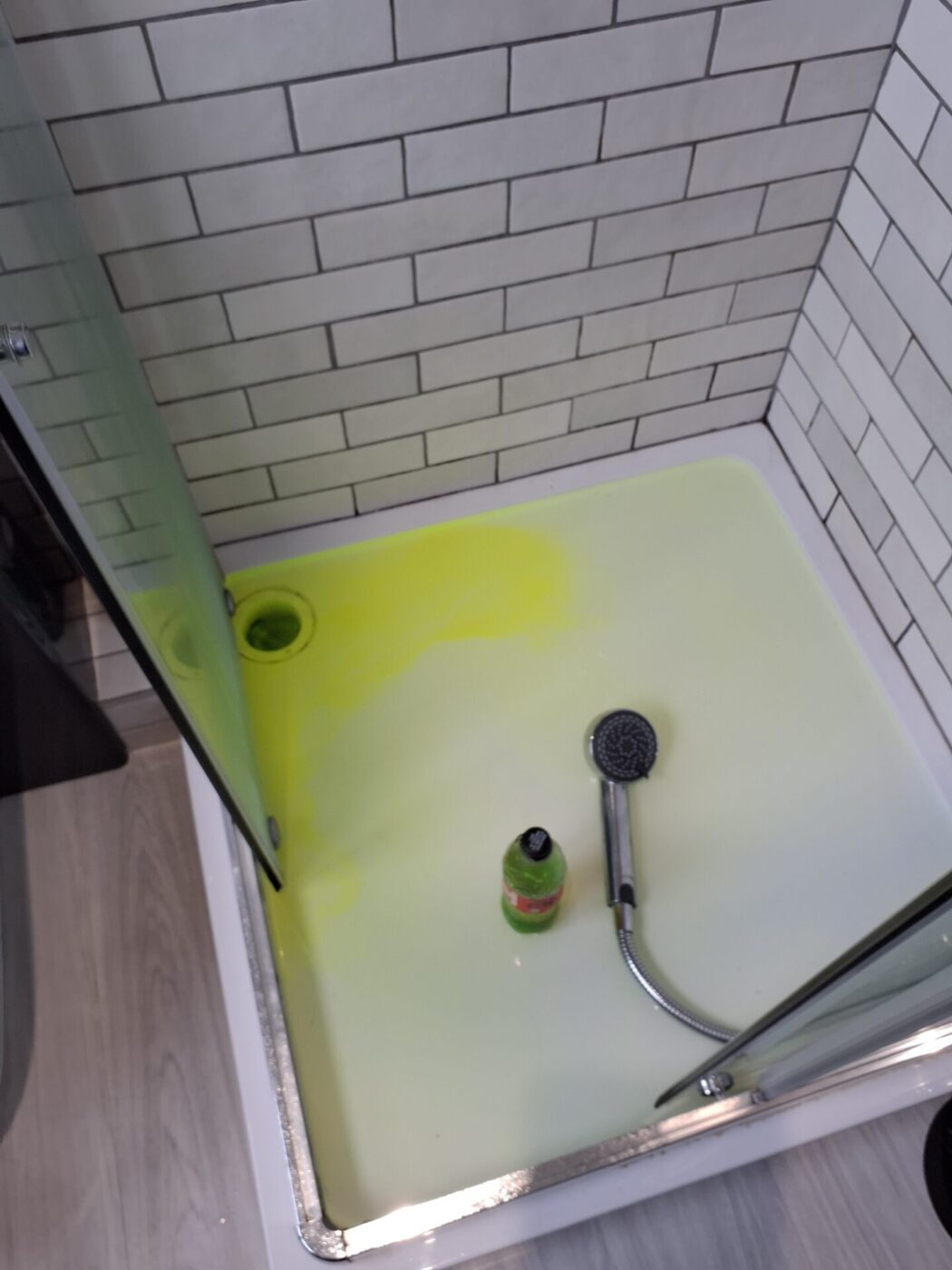
Tracer dye testing is a non-destructive method used to trace the path of water through a building or drainage system. By introducing a safe, non-toxic tracer dye into the suspected source, investigators can observe where the water travels, helping to identify water ingress, plumbing defects and hidden leak pathways with minimal disruption.
It is one of several techniques used during leak investigations. The most appropriate method depends on the type of leak, the construction of the property and the evidence available on site. To explore related techniques, visit our Leak Detection Technology page. You can also view our main Leak Detection service page for a wider overview.
What Tracer Dye Testing Is
Tracer dye testing uses a specially formulated tracer dye, sometimes referred to as fluorescent dye or UV dye, to follow the movement of water. Once introduced into the suspected source, the dye travels naturally with the water, making it easier to understand where the water is flowing and how it is moving through the building.
Depending on the application, the tracer dye may be visible to the eye or designed to fluoresce under ultraviolet (UV) light, allowing even very small traces of water to be identified during an investigation.
Tracer dye testing provides evidence of how water is travelling. The findings still need to be interpreted alongside the construction of the property and the results of other leak detection methods.
How Tracer Dye Testing Works
Tracer dye testing is carried out under controlled conditions so that only the area being investigated is tested. A safe, non-toxic tracer dye is introduced into the suspected source of the water, allowing investigators to monitor where the dyed water appears and the route it takes through the property.
Depending on the investigation, fluorescent tracer dyes, ultraviolet inspection lamps and specialist inspection equipment may all be used to improve visibility and help trace the movement of water.
- The suspected source of the water is identified.
- A suitable tracer dye is introduced.
- The movement of the dyed water is monitored.
- Ultraviolet (UV) lighting may be used to enhance visibility.
- The findings are interpreted alongside other evidence gathered during the investigation.
The objective is not simply to colour the water, but to understand how water is travelling and what that reveals about the source of the problem.
When Tracer Dye Testing Is Most Useful
Tracer dye testing is particularly useful where the route of water is unclear or where water ingress only occurs under certain conditions.
It is commonly used during investigations involving:
- Roof leaks.
- Flat roofs, balconies and terraces.
- Shower trays and wet rooms.
- Bathrooms and tiled walls.
- Water ingress through external walls.
- Window and door leaks.
- Waterproofing defects.
- Drainage and rainwater goods where appropriate.
By following the movement of water, tracer dye testing can often help distinguish between where water first becomes visible and the route it has taken through the building.
What Tracer Dye Testing Can and Cannot Tell You
Tracer dye testing shows the path that water takes through a building, roof structure or drainage system. It helps investigators understand how water is moving and where it eventually emerges.
However, tracer dye testing does not always identify where the water first entered the building. Water may travel through cavities, insulation, structural elements and waterproof membranes before becoming visible.
Tracer dye testing is also not normally used to locate concealed pressurised pipe leaks. Technologies such as Acoustic Leak Detection, Tracer Gas Leak Detection and Correlation Leak Detection are generally more appropriate for those types of investigations.
What Affects Tracer Dye Testing Results?
Tracer dye testing is highly effective when carried out under controlled conditions, but the results can be influenced by the way water behaves within the building.
- The construction of the property.
- Multiple water entry points.
- Wind-driven rain.
- Existing moisture from previous leaks.
- Waterproof membranes and cavity barriers.
- Water travelling through cavities or along structural elements.
- The conditions under which the test is carried out.
Tracer dye provides evidence of the route water has taken. Experience helps determine whether that route represents the original point of entry or simply where the water has emerged. An experienced investigator interprets the findings alongside the construction of the property and the results of other leak detection methods to determine the most likely source of the problem.
Why Tracer Dye Test Results Need Interpretation
Water does not always follow the shortest or most obvious route. It can travel through cavities, beneath finishes, along structural timbers, across waterproof membranes and around building components before eventually becoming visible.
Tracer dye testing helps reveal the route that water has taken, but it does not always identify where the water first entered the building. An experienced leak investigator considers the construction of the property, likely water pathways and the results of other leak detection methods before determining the most likely source of the problem.
Technology provides evidence. The findings still need to be interpreted within the wider context of the investigation.
How Tracer Dye Testing Fits With Other Leak Detection Methods
Tracer dye testing is often used alongside other investigation techniques to build a clearer understanding of how water is behaving within a property.
- Moisture Mapping to assess how moisture has spread through the building.
- Endoscope Inspection to visually inspect concealed spaces and confirm the route of water.
- Thermal Imaging Leak Detection to compare temperature patterns with moisture movement.
- Pressure Testing where a pressurised plumbing system also requires investigation.
The objective is not simply to observe coloured water. The objective is to understand how water is travelling and how that information contributes to an accurate diagnosis.
Why Tracer Dye Testing Matters
Tracer dye testing helps investigators understand how water moves through a property while keeping disruption to a minimum. It is particularly valuable where the route of water is uncertain or where water ingress only occurs under specific conditions.
When interpreted correctly, tracer dye testing provides valuable evidence that supports accurate diagnosis and helps avoid unnecessary exploratory work.
Frequently Asked Questions
What is tracer dye testing?
Tracer dye testing uses a safe, non-toxic tracer dye to follow the movement of water through a building. It helps investigators understand where water is travelling and how it reaches the point where it becomes visible.
Is tracer dye the same as fluorescent dye?
Yes. Tracer dye is often referred to as fluorescent dye or UV dye because some formulations fluoresce under ultraviolet light, making even small traces of water easier to identify during an investigation.
Will the dye stain my property?
No. The tracer dyes used for professional leak investigations are specially formulated to be non-staining when used correctly. They are designed to trace the movement of water without permanently staining pipework, sanitaryware or building materials.
Is tracer dye safe?
Yes. Professional tracer dyes are non-toxic and specifically designed for tracing the movement of water during leak and water ingress investigations.
Why is ultraviolet (UV) light sometimes used?
Ultraviolet light makes fluorescent tracer dye much easier to see, allowing investigators to identify even very small traces of water that may not be visible under normal lighting.
Can tracer dye testing find every type of leak?
No. Tracer dye testing is particularly effective for understanding how water travels during roof leak, shower leak and water ingress investigations. Hidden pressurised pipe leaks usually require other specialist leak detection methods such as pressure testing, acoustic leak detection, tracer gas testing or correlation leak detection.
Need Help Investigating a Hidden Leak?
Every leak investigation is different, and no single technology is suitable for every situation. The most effective approach depends on the type of leak, the construction of the property and the evidence available on site.
To learn more about our investigation process, visit our Leak Detection page. If you need advice about a suspected leak or would like to arrange an investigation, please contact us and we’ll be happy to help.


